


How Human Hair Weaving Changed the Way Women Protect Their Natural Hair ?
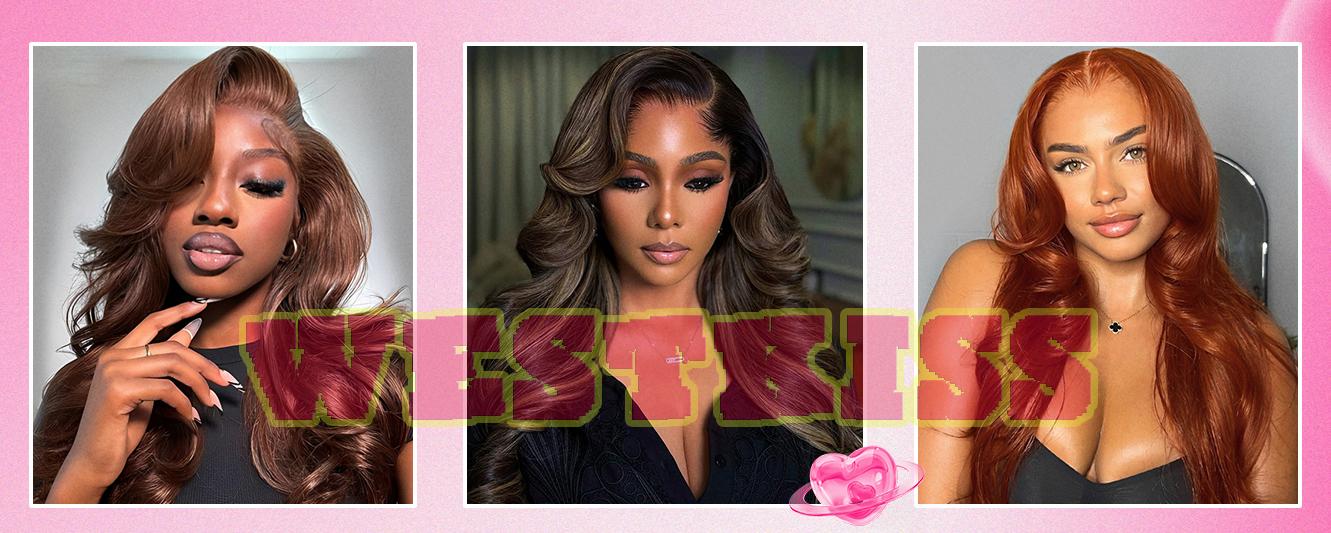
For decades, protective styling meant trade-offs. Braids pulled heavy on edges, relaxed hair stayed exposed to heat, and many wigs looked obvious enough that wearing one felt like a compromise. Human hair weaving quietly rewrote those options, giving women a way to tuck their natural hair away completely while wearing hair that moved, swung, and styled like their own.
The protective logic is straightforward. A proper sew-in leaves your natural hair cornrowed flat beneath the wefts, shielded from daily manipulation, weather, and heat. No flat irons, no blow dryers, no combing stress for weeks at a time. Unlike glued quick weaves, which bond adhesive directly to protected hair and can peel strands out at removal, sewn human hair weaving attaches to braided foundation with thread. Done correctly, nothing chemical touches your own hair for the entire install.
That rest period is when natural hair thrives. The ends — the oldest, driest part of every strand — are tucked away instead of rubbing against collars and car seats, so mechanical splitting drops sharply. Women transitioning from relaxers survive the awkward two-texture phase without big chops; those recovering from heat damage hide uneven lengths while healthy hair grows in. What once required hats, scarves, or patience with a shrinking twist-out became as simple as an install appointment.
Versatility is the other half of the shift. Because human hair weaving uses real cuticle hair, it accepts color, curl rods, flat irons, and rollers exactly like growing hair. A woman can wear bone-straight one month and deep wave the next without chemically altering a single strand of her own. Synthetic alternatives could never offer that; they frizz under heat and permanently hold whatever shape the factory gave them. Real hair made experimentation consequence-free.
The aesthetic change mattered psychologically too. Early weaves were often detectable — bulky parts, visible tracks, a helmet-like sheen. Modern human hair weaving on closure or frontal foundations produces free-parting styles and scalp-like parts that read as genuinely growing hair. For the first time, protective styling and "good hair days" stopped being separate goals. Women in professional environments, on camera, and at major life events could protect fragile hair without anyone knowing.
Accessibility completed the transformation. Weaving was once a salon-only luxury; today bundles ship worldwide in every texture from kinky curly to silky straight, and tutorials made installation knowledge mainstream. Women with tightly textured hair finally found protective hair matching their own — normalizing the idea that the hair underneath deserves as much care as the style on top.
None of this means weaves are automatically protective. Poor technique can still cause harm: braids sewn too tight create tension alopecia, installs left in for months mold against unwashed scalps, and neglecting the hair underneath defeats the entire purpose. The modern rules — manageable braid tension, cleansing between tracks with applicator bottles, deep conditioning before reinstall, and never exceeding roughly eight weeks per install — grew up alongside the technique itself.
Still, the shift is undeniable. Human hair weaving turned protective styling from a visible sacrifice into a seamless confidence boost, letting millions of women grow healthier hair while wearing whatever length, color, or texture they wanted. The best protective style has always been the one you can actually maintain — and for many, that is exactly what weaving became.
- Digital Agency
- Literie
- Location de voitures
- Restaurant
- Restaurant
- Mode
- Mode
- Information
- Marketing
- Tourisme
- Développement
- Découverte
- Législation
- Gastronomie
- Pâtisserie
- Evenement
- Art
- Causes
- Crafts
- Dance
- Drinks
- Film
- Fitness
- Food
- Spellen
- Gardening
- Health
- Home
- Literature
- Music
- Networking
- Overig
- Party
- Religion
- Shopping
- Sports
- Theater
- Wellness
© 2026 Sngine France : Partagez Vos Moments, Faites de Nouveaux Amis
 Dutch
Dutch
Dutch
 Indian
 English
 French
 Arabic
 Spanish
 Portuguese
 Deutsch
 Turkish
 Italiano
 Russian
 Romaian
 Portuguese (Brazil)
 Greek
Greek
