


3D Printer Filament Guide – Types, Uses and How to Choose the Right Material
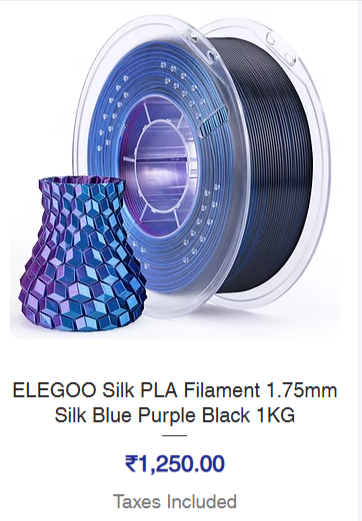
Choosing the right material is essential for achieving reliable and high-quality 3D prints. For FDM and FFF 3D printing, filament is the primary printing material, and different types of filament are designed for different applications. Understanding material properties can help beginners, designers, engineers and businesses select the right option for their projects.
While 3D printer Filament is widely used for prototypes, models and functional parts, resin-based printing provides another option when very fine details and smooth finishes are required. Knowing the difference between these material categories can help users choose an appropriate printing workflow.
Hydrotech provides 3D printing solutions and materials for customers looking to explore additive manufacturing for professional, commercial and personal applications.
What Is 3D Printer Filament?
3D printer Filament is a thermoplastic material supplied as a continuous strand wound around a spool. It is fed into the printer's extruder, heated to the required temperature and deposited through a nozzle to create a three-dimensional object layer by layer.
Filament is available in numerous materials and formulations. Each material can have different properties relating to strength, flexibility, temperature resistance, appearance and ease of printing.
The most suitable option depends on the printer being used and the requirements of the finished part.
Common Types of Filament
There are several commonly used filament materials, with each offering particular advantages.
PLA Filament
PLA is one of the most commonly used materials for general-purpose 3D printing. It is popular among beginners because it is relatively easy to print and is available in many colours and finishes.
PLA can be suitable for:
- Decorative models
- Concept prototypes
- Educational projects
- Display pieces
- General-purpose prints
PETG Filament
PETG offers a balance of ease of printing and durability. It is often considered when users need parts with greater toughness than typical PLA prints.
It can be useful for functional prototypes, brackets, containers and other practical components, depending on the application.
ABS Filament
ABS is an engineering thermoplastic that has been used extensively in manufacturing and product development.
It can provide useful mechanical and temperature-resistant properties, but it can also require more controlled printing conditions than easier-to-print materials.
TPU Filament
TPU is a flexible thermoplastic material. It can be used where elasticity or flexibility is required.
Applications may include flexible components, protective parts, seals and specialised prototypes.
The correct TPU grade and printer settings depend on the specific product.
Why Material Selection Matters
Choosing filament simply because it is inexpensive or readily available may not produce the desired results.
Before selecting a material, consider the purpose of the printed object.
A display model may prioritise appearance, while a functional component may require strength, durability or resistance to environmental conditions.
Important factors include:
- Mechanical strength
- Flexibility
- Temperature resistance
- Surface appearance
- Dimensional accuracy
- Ease of printing
- Post-processing requirements
- Environmental exposure
Selecting the material based on these requirements can improve the reliability of the finished part.
3D Printer Filament and Print Quality
The quality of the filament can influence printing performance.
Consistent filament diameter and appropriate material storage can help maintain stable extrusion. Moisture absorption can also affect certain materials and may result in issues such as inconsistent extrusion, surface imperfections or reduced print quality.
Keeping filament properly stored and following the manufacturer's recommendations can help maintain material performance.
Printer settings are equally important. Temperature, print speed, layer height, cooling and other parameters should be adjusted according to the specific material.
Filament for Prototyping
One of the major uses of filament-based 3D printing is rapid prototyping.
Designers and engineers can produce physical versions of a concept before moving to more expensive manufacturing processes. This allows them to inspect dimensions, test assembly and identify design changes.
For example, a company developing a new product enclosure can print an early prototype, test how components fit together and modify the digital design before creating a final production version.
This can make the product-development process more flexible.
Filament for Functional Components
3D printing is not limited to visual prototypes. Certain materials can be used to manufacture functional components for appropriate applications.
Depending on the material and design, printed parts can be used for:
- Brackets
- Mounting components
- Enclosures
- Fixtures
- Tooling aids
- Replacement components
- Custom accessories
The suitability of a printed part should always be evaluated against the mechanical and environmental requirements of its intended application.
3D Printer Filament vs Resin
Filament and resin represent two different approaches to 3D printing.
Filament printers melt thermoplastic material and deposit it through a nozzle. Resin printers use liquid photopolymer material that is cured using light.
Filament can be a practical option for larger objects, functional prototypes and general-purpose applications. Resin can be advantageous when very fine details and smooth surfaces are priorities.
The choice should therefore be based on the intended application rather than assuming one technology is suitable for every project.
How to Store Filament
Proper storage is an important part of maintaining filament quality.
Many filament materials can absorb moisture from the surrounding environment. Moisture can affect the printing process and may cause undesirable print results.
For this reason, users should follow the manufacturer's storage recommendations. Airtight containers or dedicated filament storage solutions can be useful for materials that are particularly sensitive to humidity.
Before printing, it is also helpful to check the material for signs of moisture-related problems.
How to Select the Right Filament
Start by identifying what the finished part needs to do.
For simple models and prototypes, a general-purpose material may be sufficient. For functional applications, you may need a material with greater toughness, flexibility or resistance to environmental conditions.
Also check your printer's compatibility before purchasing a spool.
Consider:
- Printer compatibility
- Nozzle and temperature requirements
- Required strength
- Flexibility requirements
- Surface finish
- Environmental conditions
- Expected print size
- Storage requirements
A material that matches the application and printer can provide more consistent results.
Hydrotech and 3D Printing Solutions
Hydrotech supports customers exploring 3D printing for different applications. Selecting the right filament involves understanding both the printing equipment and the characteristics required from the finished component.
Whether the objective is prototyping, product development, education, design or functional printing, choosing an appropriate material is an important part of the overall workflow.
Customers can evaluate their requirements and select suitable printing products based on their specific applications.
Final Thoughts
3D printer Filament offers a versatile material solution for many FDM and FFF 3D printing applications. From basic prototypes to functional components, different filament materials can provide different combinations of strength, flexibility, appearance and durability.
At the same time, resin printing remains useful for applications where extremely fine details and smooth finishes are important.
Understanding the differences between available materials allows users to make more informed decisions and develop a printing process suited to their needs. With the right material, printer settings and storage practices, 3D printing can become a practical tool for prototyping, design and product development.
Frequently Asked Questions
1. What is 3D printer Filament?
3D printer Filament is a thermoplastic material supplied on a spool and used by FDM or FFF printers to create objects layer by layer.
2. Which filament is best for beginners?
PLA is commonly chosen by beginners because it is generally straightforward to print and is widely available.
3. What is PETG filament used for?
PETG can be used for functional prototypes and components where a combination of durability and relatively easy printing is desirable.
4. Is ABS filament difficult to print?
ABS can require more controlled printing conditions than some general-purpose materials. Printer setup and environmental conditions can affect results.
5. What is TPU filament?
TPU is a flexible thermoplastic filament used for applications where elasticity or flexibility is required.
6. Can filament absorb moisture?
Yes. Many filament materials can absorb moisture from the surrounding environment, which can affect printing performance.
7. How should 3D printing filament be stored?
Filament should be stored according to the manufacturer's recommendations. Moisture-sensitive materials may benefit from airtight or controlled storage.
8. Can filament be used for functional parts?
Yes. Certain filament materials can be suitable for functional components when their mechanical and environmental properties meet the application requirements.
9. Is filament better than resin?
Neither material is universally better. Filament and resin are suited to different printing technologies and applications.
10. Can Hydrotech help with 3D printing materials?
Hydrotech provides 3D printing solutions and can help customers evaluate material options according to their printer and intended application.
For more details please visit the website - https://www.hydrotech3dchennai.com/
Call us: +91-9445390912
Email: hydrotech3dps@gmail
Address: Valasaravakkam, Chennai 600087
- Digital Agency
- Literie
- Location de voitures
- Restaurant
- Restaurant
- Mode
- Mode
- Information
- Marketing
- Tourisme
- Développement
- Découverte
- Législation
- Gastronomie
- Pâtisserie
- Evento
- Art
- Causes
- Crafts
- Dance
- Drinks
- Film
- Fitness
- Food
- Jogos
- Gardening
- Health
- Início
- Literature
- Music
- Networking
- Outro
- Party
- Religion
- Shopping
- Sports
- Theater
- Wellness
 Portuguese (Brazil)
 Indian
 English
 French
 Arabic
 Spanish
 Portuguese
 Deutsch
 Turkish
 Dutch
Dutch
 Italiano
 Russian
 Romaian
 Greek
Greek
