


The Evolution of Water Level Monitoring: From Float Sensors to Radar Technology
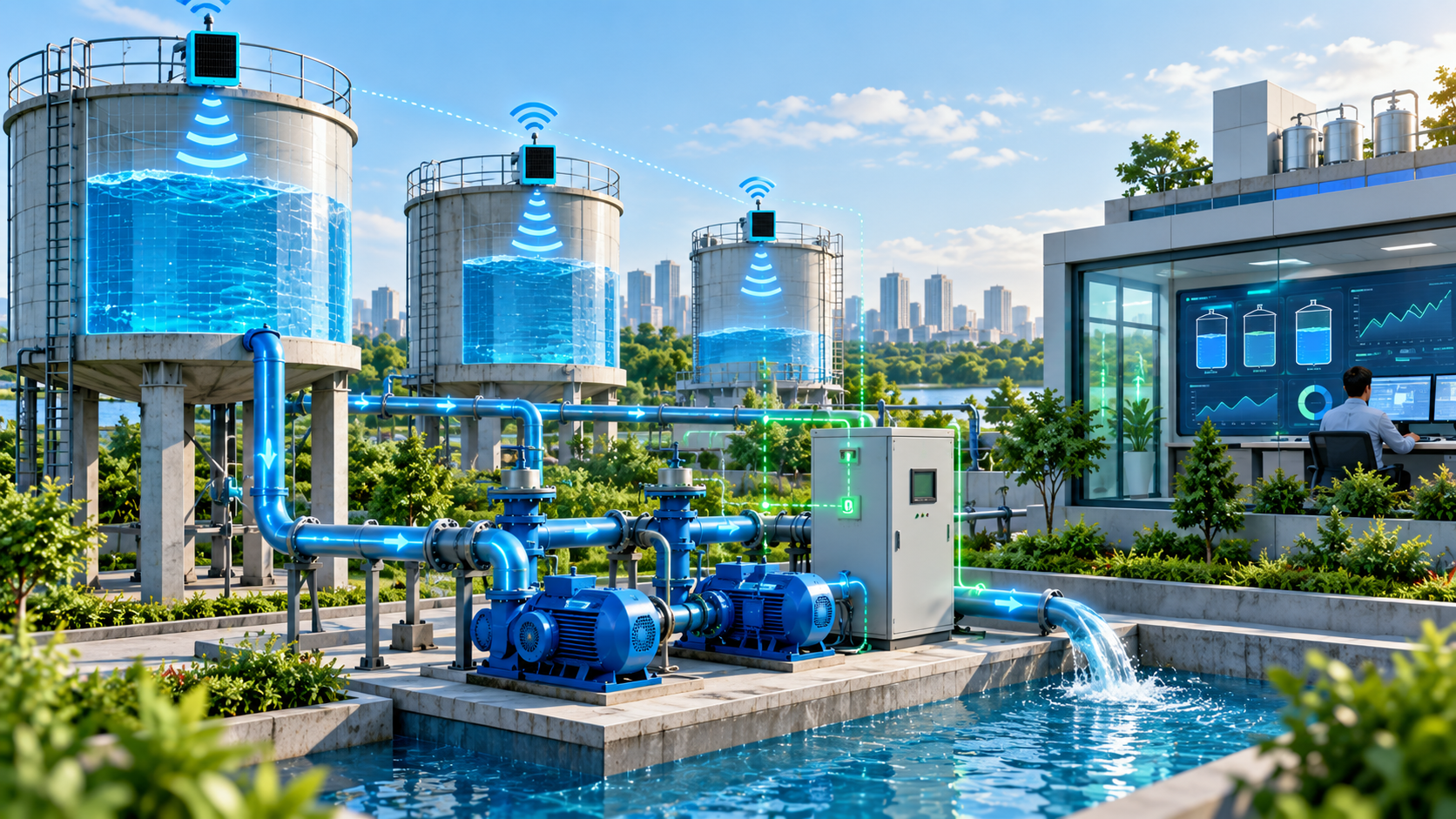
Water level monitoring has evolved significantly over the years. From basic manual inspections and mechanical float sensors to advanced radar-based systems connected to cloud platforms, technology has transformed the way industries, businesses, and residential facilities manage water resources.
Today, accurate data, remote access, and automation are becoming essential for efficient water management. This evolution reflects the growing need for reliable monitoring solutions that can reduce water wastage, improve operational efficiency, and support smarter decision-making.
The Early Days of Water Level Monitoring
Traditional water level monitoring methods relied heavily on manual observation. Facility operators would physically inspect tanks, check water levels, and operate pumps when required.
As water systems became larger and more complex, mechanical float sensors were introduced. These devices used physical movement to detect water levels and trigger basic pump operations.
While float sensors were simple and affordable, they had several limitations:
-
Moving parts could wear out over time.
-
Mechanical components required periodic maintenance.
-
Accuracy could be affected by installation conditions.
-
Remote monitoring was not possible.
-
Data could not easily be stored or analyzed.
These challenges created the need for more advanced sensing technologies.
The Rise of Electronic Water Level Sensors
Electronic sensors improved water level monitoring by replacing mechanical components with electrical measurement systems. Technologies such as ultrasonic sensors and pressure-based sensors offered better accuracy and automation capabilities.
However, these sensors could still face limitations depending on the application. Temperature changes, condensation, water quality, and physical contact with the liquid could affect performance.
As industries demanded more reliable and maintenance-friendly solutions, radar technology began gaining attention.
The Introduction of Radar Level Technology
Radar level sensors use electromagnetic waves to measure the distance between the sensor and the water surface. Because the measurement is non-contact, the sensor does not need to be immersed in water.
This provides several advantages:
-
Reduced mechanical wear
-
Minimal maintenance requirements
-
Reliable measurement in challenging environments
-
Better suitability for remote installations
-
Continuous and accurate level monitoring
Radar technology has become especially useful for industrial water tanks, underground reservoirs, commercial buildings, and large-scale water infrastructure.
Why Radar Level Sensor Installation Matters
The performance of a radar-based monitoring system depends not only on the sensor itself but also on correct Radar level sensor installation.
Proper installation ensures that the radar signal reaches the water surface without unnecessary interference. The sensor should be positioned away from obstructions such as pipes, ladders, tank walls, and other structures that may reflect the signal.
Important installation factors include:
-
Correct mounting height and position
-
Clear line of sight to the water surface
-
Secure installation to prevent vibration
-
Suitable configuration for tank dimensions
-
Protected power and communication connections
A well-planned installation helps ensure stable readings and improves the reliability of the entire monitoring system.
From Local Monitoring to Smart Water Monitoring
The next major development in water management was the integration of sensors with digital communication systems. Instead of checking individual tanks manually, operators could receive information electronically.
This created the foundation for smart water monitoring, where real-time data can be collected, analyzed, and used to improve water management decisions.
Smart monitoring systems can provide:
-
Live water level visibility
-
Low-level and overflow alerts
-
Pump status monitoring
-
Historical consumption data
-
Remote access to multiple water assets
-
Improved operational planning
This shift allows organizations to move from reactive maintenance toward proactive water management.
The Role of Cloud-Enabled Platforms
Modern water monitoring systems are increasingly connected to Cloud-Enabled Platforms. These platforms collect data from connected sensors and make it accessible through web or mobile dashboards.
With cloud-based monitoring, facility managers can view water levels from different locations without being physically present at the tank.
Cloud-enabled systems also support:
-
Centralized monitoring
-
Automated alerts and notifications
-
Data storage and historical analysis
-
Multi-site management
-
Performance tracking
-
Integration with automation systems
This makes water infrastructure more visible, connected, and easier to manage.
Comparing Traditional and Modern Water Monitoring
|
Feature |
Float Sensors |
Radar Technology |
|
Measurement method |
Mechanical contact |
Non-contact radar waves |
|
Moving parts |
Yes |
No |
|
Maintenance |
Higher |
Lower |
|
Remote monitoring |
Limited |
Supported through IoT |
|
Data analytics |
Minimal |
Advanced |
|
Automation capability |
Basic |
Highly flexible |
|
Suitability for large systems |
Limited |
Excellent |
The comparison shows why radar technology is becoming a preferred choice for modern water management applications.
The Future of Water Level Monitoring
The future of water monitoring lies in combining accurate sensors with intelligent software and automation. Radar sensors can provide reliable measurements, while IoT networks and Cloud-Enabled Platforms transform that data into actionable insights.
As smart water monitoring continues to expand, organizations can benefit from improved efficiency, reduced maintenance, better resource utilization, and greater operational control.
Conclusion
The evolution from float sensors to radar technology represents a major transformation in water level monitoring. Traditional systems provided basic level detection, while modern radar-based solutions offer accurate, non-contact measurement and seamless digital connectivity.
With proper Radar level sensor installation, advanced smart water monitoring, and integrated Cloud-Enabled Platforms, water management is becoming more efficient, intelligent, and future-ready.
References
- Digital Agency
- Literie
- Location de voitures
- Restaurant
- Restaurant
- Mode
- Mode
- Information
- Marketing
- Tourisme
- Développement
- Découverte
- Législation
- Gastronomie
- Pâtisserie
- Event
- Art
- Causes
- Crafts
- Dance
- Drinks
- Film
- Fitness
- Food
- Games
- Gardening
- Health
- Home
- Literature
- Music
- Networking
- Other
- Party
- Religion
- Shopping
- Sports
- Theater
- Wellness
 English
 Indian
 French
 Arabic
 Spanish
 Portuguese
 Deutsch
 Turkish
 Dutch
Dutch
 Italiano
 Russian
 Romaian
 Portuguese (Brazil)
 Greek
Greek
