


3D Printer Resin – Complete Guide to Types, Uses, Benefits & Buying Tips
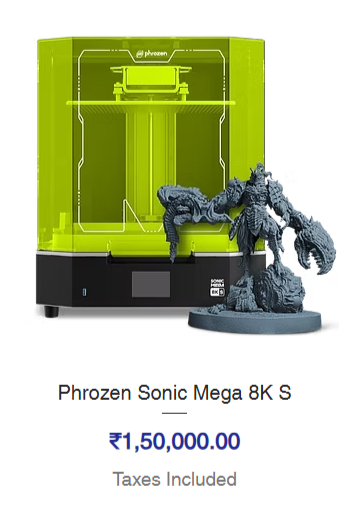
Resin-based 3D printing has become a popular choice for applications that require fine details, smooth surfaces, and accurate models. From product designers and engineers to jewellers, educators, hobbyists, and businesses, many users rely on resin printing to create detailed physical objects from digital designs.
At the centre of this printing process is 3D printer resin. Choosing the right resin is just as important as selecting the right printer because the material directly affects the appearance, strength, flexibility, durability, and performance of the finished part.
With different types of resin available for different applications, understanding their properties can help users achieve better printing results and avoid selecting a material that does not match their requirements.
This guide explains what 3D printer resin is, the different types available, how it is used, and what to consider before purchasing it.
What Is 3D Printer Resin?
3D printer resin is a liquid photopolymer material used in resin-based 3D printing technologies.
During the printing process, controlled exposure to light causes selected areas of the liquid resin to cure and become solid. The printer repeats this process layer by layer until the complete model is produced.
Unlike traditional thermoplastic printing, resin printing starts with a liquid material rather than a solid filament.
This allows resin printers to create highly detailed models with smooth surfaces and fine features.
How Does 3D Printer Resin Work?
The basic resin printing workflow involves several stages.
1. Prepare the 3D Model
A digital model is prepared using 3D modelling software or downloaded from a suitable source.
2. Slice the Model
Slicing software converts the model into individual layers that the printer can reproduce.
3. Add Resin
The appropriate resin is placed into the printer's resin vat.
4. Print the Model
The printer selectively cures the resin layer by layer to create the object.
5. Remove the Print
Once printing is complete, the model is carefully removed from the build platform.
6. Wash the Model
The printed part is cleaned to remove excess uncured resin.
7. Cure the Model
The model is exposed to appropriate curing conditions to achieve its required final properties.
8. Finish the Model
Supports can be removed and additional finishing can be performed if required.
Understanding this workflow is important because resin printing involves more than the printing stage itself.
Types of 3D Printer Resin
Different applications require different resin properties.
Standard Resin
Standard resin is commonly used for general-purpose models and prototypes.
It can be suitable when users primarily require good surface quality and visual detail.
Typical applications include:
-
Decorative models
-
Figurines
-
Concept models
-
General prototypes
-
Demonstration models
Tough Resin
Tough resins are designed for applications where improved resistance to impact or mechanical stress is required.
They may be useful for functional prototypes and components that need to withstand more handling than standard models.
Flexible Resin
Flexible resin is designed to produce parts with greater flexibility.
Depending on the specific material, applications may include:
-
Flexible prototypes
-
Soft components
-
Gaskets
-
Grips
-
Custom models
High-Detail Resin
High-detail materials are intended for applications where very fine features are important.
They can be useful for:
-
Miniatures
-
Jewellery models
-
Intricate prototypes
-
Detailed sculptures
-
Small components
Castable Resin
Castable materials can be used in specialised workflows such as jewellery and investment casting.
These materials require appropriate printing, burnout, and casting procedures, so users should follow the manufacturer's recommended process carefully.
Engineering Resin
Engineering-focused materials are developed for applications that require specific mechanical or functional properties.
Depending on the material, these can include improved strength, toughness, heat resistance, or other specialised characteristics.
Benefits of Using 3D Printer Resin
Resin-based printing offers several advantages.
High Level of Detail
One of the biggest benefits is the ability to reproduce small and intricate features.
This makes resin printing particularly useful for detailed models.
Smooth Surface Finish
Resin printing can produce relatively smooth surfaces compared with many other desktop printing processes.
This can reduce the amount of finishing required for certain applications.
Complex Geometries
Resin printing can be useful for producing models with intricate shapes and fine structures.
Wide Range of Applications
Different resin formulations allow users to select materials based on specific requirements.
Excellent Prototyping Potential
Designers can produce detailed physical models for evaluating form, appearance, fit, and design concepts.
Applications of 3D Printer Resin
The versatility of resin materials makes them useful across several industries.
Jewellery
Jewellery designers can use specialised resins to create highly detailed patterns and models.
Product Design
Designers can produce prototypes to evaluate the appearance and dimensions of new products.
Engineering
Engineers can use suitable resin materials for detailed prototypes and certain functional applications.
Miniatures
Resin printing is widely suited to detailed miniature models and figurines.
Education
Schools, colleges, and training centres can use resin printing to create detailed models for educational and demonstration purposes.
Medical and Dental Applications
Specialised materials can be used in certain professional medical and dental workflows when the appropriate certified equipment, material, and process are used.
How to Choose the Right Resin
Choosing the correct 3D printer resin depends on the intended application.
Ask yourself the following questions before buying.
Do I need high detail?
If the model contains very small features, select a resin designed for high-detail printing.
Does the part need strength?
For functional prototypes, a tougher or engineering-oriented resin may be more appropriate.
Does the part need flexibility?
Flexible materials should be considered when the finished object needs to bend or deform.
Is the model for casting?
If the printed pattern will be used for casting, select a material specifically designed for that workflow.
Is appearance important?
For presentation models, colour, surface finish, and visual quality may be major considerations.
Resin Compatibility Matters
Not every resin is suitable for every printer.
Before purchasing 3D printer resin, confirm that the material is compatible with your specific machine and printing technology.
Important considerations include:
-
Printer wavelength
-
Exposure requirements
-
Recommended settings
-
Resin viscosity
-
Build-platform compatibility
-
Washing requirements
-
Curing requirements
Following the manufacturer's recommended settings can help improve print consistency.
Storage of 3D Printer Resin
Proper storage is important for maintaining material quality.
Resin should generally be stored according to the manufacturer's instructions and protected from unsuitable environmental conditions.
Users should also avoid unnecessary exposure to light and keep containers properly closed when the material is not being used.
Always refer to the product's technical and safety documentation for specific storage requirements.
Safety When Handling Resin
Liquid resin should be handled responsibly.
Users should follow the manufacturer's safety instructions and use suitable protective equipment when handling uncured material.
Important practices can include:
-
Wearing appropriate gloves
-
Avoiding direct skin contact
-
Keeping the workspace clean
-
Following ventilation recommendations
-
Cleaning spills promptly
-
Storing resin safely
-
Handling waste responsibly
Users should also read the safety documentation supplied with their specific resin.
Common Problems When Using Resin
Even high-quality resin can produce poor results if the printing settings or workflow are incorrect.
Common issues include:
Failed prints
Possible causes can include incorrect exposure, insufficient supports, unsuitable orientation, or inadequate build-platform preparation.
Brittle models
Some standard resins may not be appropriate for parts that experience significant mechanical stress.
Sticky surfaces
Incomplete washing or curing can leave residual material on the model.
Loss of detail
Incorrect exposure settings or inappropriate material selection can affect fine features.
Warping
Poor orientation, support design, curing conditions, or other workflow issues can contribute to deformation.
Careful calibration and following recommended settings can help minimise these problems.
How to Get Better Results
To achieve consistent results with 3D printer resin, follow a structured workflow.
-
Use compatible materials.
-
Follow recommended exposure settings.
-
Orient models carefully.
-
Add appropriate supports.
-
Keep the build platform clean.
-
Store resin correctly.
-
Wash printed parts thoroughly.
-
Cure models according to material recommendations.
-
Keep the printer clean.
-
Record successful settings for future projects.
Testing a small model before beginning a large or important print can also help identify potential problems.
Why Material Quality Matters
The quality and suitability of the resin can have a major effect on the finished model.
A suitable material can provide:
-
Better detail
-
More consistent results
-
Appropriate mechanical properties
-
Better surface appearance
-
More predictable post-processing
Instead of selecting material solely based on price, consider whether its properties match the intended application.
Buying 3D Printer Resin
When purchasing resin, consider more than the product name.
Check:
-
Material type
-
Printer compatibility
-
Recommended exposure settings
-
Intended application
-
Mechanical properties
-
Colour
-
Storage requirements
-
Washing requirements
-
Curing requirements
-
Safety information
If you are unsure which material to select, consult an experienced 3D printing supplier.
Why Choose Hydrotech for 3D Printing Solutions?
Selecting the correct printer and material combination can sometimes be challenging, especially for new users.
Hydrotech helps customers explore 3D printing solutions according to their applications and technical requirements.
The right combination of machine, resin, settings, and post-processing equipment can improve the overall printing workflow.
Whether you are working on product prototypes, engineering models, jewellery designs, educational projects, or detailed models, understanding your material requirements is an important step toward successful 3D printing.
Conclusion
3D printer resin plays a critical role in resin-based additive manufacturing. Different formulations can provide different levels of detail, strength, flexibility, durability, surface quality, and functional performance.
The right resin depends on what you want to produce.
Before purchasing, consider your printer compatibility, application, required properties, post-processing workflow, storage requirements, and safety procedures.
By selecting the right material and following recommended printing and post-processing practices, users can achieve detailed, consistent, and high-quality results.
For businesses, designers, engineers, educators, and hobbyists, understanding resin materials is an essential part of building an effective resin 3D printing workflow.
Hydrotech can help customers evaluate suitable 3D printing solutions and material requirements based on their specific applications.
Frequently Asked Questions
1. What is 3D printer resin?
3D printer resin is a liquid photopolymer material used in resin-based 3D printing. It is selectively cured using light to create solid objects layer by layer.
2. What is 3D printer resin used for?
It can be used for detailed prototypes, miniatures, jewellery models, product designs, engineering models, educational objects, and various specialised applications.
3. Is all 3D printer resin the same?
No. Different resins are designed to provide different properties, including detail, toughness, flexibility, strength, heat resistance, and casting suitability.
4. How do I choose the right resin?
Choose based on your application and required properties. Consider detail, strength, flexibility, appearance, casting requirements, printer compatibility, and post-processing.
5. Can any resin be used in any 3D printer?
No. Resin compatibility depends on the printer technology, wavelength, settings, and manufacturer's recommendations.
6. Does resin require post-processing?
Yes. Resin prints generally require washing and curing after printing, followed by support removal and additional finishing when necessary.
7. How should 3D printer resin be stored?
Store resin according to the manufacturer's instructions, keeping it properly sealed and protected from unsuitable environmental conditions and unnecessary light exposure.
8. Is 3D printer resin safe to handle?
Uncured resin should be handled carefully. Users should follow the manufacturer's safety instructions, use suitable protective equipment, and follow appropriate handling and waste-disposal procedures.
9. Can resin be used for functional prototypes?
Yes. Certain engineering and tough resin formulations are designed for functional or mechanically demanding prototype applications.
10. Can Hydrotech help me choose the right resin?
Hydrotech can help customers evaluate suitable 3D printing solutions and material options according to their application and technical requirements.
For more details please visit the website - https://www.hydrotech3dchennai.com/
Call us: +91-9445390912
Email: hydrotech3dps@gmail
Address: Valasaravakkam, Chennai 600087
- Digital Agency
- Literie
- Location de voitures
- Restaurant
- Restaurant
- Mode
- Mode
- Information
- Marketing
- Tourisme
- Développement
- Découverte
- Législation
- Gastronomie
- Pâtisserie
- Мероприятие
- Art
- Causes
- Crafts
- Dance
- Drinks
- Film
- Fitness
- Food
- Игры
- Gardening
- Health
- Главная
- Literature
- Music
- Networking
- Другое
- Party
- Religion
- Shopping
- Sports
- Theater
- Wellness
 Russian
 Indian
 English
 French
 Arabic
 Spanish
 Portuguese
 Deutsch
 Turkish
 Dutch
Dutch
 Italiano
 Romaian
 Portuguese (Brazil)
 Greek
Greek
