


How to Pair a Radiant Cut Diamond With Bezel Set With a Wedding Band
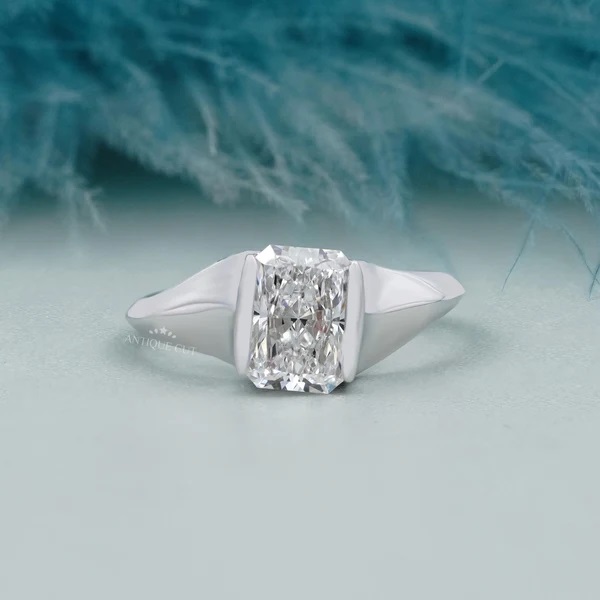
Choosing an engagement ring is often the first step in creating a bridal set, but the wedding band eventually becomes an equally important part of the overall look. When the engagement ring features a radiant cut diamond surrounded by a bezel setting, selecting a complementary band can require a little more consideration.
The radiant cut already has a distinctive outline. Its straight sides and trimmed corners give it a geometric character, while its brilliant-style faceting creates plenty of sparkle. A bezel setting adds another layer to the design by surrounding the stone with a smooth metal rim. Together, these features create a clean and contemporary appearance.
The wedding band should enhance those qualities rather than compete with them. Fortunately, there are several approaches that can work beautifully. A slim, understated band can keep attention on the center stone, while a more substantial or diamond-set band can create additional contrast. The right choice depends on the shape of the engagement ring, the wearer's personal style, and how closely the two rings are expected to sit.
Start With the Shape and Proportions of the Engagement Ring
Before choosing a wedding band, look carefully at the proportions of the engagement ring. The size and orientation of the radiant diamond can influence which type of band will look most balanced. However, if a seamless stack is important, the profile should be considered before purchasing the band.
An elongated radiant cut tends to create a graceful vertical appearance when worn traditionally on the finger. A narrow wedding band can emphasize this elegance without making the overall combination appear heavy. If the center stone is closer to a square shape, a slightly wider band may provide a stronger visual balance.
The bezel itself also matters. Because metal surrounds the diamond, the engagement ring may have a broader visual footprint than a similarly sized prong-set stone. This means a wedding band that looks perfect on its own may appear too delicate or too substantial when placed next to the engagement ring.
One useful approach is to compare the widths of both rings rather than considering each piece separately. A very thin band beside a wide bezel can create a dramatic contrast, but it may not be the desired look for everyone. A wedding band with a closer width can produce a more cohesive appearance.
Profile architecture directly dictates how an engagement piece aligns with neighboring jewelry. When buyers browse radiant cut diamond with bezel set options, examining low-profile galleries versus raised under-structures helps clarify whether a flush, gapless stack or a deliberate, negative-space gap creates their ideal layered aesthetic.
Choose a Wedding Band That Complements the Bezel
Once the proportions are understood, the next step is deciding what type of wedding band will complement the bezel. A plain metal band is one of the simplest options. It allows the engagement ring to remain the main attraction while introducing a clean line beside it. This approach works particularly well for someone who prefers understated jewelry.
The metal can either match the engagement ring or intentionally contrast with it. Matching metals create a unified appearance and make the two rings feel like part of the same set. Mixing metals, on the other hand, can add visual interest. For example, a warm-toned wedding band beside a cooler-toned bezel can create a subtle distinction between the two pieces.
Diamond-set bands offer another possibility. A band featuring small diamonds can echo the brilliance of the radiant center stone without introducing another large focal point. This can make the overall stack feel more decorative while preserving the importance of the engagement ring.
Curved and contoured bands deserve special consideration. These bands are designed to follow the shape of an engagement ring and can sometimes accommodate settings that prevent a straight band from sitting closely beside the center stone. Depending on the bezel design, a curved band may create a more connected appearance.
For a more contemporary appearance, a geometric wedding band can work especially well. Since the radiant cut and bezel already have structured lines, a band with clean edges or an unusual silhouette can reinforce that modern aesthetic. There is no single correct choice. The key is to decide whether the wedding band should blend into the engagement ring or provide a deliberate contrast.
Browse Radiant Cut Diamond With Bezel Set Options Before Finalizing Your Band
When comparing designs, pay attention to more than the face-up appearance of the ring. Look at the side profile as well. A photograph from above may make two rings appear compatible, but their lower profiles could prevent them from sitting together comfortably.
It is also useful to consider how you normally wear jewelry. If you prefer your rings to remain closely aligned throughout the day, a band designed specifically to accommodate the engagement ring may be preferable. If you enjoy a little separation between the pieces, a straight band may provide exactly the look you want.
The width of the wedding band should be evaluated in relation to the center stone as well. A very fine band can give an elongated radiant diamond an airy appearance, while a more substantial band can create a bolder, fashion-forward stack.
For those who enjoy a classic appearance, a simple polished band is difficult to overlook. Its simplicity can actually make the bezel and radiant diamond look more prominent. For someone who likes additional sparkle, a pavé or channel-style band can introduce texture without taking attention completely away from the center.
Think About Metal, Comfort, and Everyday Wear
Visual coordination is important, but comfort should not be ignored. An engagement ring and wedding band are likely to be worn together frequently, so the combination should feel natural on the hand. Matching metals is the most straightforward approach. A white-metal engagement ring with a similar white-metal wedding band produces a continuous appearance, while yellow or rose gold can bring warmth to the design.
Mixed-metal combinations can also be attractive when they are intentional. Instead of trying to make two different metals look identical, use the contrast as part of the styling. The bezel can become the connecting element between the center diamond and the wedding band. A polished engagement ring paired with a heavily textured band can create an interesting contrast, whereas two highly detailed pieces may compete visually.
Comfort also depends on the edges of the bands. A wedding ring with a smooth interior and carefully finished edges may be easier to wear alongside a bezel-set engagement ring. Since the two rings can move against one another throughout the day, paying attention to their construction can make a difference.
Think about the ring stack as a whole rather than judging the pieces independently. Place the engagement ring and prospective wedding band together and view them from different angles. Check whether one ring visually overwhelms the other, whether the edges meet comfortably, and whether the combination still looks appealing when the hand is relaxed.
Create a Bridal Stack That Feels Personal
The best engagement ring and wedding band combinations are not necessarily the ones that follow the latest trend. They are the ones that reflect the person wearing them. A bezel-set radiant design already has a strong identity. It does not need an elaborate wedding band to make an impression. A simple band can highlight its clean geometry, while a diamond-accented band can make the entire stack feel more glamorous.
Consider what you want to notice first when looking at your hand. If the answer is the center diamond, choose a band that supports rather than dominates it. If you enjoy the appearance of a layered jewelry stack, you can experiment with different widths, textures, and stone details. The wedding band can also be an opportunity to introduce something different.
Rather than searching for a combination that looks perfect according to someone else's rules, focus on proportion and personal preference. A bridal set should feel comfortable enough for everyday life while still carrying the significance associated with the occasion.
Antiquecut radiant cut diamond selection can be a useful starting point for understanding the different possibilities available with this distinctive diamond shape. Once the center stone and bezel profile have been considered, finding a wedding band becomes much less about guessing and more about creating a deliberate combination.
Conclusion
Pairing a radiant cut diamond in a bezel setting with a wedding band comes down to finding harmony between the center stone, metal frame, and band. The geometric character of the radiant cut provides a strong foundation, while the bezel adds a clean outline that can influence how the wedding band sits and appears.
Start by considering the proportions and profile of the engagement ring. From there, decide whether you prefer a plain band, a diamond-accented style, a contrasting metal, or a curved design that follows the shape of the setting. Width, texture, comfort, and everyday wear should all be part of the decision.
There is no universal formula for the perfect bridal combination. A thoughtfully chosen wedding band can either blend seamlessly with the engagement ring or provide an intentional contrast. What matters most is that both pieces work comfortably together and reflect the wearer's individual taste.
With the right balance of shape, scale, metal, and detail, the engagement ring and wedding band can become a cohesive pair—one that looks considered from every angle and remains meaningful long after the wedding day.
- Digital Agency
- Literie
- Location de voitures
- Restaurant
- Restaurant
- Mode
- Mode
- Information
- Marketing
- Tourisme
- Développement
- Découverte
- Législation
- Gastronomie
- Pâtisserie
- Event
- Art
- Causes
- Crafts
- Dance
- Drinks
- Film
- Fitness
- Food
- Games
- Gardening
- Health
- Home
- Literature
- Music
- Networking
- Other
- Party
- Religion
- Shopping
- Sports
- Theater
- Wellness
 English
 Indian
 French
 Arabic
 Spanish
 Portuguese
 Deutsch
 Turkish
 Dutch
Dutch
 Italiano
 Russian
 Romaian
 Portuguese (Brazil)
 Greek
Greek
