


3D Printer Cost in India: Complete Guide to Pricing, Features & Buying the Right Machine
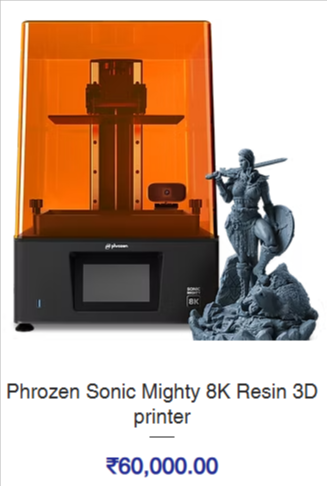
The 3D printer cost in India can vary widely depending on the printing technology, build volume, print quality, brand, features and intended application. From affordable desktop machines for beginners to advanced professional systems for engineering and manufacturing, there are options for almost every requirement.
For a first-time buyer, however, looking only at the purchase price can be misleading. The real cost of owning a 3D printer also includes materials, maintenance, accessories, electricity, replacement parts and technical support.
This guide explains the major factors that influence 3D printer pricing and how to choose a machine that provides the right value for your application.
What Determines 3D Printer Cost?
There is no single price that applies to every 3D printer. Two machines may look similar but have significantly different prices because of their hardware, automation, materials compatibility and intended use.
The main factors include:
- Printing technology
- Build volume
- Print resolution
- Printing speed
- Material compatibility
- Automation features
- Brand
- Software
- Warranty
- After-sales support
Understanding these factors can help you avoid paying for features you do not actually need.
Entry-Level 3D Printers
Entry-level machines are generally designed for beginners, students, hobbyists and users who want to explore additive manufacturing.
These printers can be suitable for:
- Educational projects
- Hobby models
- Basic prototypes
- Decorative objects
- Small functional parts
An affordable printer can be a good starting point if your projects primarily involve materials such as PLA and you do not require a very large build volume.
However, buyers should not select a machine purely because it has the lowest price.
A slightly more expensive model may offer better calibration, reliability and ease of use, potentially making it a better long-term investment.
Mid-Range 3D Printers
Mid-range machines generally provide more features and improved performance compared with basic entry-level models.
Depending on the printer, you may find features such as:
- Automatic bed levelling
- Larger build volume
- Faster printing
- Better temperature control
- Improved motion systems
- Touchscreen interfaces
- Network connectivity
- Enclosed printing areas
These printers can be useful for serious hobbyists, educational institutions, designers and small businesses.
Professional 3D Printers
Professional systems are designed for users who need more consistent results, advanced materials or higher production requirements.
The 3D printer cost at this level can be substantially higher because professional equipment may include advanced hardware, specialised software, improved temperature management and stronger technical support.
Professional applications can include:
- Engineering prototypes
- Manufacturing aids
- Functional components
- Product development
- Architectural models
- Industrial design
- Small-batch production
For businesses, the purchase price should be considered alongside productivity and reliability.
FDM vs Resin: How Technology Affects Cost
The printing technology you choose has a major influence on your budget.
FDM 3D Printers
FDM printers use thermoplastic filament.
They are popular for:
- Large parts
- Functional prototypes
- Mechanical components
- Educational projects
- General-purpose printing
The material workflow is relatively straightforward, and filament is available in a wide range of materials.
Resin 3D Printers
Resin printers use liquid photopolymer materials and are particularly useful for detailed models.
They are often used for:
- Miniatures
- Jewellery models
- Figurines
- Detailed prototypes
- Dental applications
However, resin printing requires additional post-processing equipment and consumables.
Therefore, when comparing prices, remember to consider the complete printing setup rather than the printer alone.
Don't Forget the Cost of Filament or Resin
One of the most important ongoing expenses is printing material.
FDM users need filament, while resin users need liquid photopolymer resin.
Material consumption depends on:
- Object size
- Infill percentage
- Wall thickness
- Support structures
- Number of failed prints
- Material type
A printer that appears inexpensive initially may become more expensive to operate if consumables are difficult to source or particularly costly.
Accessories Add to the Total Budget
New buyers sometimes budget only for the printer.
Depending on the technology and application, additional equipment may include:
For FDM Printing
- Spare nozzles
- Build plates
- Filament storage
- Drying equipment
- Replacement components
- Calibration tools
For Resin Printing
- Washing equipment
- UV curing equipment
- Cleaning supplies
- Appropriate protective equipment
- Resin storage
- Replacement film or other consumables
Including these expenses in your initial budget gives you a more realistic picture of the investment.
Is a More Expensive 3D Printer Better?
Not necessarily.
A more expensive machine may offer advanced capabilities, but those features may not be useful for your particular application.
For example, a hobbyist printing simple PLA models may not need an industrial-grade printer.
On the other hand, a business producing engineering components may benefit from investing in a professional machine with greater reliability and material compatibility.
The right question is therefore not:
“What is the most expensive printer I can buy?”
Instead, ask:
“What capabilities do I actually need?”
How to Choose According to Your Application
For Students
Look for a reliable, easy-to-use printer with accessible materials and straightforward software.
For Hobbyists
Consider build volume, print quality, ease of maintenance and the range of materials you want to experiment with.
For Designers
Print resolution, surface quality and repeatability may be particularly important.
For Engineers
Material compatibility, dimensional accuracy, reliability and temperature capabilities should receive more attention.
For Businesses
Production capacity, maintenance, technical support and total operating costs can be more important than the initial purchase price.
Brand and Model Selection
Brand reputation can also influence pricing.
Established manufacturers may invest heavily in:
- Research and development
- Software
- Quality control
- Customer support
- Spare parts
- Product updates
However, brand alone should not determine your decision.
Compare the actual specifications and support available for the model you are considering.
Hydrotech 3D currently lists multiple 3D printing brands and solutions, including Bambu Lab, Elegoo and Phrozen, along with printer support services. (hydrotech3dchennai.com)
Why After-Sales Support Matters
A 3D printer is a piece of equipment that may eventually require maintenance or replacement components.
Before purchasing, find out:
- Who provides technical support?
- Are spare parts available?
- Are consumables readily available?
- What warranty is included?
- Is installation assistance available?
- Can troubleshooting support be accessed locally?
For Indian customers, local support can be especially valuable because it can reduce downtime and simplify maintenance.
How to Calculate the Total Cost of Ownership
Instead of considering only the purchase price, think about the total cost over the period you expect to use the printer.
A simple calculation can include:
Printer price + materials + accessories + maintenance + replacement parts + support = approximate ownership cost
For businesses, you can go one step further and calculate the cost per successful printed part.
This can help you compare different printers more realistically.
Buying a 3D Printer for a Business
Businesses should consider return on investment.
Suppose a company currently outsources prototypes. Bringing some prototyping work in-house with a 3D printer could potentially reduce turnaround times and outsourcing expenses.
The machine may also allow designers and engineers to test several iterations more quickly.
However, the calculation should include operator time, materials, maintenance and failed prints.
Common Mistakes When Comparing Prices
Looking Only at the Initial Price
The cheapest printer may not have the features or reliability you require.
Ignoring Consumables
Material costs can become significant if you print frequently.
Buying Too Much Capacity
A huge build volume is unnecessary if you only produce small parts.
Ignoring Support
Technical support and spare parts can affect long-term usability.
Choosing Based Only on Maximum Speed
Real-world print quality and reliability are also important.
Final Thoughts
The 3D printer cost in India depends heavily on the technology, specifications, brand and application.
Entry-level machines can be suitable for beginners and educational users, while professional systems can provide advanced capabilities for engineering and manufacturing.
Before buying, consider the complete investment—including materials, accessories, maintenance and support.
The best printer is not necessarily the cheapest or most expensive option. It is the machine that provides the capabilities you need at a sustainable overall cost.
For Indian buyers, working with a specialist supplier can also make it easier to compare technologies, understand material requirements and arrange technical support.
By focusing on your actual application and total ownership cost, you can make a more informed 3D printing investment.
Frequently Asked Questions
1. How much does a 3D printer cost?
The cost varies according to technology, brand, build volume and features. Entry-level, enthusiast and professional machines can occupy very different price ranges.
2. What is included in the price of a 3D printer?
The printer itself is usually the main component, but some models may include accessories or starter materials. Always check the exact package before purchasing.
3. Is FDM cheaper than resin printing?
The overall cost depends on the printer, materials and workflow. FDM generally has a simpler material and post-processing workflow, while resin printing requires additional washing and curing steps.
4. What other expenses should I consider?
Consider filament or resin, spare parts, build surfaces, maintenance equipment and any additional post-processing equipment.
5. Is an expensive 3D printer worth it?
It can be worthwhile when you need advanced features, higher reliability, specialised materials or greater production capacity. For basic applications, a simpler machine may provide better value.
6. Should businesses buy or outsource 3D printing?
It depends on printing volume, turnaround requirements and operating costs. Businesses with frequent prototyping needs may benefit from bringing some work in-house.
7. Where can I get help choosing a 3D printer?
A specialist 3D printing supplier can help match the printer, materials and accessories to your intended application and provide information about available support.
For more details please visit the website - https://www.hydrotech3dchennai.com/
Call us: +91-9445390912
Email: hydrotech3dps@gmail
Address: Valasaravakkam, Chennai 600087
- Digital Agency
- Literie
- Location de voitures
- Restaurant
- Restaurant
- Mode
- Mode
- Information
- Marketing
- Tourisme
- Développement
- Découverte
- Législation
- Gastronomie
- Pâtisserie
- Evento
- Art
- Causes
- Crafts
- Dance
- Drinks
- Film
- Fitness
- Food
- Jogos
- Gardening
- Health
- Início
- Literature
- Music
- Networking
- Outro
- Party
- Religion
- Shopping
- Sports
- Theater
- Wellness
 Portuguese
 Indian
 English
 French
 Arabic
 Spanish
 Deutsch
 Turkish
 Dutch
Dutch
 Italiano
 Russian
 Romaian
 Portuguese (Brazil)
 Greek
Greek
