


Insertional Achilles Tendinopathy Treatment and Achilles Tendon Rupture Treatment: A Complete Guide
The Achilles tendon is one of the strongest tendons in the body, connecting the calf muscles to the heel bone and helping us walk, run and push off the ground. However, repeated stress, sporting activity, age-related changes and sudden injuries can cause significant Achilles problems. Two conditions that require different approaches are insertional Achilles tendinopathy and an Achilles tendon rupture.
If you are looking for insertional Achilles tendinopathy treatment or Achilles tendon rupture treatment, understanding the difference between these conditions is important. Although both affect the Achilles tendon, their symptoms, causes and treatment pathways can be quite different.
For persistent foot and ankle symptoms, assessment by a specialist can help establish an accurate diagnosis and determine the most appropriate treatment.
What Is Insertional Achilles Tendinopathy?
Insertional Achilles tendinopathy affects the lower part of the Achilles tendon where it attaches to the heel bone. Unlike some other forms of Achilles tendinopathy, the pain is concentrated close to the back of the heel.
Patients may experience pain, stiffness or tenderness around the tendon attachment. Symptoms can become more noticeable during activities such as walking uphill, running, jumping or climbing stairs. Some people may also notice discomfort when wearing shoes that press against the back of the heel.
Insertional Achilles problems can develop gradually. Repeated loading of the tendon may contribute to symptoms, while factors such as activity levels, biomechanics and footwear may also play a role.
Insertional Achilles Tendinopathy Treatment
The appropriate insertional Achilles tendinopathy treatment depends on the severity and duration of symptoms, the condition of the tendon and the individual's lifestyle.
Non-surgical treatment is usually considered initially. This may involve modifying activities that increase pain while maintaining suitable movement and exercise where possible.
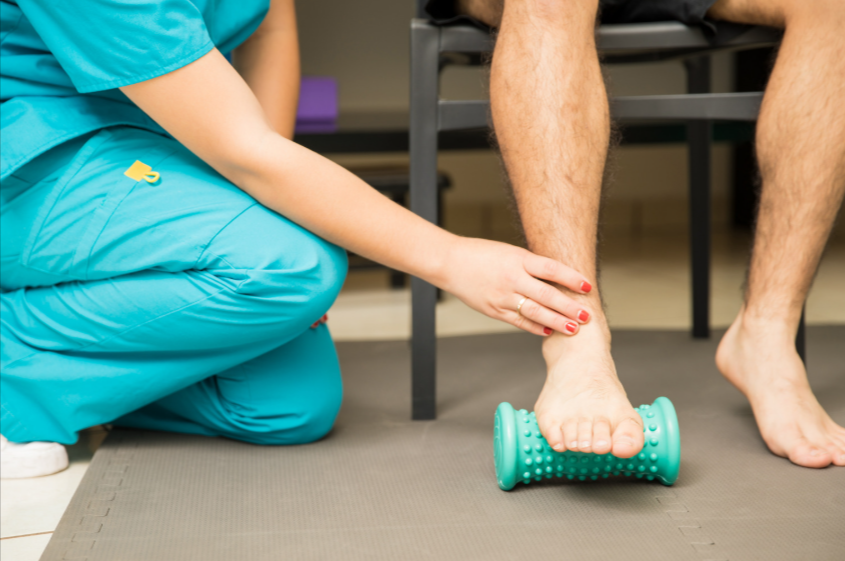
A structured rehabilitation programme can be an important part of recovery. Physiotherapy may include progressive strengthening and exercises designed specifically for the individual's condition.
However, insertional Achilles tendinopathy requires particular consideration when selecting exercises. Some exercises commonly used for other forms of Achilles tendinopathy may place excessive compression on the tendon insertion and may not be suitable for everyone.
The Royal National Orthopaedic Hospital recommends an individualised approach and notes that rehabilitation for Achilles tendinopathy can take several months.
Footwear and Activity Modification
Appropriate footwear can sometimes help reduce irritation around the heel. Depending on the individual's symptoms, footwear modifications or heel lifts may be considered.
Activity modification is also important. This does not necessarily mean complete inactivity. Instead, the aim is generally to reduce activities that significantly aggravate symptoms while maintaining appropriate levels of movement.
A gradual return to higher-impact activity is usually preferable to suddenly returning to running or sport after a period of pain.
What Is an Achilles Tendon Rupture?
An Achilles tendon rupture is different from tendinopathy. It involves a tear, which can be partial or complete, in the Achilles tendon.
A rupture can occur during sports or activities involving sudden acceleration, jumping or a forceful push-off. It can sometimes happen when the tendon is subjected to a sudden load that exceeds its capacity.
Some people describe hearing or feeling a sudden “snap” or “pop” at the back of the ankle. There may be immediate pain, swelling and difficulty walking or pushing off through the affected foot.
Because other injuries can cause similar symptoms, a suspected Achilles rupture requires prompt medical assessment.
Achilles Tendon Rupture Treatment
Achilles tendon rupture treatment depends on several factors, including the extent of the rupture, the patient's age, activity levels, overall health and individual goals.
Both non-operative and surgical treatment approaches may be considered in appropriate patients. The decision should be made after clinical assessment and discussion with an appropriately qualified specialist.
Non-Surgical Treatment
Some Achilles tendon ruptures can be treated without surgery. This generally involves protecting the tendon initially and keeping the ankle in an appropriate position while the tendon heals.
This is normally followed by a carefully structured rehabilitation programme. Rehabilitation is important because the tendon needs time to heal and gradually regain strength.
The exact rehabilitation pathway varies between patients and should be guided by the treating healthcare team.
Surgical Treatment
Surgery may be considered for selected patients, particularly depending on the nature of the rupture and their activity requirements.
Surgical treatment aims to bring the torn ends of the tendon together to allow healing. Following surgery, rehabilitation remains an important part of recovery.
Surgery is not automatically required for every Achilles tendon rupture. Factors such as the patient's health, functional requirements and the characteristics of the injury need to be considered.
Why Early Assessment Matters
One of the biggest differences between Achilles tendinopathy and rupture is the urgency of assessment.
A patient with gradual heel pain may have tendinopathy that can often be managed initially with appropriate conservative treatment. A sudden injury accompanied by a pop, immediate pain or difficulty pushing off may indicate a rupture and should be assessed promptly.
Leaving a significant Achilles injury untreated can affect walking and normal ankle function.
A healthcare professional may perform a clinical examination and, when appropriate, arrange imaging to help confirm the diagnosis and assess the extent of tendon damage.
Returning to Exercise After Achilles Problems
Whether you have experienced insertional Achilles tendinopathy or an Achilles rupture, returning to sport should generally be gradual.
Trying to return to running or jumping too quickly may place excessive stress on a tendon that has not regained sufficient strength.
Rehabilitation may progress through different stages, beginning with controlled movement and strengthening before gradually introducing more demanding activities.
Your rehabilitation plan should be based on your diagnosis, recovery progress and functional goals.
When Should You See a Specialist?
You should consider professional assessment if you have persistent Achilles pain, recurring symptoms, difficulty walking or pain that is affecting your normal activities.
More urgent assessment is particularly important following a sudden injury involving:
-
A popping or snapping sensation
-
Sudden pain at the back of the ankle
-
Significant swelling
-
Difficulty walking
-
Difficulty pushing off with the foot
-
Difficulty standing on your toes
These symptoms may indicate a significant Achilles injury requiring timely assessment.
Specialist Foot and Ankle Care
Mr Pavel Akimau is a consultant orthopaedic surgeon specialising in foot and ankle conditions. Patients experiencing Achilles problems can benefit from a proper assessment to understand the underlying condition and discuss suitable treatment options.
Whether symptoms have developed gradually or followed a sudden injury, identifying the correct diagnosis is the first step towards choosing an appropriate treatment pathway.
The goal of treatment is not simply to reduce pain but also to improve function and help patients return to their desired activities safely and appropriately.
Frequently Asked Questions
1. What is insertional Achilles tendinopathy?
Insertional Achilles tendinopathy affects the portion of the Achilles tendon where it attaches to the heel bone. It commonly causes pain and tenderness around the back of the heel.
2. What is the best insertional Achilles tendinopathy treatment?
Treatment depends on the individual. Activity modification, appropriate footwear and a structured rehabilitation programme may form part of conservative management. A specialist can recommend an approach based on the severity of the condition.
3. How long does Achilles tendinopathy take to improve?
Recovery varies considerably. Achilles tendinopathy can take several months to improve, particularly when symptoms have been present for a long time.
4. What are the symptoms of an Achilles tendon rupture?
A rupture may cause sudden pain, swelling and difficulty walking or pushing off with the affected foot. Some people experience a sudden popping or snapping sensation.
5. Does every Achilles tendon rupture require surgery?
No. Both non-operative and surgical approaches may be appropriate depending on the individual injury and patient factors. The decision should be made following specialist assessment.
6. How is an Achilles tendon rupture diagnosed?
A clinician will usually begin with a physical examination. Imaging may sometimes be used to clarify the diagnosis or assess the injury further.
7. Can I exercise with Achilles tendinopathy?
Some forms of exercise may be appropriate, but activities that significantly increase pain may need to be modified. A physiotherapist or specialist can provide personalised guidance.
8. When should Achilles pain be assessed?
Persistent or worsening Achilles pain should be assessed, particularly if it affects walking or daily activities. Sudden severe pain or a suspected rupture requires prompt medical attention.
If you are experiencing persistent heel pain, Achilles tendon symptoms or a sudden ankle injury, seek professional assessment. Mr Pavel Akimau can assess foot and ankle conditions and discuss suitable treatment options based on your individual diagnosis and needs.
For more details please visit the website - https://pavelakimau.com/
Call us at - 07934539252 , 01782 432227
Email at - [email protected]
Address - North Staffordshire Hospital Clayton Road, Newcastle-under-Lyme, ST5 4DB
- Digital Agency
- Literie
- Location de voitures
- Restaurant
- Restaurant
- Mode
- Mode
- Information
- Marketing
- Tourisme
- Développement
- Découverte
- Législation
- Gastronomie
- Pâtisserie
- Event
- Art
- Causes
- Crafts
- Dance
- Drinks
- Film
- Fitness
- Food
- Games
- Gardening
- Health
- Home
- Literature
- Music
- Networking
- Other
- Party
- Religion
- Shopping
- Sports
- Theater
- Wellness
 English
 Indian
 French
 Arabic
 Spanish
 Portuguese
 Deutsch
 Turkish
 Dutch
Dutch
 Italiano
 Russian
 Romaian
 Portuguese (Brazil)
 Greek
Greek
