Choosing a yellow diamond can feel exciting until you start comparing natural and lab-grown options. Both can have the warm yellow color many couples love, but they are not the same when it comes to origin, price, and what you may get for your budget. If you are shopping for a yellow diamond engagement ring, understanding these differences can help you spend your money with more confidence.
The biggest question is not simply which diamond is better. It is which one makes sense for you. Some buyers care deeply about a diamond formed naturally inside the earth. Others would rather spend less and put more of their budget toward a larger stone, a detailed setting, or another part of the ring.
Where Natural and Lab-Grown Yellow Diamonds Come From
Natural yellow diamonds form deep within the earth over extremely long periods of time. Their yellow color is usually connected to the presence of nitrogen within the diamond structure. The strength of the color can vary from a soft yellow to a much stronger, more noticeable shade.
Lab-grown yellow diamonds are created by people using advanced technology that recreates the conditions needed for diamond formation. They have the same basic chemical and physical properties as natural diamonds. The key difference is their origin.
This distinction matters because some buyers place a lot of emotional value on owning a stone that formed naturally. For others, origin is less important than appearance, size, certification, and price.
Why Natural Yellow Diamonds Usually Cost More
Natural diamonds often command higher prices because their supply is limited and they take an extremely long time to form. Fancy yellow diamonds can also become more expensive as their color becomes stronger and more desirable.
A lab-grown yellow diamond can usually offer a different balance. Because it is produced in a controlled environment, it can cost considerably less than a comparable natural stone. That price difference can make a big impact when you are working with a fixed engagement-ring budget.
For example, instead of putting most of your budget into a smaller natural yellow diamond, you may be able to choose a larger lab-grown stone and still have room for a more detailed setting or additional side diamonds.
Does Lab-Grown Mean Lower Quality?
Not necessarily. This is one of the most common misunderstandings when comparing the two.
A lab-grown diamond is still a real diamond. It is not the same thing as a diamond simulant such as cubic zirconia or some other diamond alternative. Lab-grown diamonds have the same crystal structure and can show the same types of color, clarity, and cut characteristics.
However, not every lab-grown diamond is automatically high quality. You should still look closely at the stone's cut, color, clarity, proportions, and certification.
The same rule applies to natural yellow diamonds. A natural origin alone does not guarantee that a particular diamond will look better than another stone.
Color Should Be One of Your Biggest Priorities
When buying a yellow diamond, color can completely change the appearance of the ring. Some stones have a light yellow tone, while others have a stronger and more saturated appearance.
This is especially important when comparing natural and lab-grown stones. Do not judge a diamond only by its description on a listing. Look at photographs and videos when available, and pay attention to how the color looks under different lighting.
You should also decide what kind of yellow you personally like. A softer yellow may work well if you want something understated, while a stronger yellow can become the main feature of the ring.
Cut Still Matters Even When the Diamond Is Yellow
Color may be the first thing you notice, but cut should not be ignored. The way a diamond is proportioned and faceted affects how it handles light and how attractive it looks from different angles.
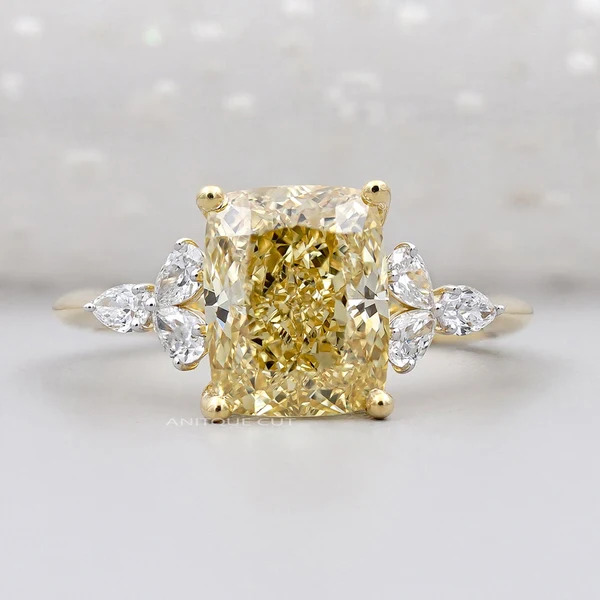
Popular shapes such as cushion, radiant, oval, and pear can all give a yellow diamond a different personality. A cushion cut may create a softer look, while a radiant cut can give the stone a more defined appearance.
When comparing two stones with similar color and size, look carefully at their cut and overall appearance rather than assuming the more expensive option is automatically the better choice.
Which One Gives You More for Your Budget?
This is where lab-grown yellow diamonds can become particularly attractive.
If your budget is limited, choosing lab-grown may allow you to consider a larger center stone without making the overall ring unaffordable. You could also use the savings for a better setting, side stones, or a metal you prefer.
Natural diamonds can make sense if having a naturally formed stone is an important part of the meaning behind your purchase. You may decide that the origin itself is worth paying more for.
There is no wrong answer here. The better choice depends on what you want your budget to accomplish.
Think About Certification Before You Buy
Whether you choose natural or lab-grown, certification is worth checking before making a purchase. A reputable grading report can provide useful information about the diamond's characteristics and help you compare different stones.
Look at the report details carefully rather than focusing only on the carat weight. Two diamonds with the same carat weight can look quite different because of their proportions, color, clarity, and cut.
If you are comparing several stones, keeping their grading information side by side can make the decision much easier.
How to Choose Between the Two
A natural yellow diamond may be the better fit if you value natural origin, rarity, and the story behind a diamond formed in the earth. You may also be comfortable spending more to get those qualities.
A lab-grown yellow diamond may suit you better if getting more size for your budget matters, or if you would rather put your money toward the setting and overall ring design.
Before making a decision, ask yourself one simple question: What will make me happiest when I look at this ring years from now?
For some people, it will be knowing their diamond came from the earth. For others, it will be seeing a beautiful yellow center stone that gave them the size and design they wanted without stretching their budget.
Explore Different Yellow Diamond Ring Styles
If you already know that yellow is the right color for you, the next step is choosing the ring design around it. Explore Designs of Yellow Diamond Engagement Ring styles to compare different center-stone shapes, settings, metals, and side-stone arrangements before deciding which look feels right for your relationship.
When comparing designs from Antiquecut, focus on the details that matter most to you, including the diamond's size, shape, setting style, certification, and the overall balance of the ring. Taking a little extra time here can help you avoid choosing a design simply because it looks good in one photograph.
Final Thoughts
Natural and lab-grown yellow diamonds can both be meaningful choices for an engagement ring. The important difference is not whether one is a “real” diamond and the other is not. It is where the diamond came from and how that difference affects price and personal value.
If natural origin is important to you, a natural yellow diamond may be worth the extra cost. If you want to make your budget go further, a lab-grown stone can give you more room to explore larger sizes and detailed ring designs.
Take your time, compare the actual stones, check certification, and choose based on what matters most to you. After all, the best engagement ring is not simply the one with the highest price—it is the one that feels right when you finally put it on.



 Italiano
 Indian
 English
 French
 Arabic
 Spanish
 Portuguese
 Deutsch
 Turkish
 Dutch
Dutch
 Russian
 Romaian
 Portuguese (Brazil)
 Greek
Greek
