


Lab Grown vs Natural Heart Shaped Diamond Ring: Which One Fits Your Love Story?
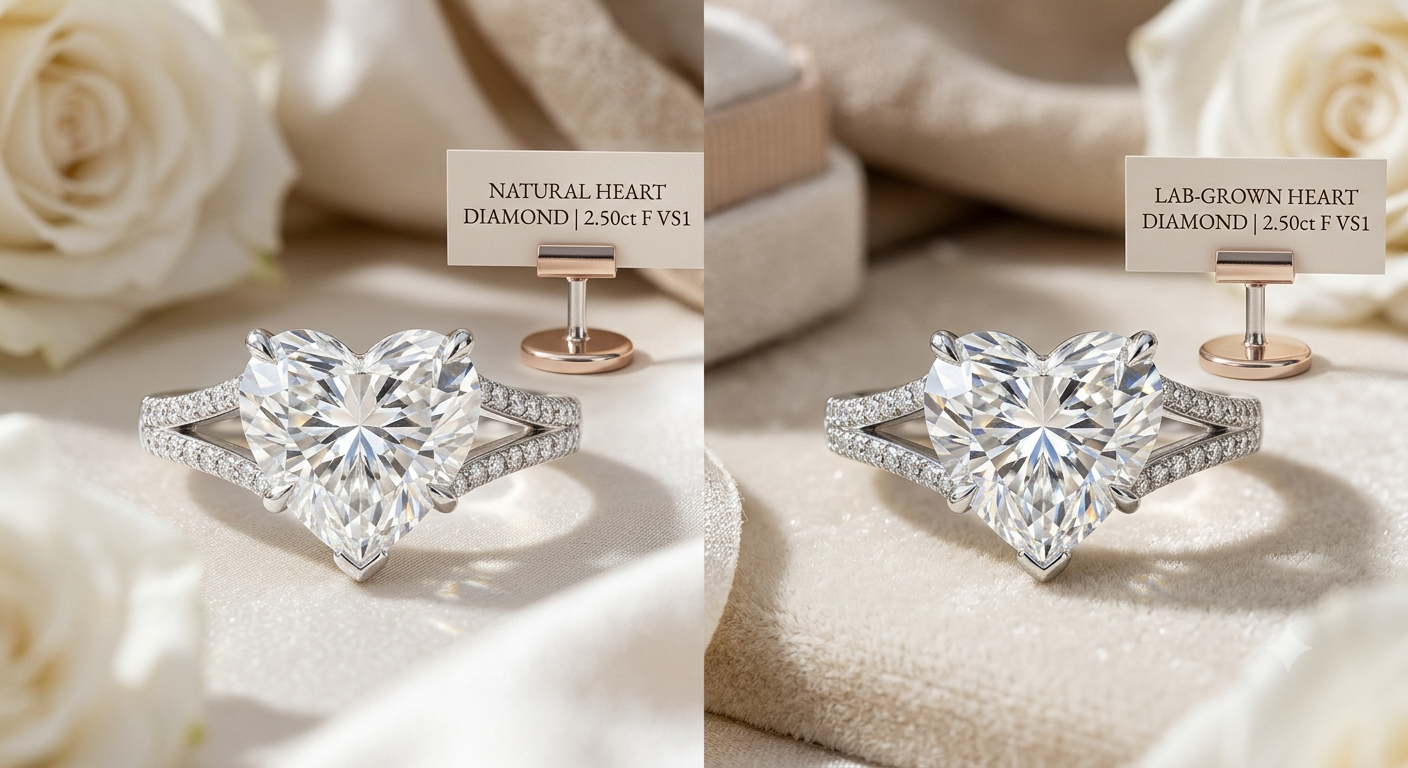
A Heart Shaped Diamond Ring is more than a beautiful piece of jewellery. Its shape is a clear symbol of love, romance, and commitment. But when choosing a heart shaped diamond, you have an important decision to make: should you choose a lab grown diamond or a natural diamond?
Both can look almost the same to the naked eye. Both are real diamonds made mainly of crystallized carbon. However, their origin, price, rarity, and long-term market position can be very different.
A natural diamond forms inside the Earth over millions or even billions of years. A lab grown diamond is created in a controlled environment using advanced technology. For many buyers, lab grown diamonds can cost significantly less than comparable natural diamonds, often allowing them to choose a larger stone within the same budget. The exact price gap can change based on carat weight, cut, color, clarity, and market conditions.
So, which one is right for your love story? The answer depends on what matters most to you: size, budget, rarity, tradition, origin, or personal values.
How Lab Grown and Natural Heart Shaped Diamonds Compare
The Same Sparkle, a Different Origin
Lab grown and natural diamonds have the same basic chemical structure. Both are made primarily from carbon atoms arranged in a diamond crystal structure. This means a high-quality lab grown diamond can have the same brilliance, fire, and durability as a natural diamond.
The main difference is how they are formed.
Natural diamonds develop deep inside the Earth under extreme heat and pressure. This process takes a very long time. Lab grown diamonds are created using methods such as HPHT, which stands for High Pressure High Temperature, or CVD, which stands for Chemical Vapor Deposition. These methods can grow diamonds in a matter of weeks.
It is also important to understand that lab grown does not mean fake.
Cubic zirconia and moissanite are diamond alternatives. They are different materials. A lab grown diamond, on the other hand, is a real diamond with a different origin.
How Certificates Reveal the Difference
A grading report is one of the most important documents when buying a diamond. Reputable laboratories such as GIA and IGI provide reports that describe important quality factors, including carat weight, color, clarity, and cut information where applicable.
The report should also clearly identify whether the diamond is natural or laboratory-grown.
You should never rely only on a salesperson's description. Ask to see the grading report before paying a deposit. Check that the report number matches the information provided for the stone. Many lab grown diamonds also have an identifying inscription on the girdle, although you should confirm the specific details with the grading laboratory or seller.
One important point for buyers is that diamond origin cannot normally be determined simply by looking at the stone with the naked eye. Special equipment and professional testing may be required to identify whether a diamond is natural or laboratory-grown.
Simple takeaway: Always check the grading report before buying your heart shaped diamond.
Which Choice Suits Different Buyers?
A natural heart shaped diamond may suit you if you value rarity, long geological history, and tradition. Some buyers also like the idea of owning a diamond that formed naturally inside the Earth.
A lab grown heart shaped diamond may suit you if you want more size for your budget. For example, the money used for a smaller natural diamond may allow you to choose a larger lab grown diamond with similar color and clarity.
| Feature | Lab Grown Diamond | Natural Diamond |
|---|---|---|
| Origin | Created in a controlled environment | Formed naturally inside the Earth |
| Price | Usually lower for comparable quality | Usually higher |
| Rarity | Production can increase | Naturally limited |
| Resale outlook | May face stronger price pressure | More established resale market |
| Environmental claims | Depends on energy and production methods | Depends on mining and supply chain practices |
| Certificate | Available from respected grading labs | Available from respected grading labs |
Why the Heart Shape Needs More Care Than Round Diamonds
Cut Quality Matters More Than Origin
Whether you choose a lab grown or natural diamond, the quality of the heart shape is extremely important.
A beautiful heart shaped diamond should have:
- Strong symmetry
- Even and balanced lobes
- A clear cleft at the top
- A sharp but protected point
- Good brightness
- Attractive overall proportions
A length-to-width ratio close to 1:1 often creates a classic heart shape. A slightly longer ratio, such as around 1:1.1, may create a more elongated appearance.
Heart shaped diamonds can also show a dark area across the center, sometimes called a bow-tie effect. A mild bow-tie may not be a major problem, but a strong dark area can reduce the diamond's face-up beauty.
Do not choose a diamond based only on its certificate. Ask to see clear photos and videos. If possible, view the stone under daylight and indoor lighting.
Protecting the Point for Daily Wear
The pointed tip is the most vulnerable part of a heart shaped diamond. If it is exposed, it may have a higher risk of damage from a hard impact.
A secure setting is very important.
A bezel setting offers strong protection because metal surrounds much of the diamond. A halo setting can add visual size and provide some protection around the center stone. A traditional prong setting should ideally include a secure V-shaped prong over the pointed tip.
Before buying, check:
- Is the point protected?
- Are the prongs secure?
- Is the girdle suitable for the design?
- Is the ring set too high for your lifestyle?
- Are side stones secure?
If you have an active lifestyle, a lower-set heart shaped diamond ring may be easier and safer for daily wear.
Two Similar Rings Can Look Very Different
Imagine two 2-carat heart shaped diamonds.
Ring A uses a lab grown diamond with strong symmetry, even lobes, and only a mild bow-tie.
Ring B uses a natural diamond with higher clarity but weak symmetry and an uneven outline.
Even though Ring B has a natural diamond and higher clarity, Ring A may look brighter, more balanced, and more attractive from the top.
This shows an important lesson: cut quality and visual beauty can matter more than simply choosing lab grown or natural.
Before making your decision, use this checklist:
- Clear cleft
- Even lobes
- Sharp point
- No heavy bow-tie
- Bright face-up appearance
Price, Value, and the Cost of Ownership
Where the Price Gap Comes From
Natural diamonds are generally more expensive because of their rarity, supply chain, mining, and market positioning. Lab grown diamonds can often be produced and supplied at a lower cost.
However, the final ring price includes much more than the diamond.
You may also pay for:
- The ring setting
- Gold or platinum
- Side stones
- Custom design work
- Grading
- Brand markup
- Taxes
For example, a budget of $5,000 may allow a buyer to choose a larger lab grown center diamond. The same budget may buy a smaller natural diamond with similar color and clarity.
The important rule is to compare matching quality. Do not compare a high-quality lab grown diamond with a lower-quality natural diamond and assume the difference is only because of origin.
Resale Value and Long-Term Expectations
Neither a lab grown nor a natural diamond should be purchased as a short-term investment.
The price you pay at retail may include jewellery design, labor, marketing, and other business costs. When selling a ring later, offers may be lower than the original purchase price.
Lab grown diamond prices may also experience additional pressure as technology and production capacity continue to develop. Natural diamonds have a longer-established resale market, but resale value is still not guaranteed.
The best approach is simple: buy the ring for its beauty, meaning, and wearability—not because you expect to make a profit later.
Keep your:
- Grading report
- Purchase receipt
- Appraisal
- Warranty documents
- Service and repair records
Building a Complete Ring Budget
Do not spend your entire budget on the center diamond.
You may also need to consider:
- Gold or platinum
- Side diamonds
- Custom design fees
- Resizing
- Insurance
- Future maintenance and repairs
Platinum is known for its durability, although it may cost more upfront depending on the design and market price.
As a general planning approach, consider keeping around 10% to 15% of your total budget available for additional costs and services.
Ask the jeweller for a written quote showing the diamond price, setting price, taxes, shipping charges, warranty details, and return policy.
Origin, Ethics, and Care Before You Buy
Comparing Environmental and Labor Claims
It is easy to see broad claims such as "ethical" or "eco-friendly." However, these claims should be supported by clear information.
When buying a natural diamond, ask:
- Which country did the diamond come from?
- What sourcing policies does the seller follow?
- Can the seller provide origin or supply chain information?
- Does the seller follow recognised industry requirements?
When buying a lab grown diamond, ask:
- Where was it grown?
- What energy sources are used?
- Does the producer provide reliable sustainability information?
- Are environmental claims supported by independent data?
Neither option is automatically perfect in every situation. The best choice is the one supported by the clearest information.
Care Tips for Heart Shaped Diamond Rings
Both lab grown and natural diamonds require similar care.
You can clean your ring with warm water, mild soap, and a soft brush. Avoid wearing it during heavy lifting, sports, swimming, or harsh cleaning work.
Because the point of a heart shaped diamond needs special protection, have the prongs checked regularly.
A professional inspection every six to 12 months can help identify loose stones or worn prongs.
Do not use strong chemicals or ultrasonic cleaning without first asking a professional jeweller, especially if your ring contains delicate side stones or has a more complex setting.
For insurance, consider getting an appraisal based on replacement value and update it when major repairs or upgrades are made.
Real-World Buyer Examples
A budget-focused couple may choose a 2-carat lab grown heart shaped diamond with a platinum halo setting. The savings may leave more money for a honeymoon, home fund, or other future goals.
A tradition-focused buyer may choose a 1-carat natural heart shaped diamond in a classic yellow-gold setting. For this buyer, rarity and natural origin are an important part of the ring's story.
A sustainability-focused buyer may compare diamond producers, energy information, grading reports, and seller policies before choosing. Instead of trusting strong marketing claims, they choose the option with the clearest evidence.
Choosing the Right Heart Shaped Diamond Ring
Use this simple guide.
Choose a lab grown diamond if:
- A larger stone is important to you.
- Budget control is a major priority.
- You are comfortable with its origin and documentation.
- Resale value is not your main concern.
Choose a natural diamond if:
- Rarity is important to you.
- Tradition matters to your love story.
- You value a diamond formed naturally inside the Earth.
- You prefer its longer-established market history.
Choose either option if:
- The diamond has strong symmetry.
- The pointed tip is protected.
- The grading report is clear.
- The seller offers a fair return policy.
- The final price is transparent.
Questions to Ask Every Jeweller
Before buying, ask:
- Can I see the grading report before purchase?
- Which laboratory issued the report?
- What is the diamond's length-to-width ratio?
- Does the diamond show a strong bow-tie?
- Is the point protected with a V-prong or bezel?
- What is the return and exchange policy?
- Does the price include resizing or inspection?
- Can you explain the diamond's origin?
- What warranty or repair service is included?
Final Comparison: Lab Grown vs Natural Heart Shaped Diamond Ring
| Feature | Lab Grown Heart Shaped Diamond Ring | Natural Heart Shaped Diamond Ring |
| Appearance | Can look virtually identical | Can look virtually identical |
| Carbon structure | Diamond | Diamond |
| Origin | Grown using advanced technology | Formed naturally inside the Earth |
| Typical price | Usually lower for similar quality | Usually higher |
| Rarity | Production can increase | Naturally rare |
| Resale outlook | May have more price pressure | More established market history |
| Environmental proof | Check energy and production data | Check mining and sourcing records |
| Care needs | Similar diamond care | Similar diamond care |
| Best for | Size and budget value | Rarity and tradition |
The best ring is not simply the most expensive one. It is the ring with a beautiful cut, a safe setting, clear paperwork, and an honest price.
The Best Heart Shaped Diamond Is the One You Can Wear With Confidence
Both lab grown and natural diamonds can create a beautiful Heart Shaped Diamond Ring. The biggest difference is the story behind the diamond.
A lab grown diamond may give you more size and sparkle within your budget. A natural diamond may offer rarity, tradition, and a connection to the Earth's long history.
Before making your final choice, remember these points:
- Check symmetry before focusing only on carat size.
- Protect the pointed tip with a secure setting.
- Compare diamonds with similar quality.
- Confirm the grading report and origin details.
- Ask for clear pricing and policies.
- Budget for the complete ring, not only the center stone.
Choose a lab grown heart shaped diamond if size and budget value matter most. Choose a natural heart shaped diamond if rarity and tradition are central to your decision.
In the end, the best Heart Shaped Diamond Ring is the one that fits your budget, your values, and your love story. Choose the diamond that feels right for you—not the one that outside pressure tells you to buy.
- Digital Agency
- Literie
- Location de voitures
- Restaurant
- Restaurant
- Mode
- Mode
- Information
- Marketing
- Tourisme
- Développement
- Découverte
- Législation
- Gastronomie
- Pâtisserie
- Event
- Art
- Causes
- Crafts
- Dance
- Drinks
- Film
- Fitness
- Food
- Games
- Gardening
- Health
- Home
- Literature
- Music
- Networking
- Other
- Party
- Religion
- Shopping
- Sports
- Theater
- Wellness
 English
 Indian
 French
 Arabic
 Spanish
 Portuguese
 Deutsch
 Turkish
 Dutch
Dutch
 Italiano
 Russian
 Romaian
 Portuguese (Brazil)
 Greek
Greek
