


How AI And IoT Technologies Transform Modern Mobile Applications
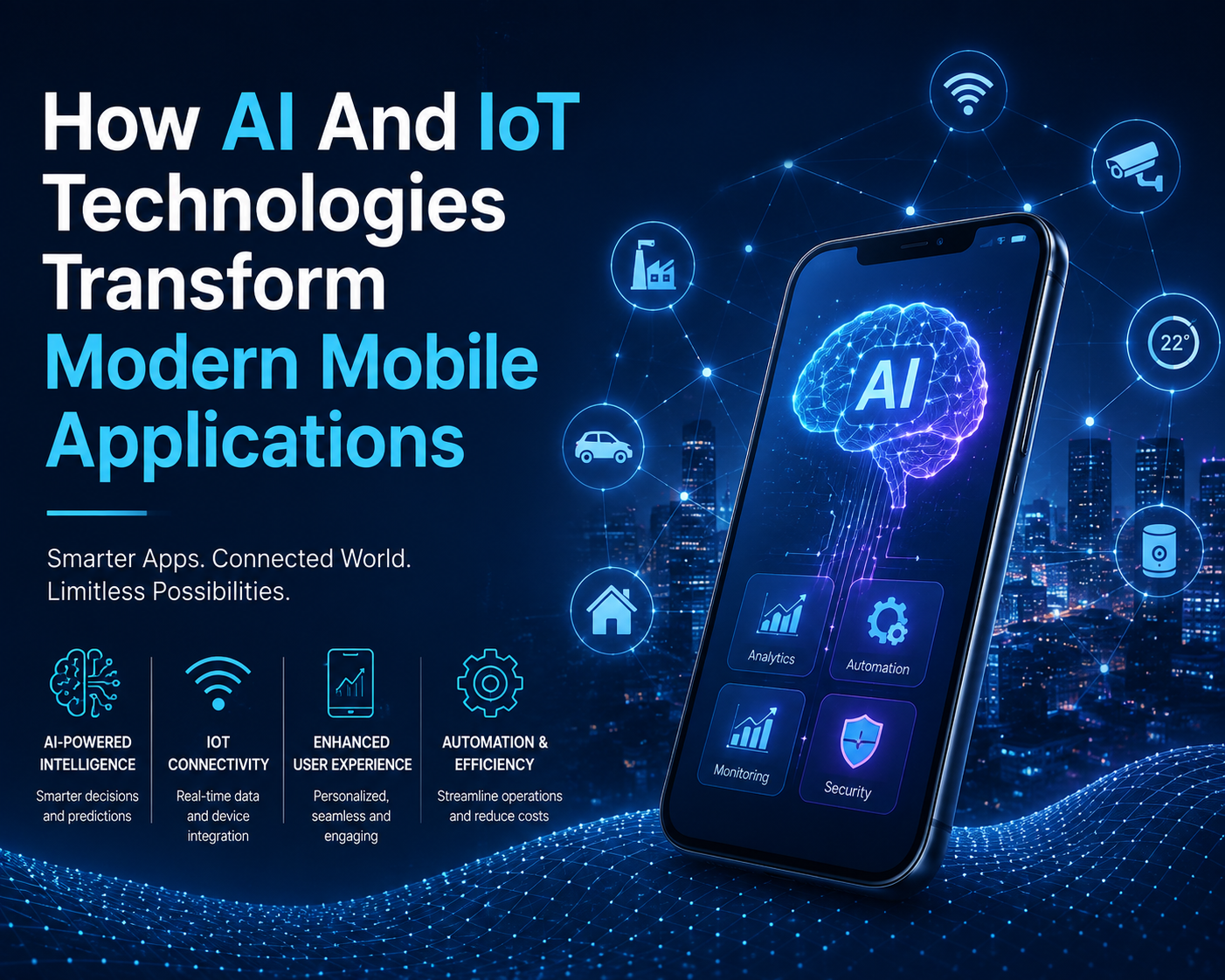
In today's highly competitive digital landscape, modern mobile applications must deliver substantial value beyond simply displaying static website content. To engage users, optimize retention, and drive recurring business value, mobile solutions on both iOS and Android must evolve. Integrating cutting-edge technologies like Artificial Intelligence (AI) and the Internet of Things (IoT) represents one of the most effective strategies for businesses to elevate their digital capabilities and build a lasting competitive advantage.
1. Transforming Experiences with Artificial Intelligence
Artificial Intelligence is no longer just an experimental concept; it is a practical powerhouse for driving mobile application success. By implementing AI features, mobile apps transition from reactive tools to predictive, intelligent ecosystems that enhance the user experience in several key ways:
-
Intelligent Chat Assistants: Providing immediate, 24/7 customer support and automated conversation capabilities to resolve queries dynamically.
-
Personalized Recommendations: Analyzing individual user behavior and preferences to offer highly targeted suggestions and content.
-
Voice Search Integration: Allowing hands-free, intuitive application control and streamlined search interactions.
-
Predictive Analytics: Tracking and assessing user journeys, screen engagement, and behavior to make data-driven improvements and enhance long-term user retention.
-
Advanced Image Recognition: Facilitating automated camera-based capabilities, visual searches, and biometric analysis.
-
Security & Operational Automation: Enhancing security via real-time fraud detection, secure document processing, and the automation of repetitive backend tasks to improve overall operational efficiency.
2. Extending App Reach with IoT and Wearable Technology
The Internet of Things (IoT) extends an application's reach far beyond the phone screen, converting the mobile interface into a centralized control hub for physical environments. Integrating IoT features offers dramatic enhancements:
-
Connected Device Control: Communicating securely with physical products—such as smart appliances, sensors, home automation systems, and industrial machinery—using robust communication protocols.
-
Wearable Integration: Exchanging real-time data seamlessly with smartwatches, fitness trackers, and specialized medical wearables, keeping users updated with timely, contextual notifications.
-
Offline Functionality: Enabling applications to operate reliably in low-connectivity areas by storing critical sensor data locally on the device and synchronizing with the cloud once an internet connection becomes available.
3. Leveraging Built-In Hardware and Device Capabilities
To bridge the software-to-hardware gap, modern applications securely tap into a smartphone's native components. When combined with AI and IoT ecosystems, these built-in hardware capabilities drive incredible, localized experiences:
The table below details how modern mobile apps make use of physical hardware integration:
|
Hardware Component |
AI / IoT Enhancement and Use Case |
|
Biometrics (Face/Fingerprint) |
Combines with secure authentication mechanisms, multi-factor authentication (MFA), and encrypted protocols to secure user profiles and payments. |
|
GPS & Geolocation |
Drives location-based notifications, real-time tracking for logistics, and context-aware IoT automations. |
|
Bluetooth & NFC |
Supports seamless, contactless payments (Apple Pay, Google Pay), local device discovery, and pairings with smart accessories. |
|
Camera & Motion Sensors |
Powers advanced image and document recognition, automated workflow tracking, and responsive augmented reality overlays. |
4. Selecting the Right Technical Partner
Building complex mobile apps with AI and IoT integrations requires a robust foundation. Whether you opt for iOS and Android native platforms (using Swift and Kotlin) to maximize performance, or cross-platform frameworks (like Flutter and React Native) to optimize development costs and launch speed, your app must be built with a secure, modular, and scalable architecture to grow with your user base.
At Aadi IT Services, an ISO 9001:2015, ISO/IEC 27001:2022, and CMMI Level 3 Certified organization, we offer end-to-end expertise in mobile app development and custom software development. We work as your long-term growth partner to ensure your application continues to deliver real-world business results post-launch.
Interested in building an intelligent, connected app? Start a conversation with our certified experts today to receive a free consultation on your next mobile project.
- Digital Agency
- Literie
- Location de voitures
- Restaurant
- Restaurant
- Mode
- Mode
- Information
- Marketing
- Tourisme
- Développement
- Découverte
- Législation
- Gastronomie
- Pâtisserie
- Evento
- Art
- Causes
- Crafts
- Dance
- Drinks
- Film
- Fitness
- Food
- Jogos
- Gardening
- Health
- Início
- Literature
- Music
- Networking
- Outro
- Party
- Religion
- Shopping
- Sports
- Theater
- Wellness
 Portuguese
 Indian
 English
 French
 Arabic
 Spanish
 Deutsch
 Turkish
 Dutch
Dutch
 Italiano
 Russian
 Romaian
 Portuguese (Brazil)
 Greek
Greek
