


Home Health Services Billing Providers: A Complete Guide to Choosing the Right Billing Partner
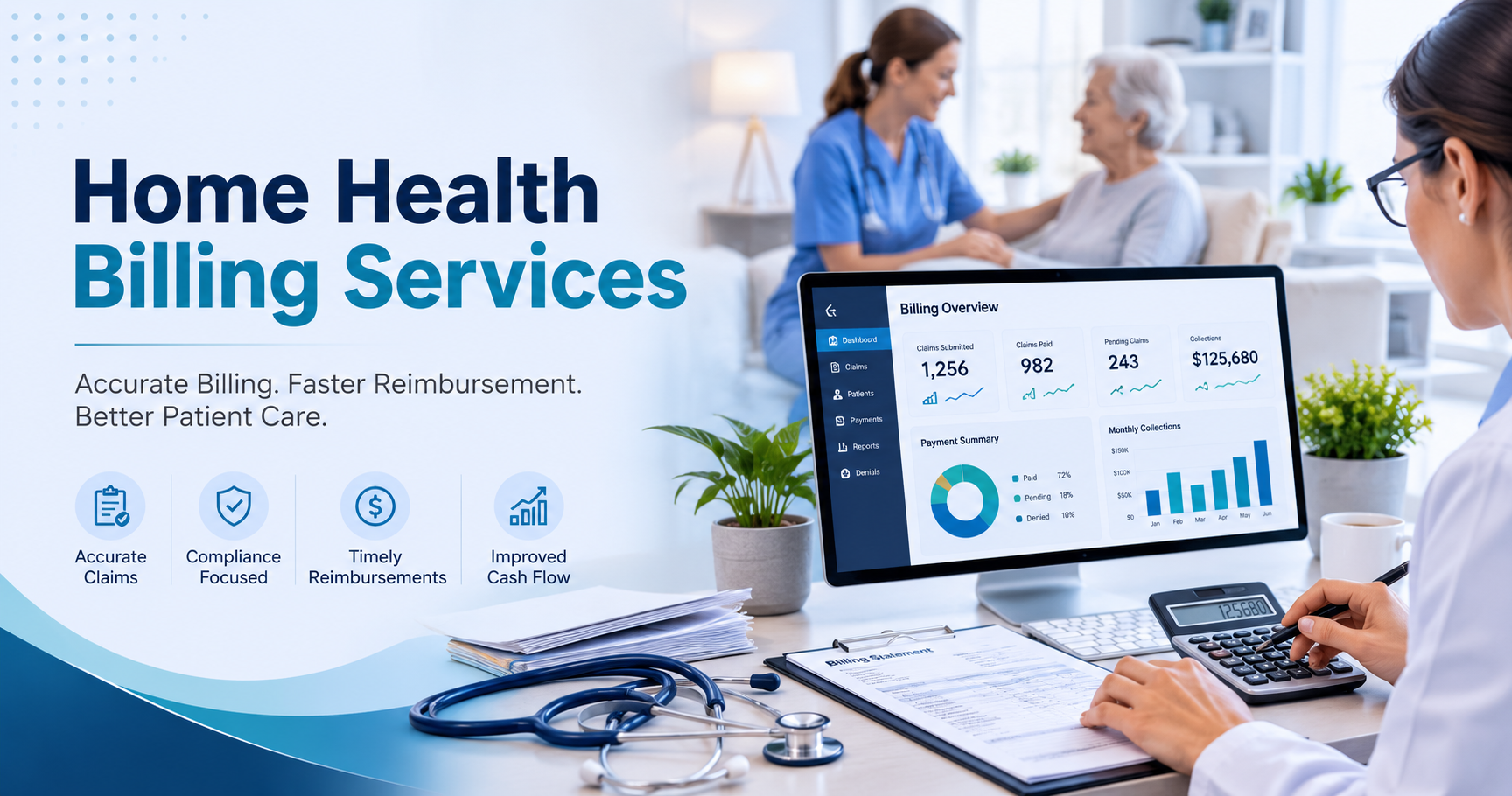
Home health agencies provide essential care to patients in the comfort of their homes, but managing the financial side of that care can be complex. Accurate documentation, insurance requirements, coding, claims submission, payment posting, and denial management all play an important role in maintaining a healthy revenue cycle.
For many agencies, working with experienced home health services billing providers can make these processes more manageable. Professional billing specialists understand the requirements associated with home-based healthcare and can help agencies organize their billing operations while reducing administrative pressure on internal teams.
This guide explains what home health billing providers do, why their services matter, what to look for when choosing a provider, and how professional billing support can contribute to a more efficient revenue cycle.
What Are Home Health Services Billing Providers?
Home health services billing providers are specialized billing companies or professionals that manage financial and revenue-cycle activities for home health agencies.
Unlike general medical billing, home health billing can involve specific documentation, coding, authorization, payer, and claim requirements. A specialized billing provider is familiar with the workflow involved in billing for services delivered outside traditional healthcare facilities.
Depending on the agreement, a billing provider may support activities such as:
- Patient insurance verification
- Eligibility checks
- Authorization and documentation review
- Medical coding
- Claim preparation and submission
- Payment posting
- Accounts receivable management
- Denial management
- Claim follow-up
- Billing reports and revenue-cycle analysis
By outsourcing some or all of these responsibilities, home health agencies can focus more attention on patient care and operational management.
Why Home Health Billing Requires Specialized Knowledge
Home health billing involves more than simply submitting an invoice to an insurance company. The billing process depends on accurate patient information, appropriate documentation, correct coding, payer requirements, and timely claim handling.
Small errors can create unnecessary delays. For example, incomplete information or coding inconsistencies may result in a claim being rejected or denied. Repeated billing issues can increase administrative work for staff and make it harder to maintain an organized accounts receivable process.
Complex Documentation Requirements
Home health services depend heavily on documentation. The medical record must support the services provided and the information reported on the claim.
Billing professionals need to understand how documentation connects with coding and billing requirements. This helps ensure that submitted claims accurately represent the services documented by the healthcare team.
Payer-Specific Requirements
Different insurance payers may have different billing procedures and requirements. Keeping track of these differences can become challenging for an agency that manages billing internally.
Experienced home health services billing providers can help organize payer-related workflows and monitor claims according to applicable requirements.
Claims and Denials
Claim rejections and denials can require additional investigation and follow-up. A structured billing process can help identify common issues, correct appropriate errors, and track outstanding claims.
What Services Do Home Health Billing Providers Offer?
The exact scope of services varies by provider, but a comprehensive billing partner may manage several stages of the revenue cycle.
Insurance Verification and Eligibility
Before billing, patient insurance information needs to be reviewed carefully. Eligibility verification helps confirm coverage information and can identify potential billing issues before claims are submitted.
Accurate insurance information also helps reduce avoidable administrative work caused by incorrect payer details.
Medical Coding
Coding is a critical part of healthcare billing. Home health billing professionals review clinical documentation and assign applicable codes based on the documented services and conditions.
Accurate coding helps ensure that claims communicate the necessary information to payers.
Claims Submission
After coding and claim preparation, billing specialists submit claims to the appropriate payer. They may also monitor claim status and address issues identified during the submission process.
Timely claim management can help keep the billing workflow organized.
Payment Posting
Once payments are received, they need to be accurately posted to the appropriate patient accounts. Payment posting helps maintain accurate financial records and makes it easier to identify remaining balances.
Denial Management
Denial management involves reviewing denied claims, identifying the reason for the denial, determining whether additional action is appropriate, and following up when necessary.
A consistent denial-management process can help agencies understand recurring billing problems and improve their internal workflows.
Accounts Receivable Follow-Up
Outstanding claims and balances require regular attention. Billing providers may monitor accounts receivable and follow up on unpaid claims according to established procedures.
This helps agencies maintain visibility into their outstanding revenue.
Benefits of Working With Home Health Services Billing Providers
Outsourcing billing does not automatically solve every revenue-cycle challenge, but the right provider can give a home health agency access to specialized knowledge and dedicated billing support.
Reduced Administrative Work
Billing involves repetitive administrative tasks that can consume significant staff time. Outsourcing these responsibilities can allow internal teams to dedicate more time to patient care, scheduling, operations, and other priorities.
Specialized Billing Expertise
Home health billing has unique requirements. A specialized provider brings experience with home health workflows rather than relying only on general healthcare billing knowledge.
This expertise can be particularly useful when agencies are dealing with complex payer requirements or recurring claim issues.
Better Revenue Cycle Organization
A professional billing team can establish structured processes for claims, payments, denials, and accounts receivable.
Clear workflows make it easier to track where claims are in the billing cycle and identify areas that need attention.
Improved Visibility
Many billing providers offer regular reports that give agencies insight into claim activity, outstanding accounts, payments, and denials.
Access to organized billing information can help management make more informed operational decisions.
How to Choose the Right Home Health Services Billing Provider
Not every billing company is the same. Home health agencies should evaluate potential partners carefully before outsourcing their billing operations.
Look for Home Health Billing Experience
Ask whether the provider has direct experience working with home health agencies. Familiarity with home health billing processes is important because the requirements can differ from those associated with other medical specialties.
Evaluate the Full Range of Services
Determine exactly what the provider handles. Some companies focus primarily on claims submission, while others offer broader revenue-cycle management.
Ask whether services include coding, eligibility verification, payment posting, denial management, accounts receivable follow-up, and reporting.
Review Communication Processes
Clear communication is essential when an external company manages billing. Ask how often the provider communicates with your team and who will be responsible for answering questions.
A reliable communication process helps ensure that billing issues do not remain unresolved.
Ask About Reporting
Request information about the reports the provider supplies. Useful reporting should make it easier to understand billing activity and identify outstanding issues.
Consider Data Security
Healthcare billing involves sensitive patient and financial information. Agencies should evaluate how a prospective provider protects data and handles access to billing information.
Before signing an agreement, review the provider's security practices, contractual responsibilities, and applicable compliance requirements.
Understand Pricing
Billing fees can be structured in different ways. Before choosing a provider, understand how charges are calculated and which services are included.
The lowest price is not necessarily the best option if important billing functions are excluded.
Questions to Ask Before Hiring a Billing Provider
A detailed discussion before signing a contract can help prevent misunderstandings later.
Consider asking:
- How much experience do you have with home health billing?
- Which billing services are included?
- Do you provide coding and claim submission?
- How do you handle rejected and denied claims?
- How is accounts receivable monitored?
- What billing reports will our agency receive?
- How will our team communicate with your billing specialists?
- What systems or software do you use?
- How do you protect patient and billing information?
- How is your service priced?
The answers can help an agency compare providers based on expertise, services, communication, technology, and overall fit.
In-House Billing vs. Outsourcing Home Health Billing
Some agencies choose to manage billing internally, while others outsource the process to specialized providers.
In-house billing gives an agency direct control over its billing team and daily processes. However, it also requires hiring, training, supervising, and retaining qualified billing staff.
Outsourcing can provide access to experienced billing professionals without requiring the agency to manage every billing function internally.
The right choice depends on the agency's size, staffing, workflow, technology, budget, and operational requirements.
When Should a Home Health Agency Consider Outsourcing Billing?
Outsourcing may be worth considering when billing responsibilities are taking too much time away from internal staff or when an agency is experiencing persistent administrative challenges.
Potential signs include:
- A growing backlog of unpaid claims
- Frequent claim rejections or denials
- Limited internal billing expertise
- Difficulty keeping up with payer requirements
- Delays in payment posting
- Inconsistent accounts receivable follow-up
- Lack of useful billing reports
- Administrative staff spending excessive time on billing tasks
A specialized billing partner can help establish a more structured process and provide additional expertise where needed.
Final Thoughts on Home Health Services Billing Providers
Efficient billing is an important part of operating a financially sustainable home health agency. From insurance verification and coding to claims submission, payment posting, denial management, and accounts receivable follow-up, each stage of the billing process requires attention to detail.
Choosing experienced home health services billing providers can give agencies access to specialized billing knowledge while reducing the administrative workload placed on internal teams. However, agencies should evaluate providers carefully, paying attention to home health experience, service coverage, communication, reporting, data security, and pricing.
For organizations looking to strengthen their overall revenue-cycle processes, professional Medical Billing Services can provide structured support across multiple stages of healthcare billing. The right partner should complement the agency's operations, maintain clear communication, and help create a more organized and reliable billing workflow.
- Digital Agency
- Literie
- Location de voitures
- Restaurant
- Restaurant
- Mode
- Mode
- Information
- Marketing
- Tourisme
- Développement
- Découverte
- Législation
- Gastronomie
- Pâtisserie
- Evento
- Art
- Causes
- Crafts
- Dance
- Drinks
- Film
- Fitness
- Food
- Jogos
- Gardening
- Health
- Início
- Literature
- Music
- Networking
- Outro
- Party
- Religion
- Shopping
- Sports
- Theater
- Wellness
 Portuguese (Brazil)
 Indian
 English
 French
 Arabic
 Spanish
 Portuguese
 Deutsch
 Turkish
 Dutch
Dutch
 Italiano
 Russian
 Romaian
 Greek
Greek
