


How Businesses Build Useful Datasets From Public Sources
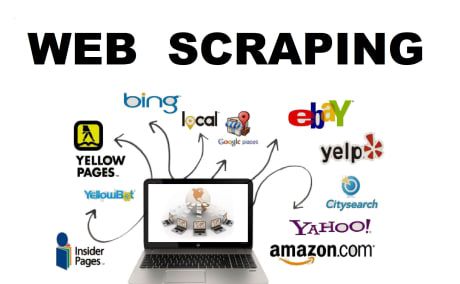
Businesses have access to an enormous amount of publicly available information. Company websites, government databases, online directories, product listings, industry publications, and public reviews can provide valuable information for research and decision-making. However, simply collecting information does not create a useful dataset. Businesses need to identify relevant sources, organize information, remove errors, and maintain quality before the results can support important decisions.
What Are Public Sources?
Public sources are websites, databases, publications, and other platforms that make information available to the general public. Web Scraping can be used to collect suitable publicly available information from websites, while APIs, open-data portals, and downloadable datasets can provide information through structured methods.
Examples include government statistics, business directories, product catalogs, public reports, industry publications, and online reviews. The best source depends on the organization's objectives and the type of information required.
Identifying the Right Information
Before collecting anything, businesses should define a clear objective. A company researching competitors may need product names, prices, services, locations, or customer reviews. A marketing team may instead need information about market trends, consumer interests, or industry developments.
Clear requirements prevent businesses from collecting unnecessary information. They should also prioritize trustworthy and relevant sources. Reliable sources can improve the quality of the final dataset and make the resulting analysis more useful.
Collecting Information From Public Sources
Businesses can gather information manually or through automated processes. Manual collection may be suitable for small projects, while larger projects often require technology that can handle repetitive tasks.
Web Scraping is one method that can help collect publicly available information from multiple web pages according to predefined requirements. APIs and other structured access methods may also be appropriate when a source provides them.
Automation can save time and make recurring collection easier. However, businesses should ensure that their collection methods respect applicable laws, privacy requirements, and the terms governing the relevant sources.
Cleaning and Organizing the Dataset
Raw information often contains duplicate records, missing fields, inconsistent formats, or incorrect values. Using such information without preparation can produce unreliable results.
Cleaning involves removing unnecessary duplicates, correcting obvious errors, standardizing formats, and handling missing information appropriately. For example, dates should follow a consistent format, while product names should use standardized naming conventions.
After cleaning, information should be organized into clearly defined fields. A well-structured dataset is easier to search, analyze, update, and integrate with business systems.
Validating Data Quality
Data quality is one of the most important parts of creating a useful dataset. Businesses should check whether collected information is accurate, complete, consistent, and current enough for its intended purpose.
Validation can include comparing records across trusted sources, checking required fields, identifying unusual values, and detecting duplicates. Regular quality checks are especially important when information is collected repeatedly because sources can change over time.
Storing and Managing Datasets
Once information has been cleaned and validated, it needs to be stored in a suitable environment. Smaller datasets may work well with spreadsheets or simple databases, while larger collections may require cloud storage, databases, or data warehouses.
Businesses should also establish appropriate access controls and backups. Documentation is useful for explaining where information came from, when it was collected, how it was processed, and what each field represents.
Good management makes datasets easier for analysts and other teams to use without repeatedly investigating their origins.
How Businesses Use Public-Source Datasets
Well-organized public information can support many business activities. Companies can analyze competitor prices, compare product offerings, monitor industry trends, and identify potential market opportunities.
For example, a retailer could collect publicly available product information from different competitors and compare pricing, categories, and availability. A marketing team could analyze public reviews to identify common customer concerns and opportunities for improving products or services.
Combining public information with internal business records can provide an even broader view of market conditions and customer behavior.
Challenges and Legal Considerations
Building datasets from public sources can involve technical and operational challenges. Websites may change their structure, information may become outdated, and different sources may use inconsistent formats.
Businesses should also consider privacy, copyright, intellectual property, and applicable data protection requirements. Publicly accessible does not automatically mean that every type of information can be collected or used without restrictions.
Organizations should review relevant rules and source terms before creating automated collection processes.
Best Practices for Building Useful Datasets
Businesses should start with a specific objective and collect only information that supports that goal. Choosing reliable sources and documenting collection methods can improve transparency and consistency.
Web Scraping and other automated methods should be monitored regularly to identify technical failures or changes in source structures. Organizations should also clean and validate collected information before using it for business decisions.
Regular updates are important because public information can change frequently. A maintenance schedule can help ensure that datasets remain relevant and useful.
The Future of Public-Source Data
Web Scraping, open-data platforms, APIs, and automated technologies are making it easier for organizations to build larger datasets from publicly available information. Machine learning and business intelligence tools can then help analyze these datasets and identify patterns.
As businesses increasingly rely on data-driven decisions, the ability to build high-quality datasets will become even more valuable. Organizations that combine reliable sources, responsible collection, strong data management, and effective analysis can gain useful insights while avoiding unnecessary information overload.
Conclusion
Public sources can provide valuable information for businesses, but the quality of the final dataset depends on how that information is collected and managed. Defining clear objectives, selecting reliable sources, cleaning records, validating quality, and storing information properly are essential steps.
A useful dataset is not simply a large collection of records. It is organized, relevant, accurate, and maintained for a specific purpose. By following responsible collection practices and focusing on quality, businesses can turn public information into a valuable resource for research, analysis, and strategic decision-making.
FAQs
1. What are public-source datasets?
Public-source datasets are organized collections of information gathered from publicly available websites, databases, reports, directories, and other accessible sources.
2. Why do businesses use public information?
Businesses can use it for competitor research, market analysis, price monitoring, trend identification, product research, and discovering new opportunities.
3. How can businesses improve dataset quality?
They can remove duplicates, standardize formats, check accuracy, handle missing information, validate records, and regularly update the dataset.
4. Is collecting information from public websites always allowed?
No. Businesses should consider applicable laws, privacy requirements, copyright and intellectual property rules, and the terms of the relevant website or service.
5. What makes a dataset useful?
A useful dataset is relevant to a specific objective and contains information that is organized, accurate, consistent, sufficiently complete, and appropriately maintained.
- Digital Agency
- Literie
- Location de voitures
- Restaurant
- Restaurant
- Mode
- Mode
- Information
- Marketing
- Tourisme
- Développement
- Découverte
- Législation
- Gastronomie
- Pâtisserie
- Event
- Art
- Causes
- Crafts
- Dance
- Drinks
- Film
- Fitness
- Food
- Games
- Gardening
- Health
- Home
- Literature
- Music
- Networking
- Other
- Party
- Religion
- Shopping
- Sports
- Theater
- Wellness
 English
 Indian
 French
 Arabic
 Spanish
 Portuguese
 Deutsch
 Turkish
 Dutch
Dutch
 Italiano
 Russian
 Romaian
 Portuguese (Brazil)
 Greek
Greek
