


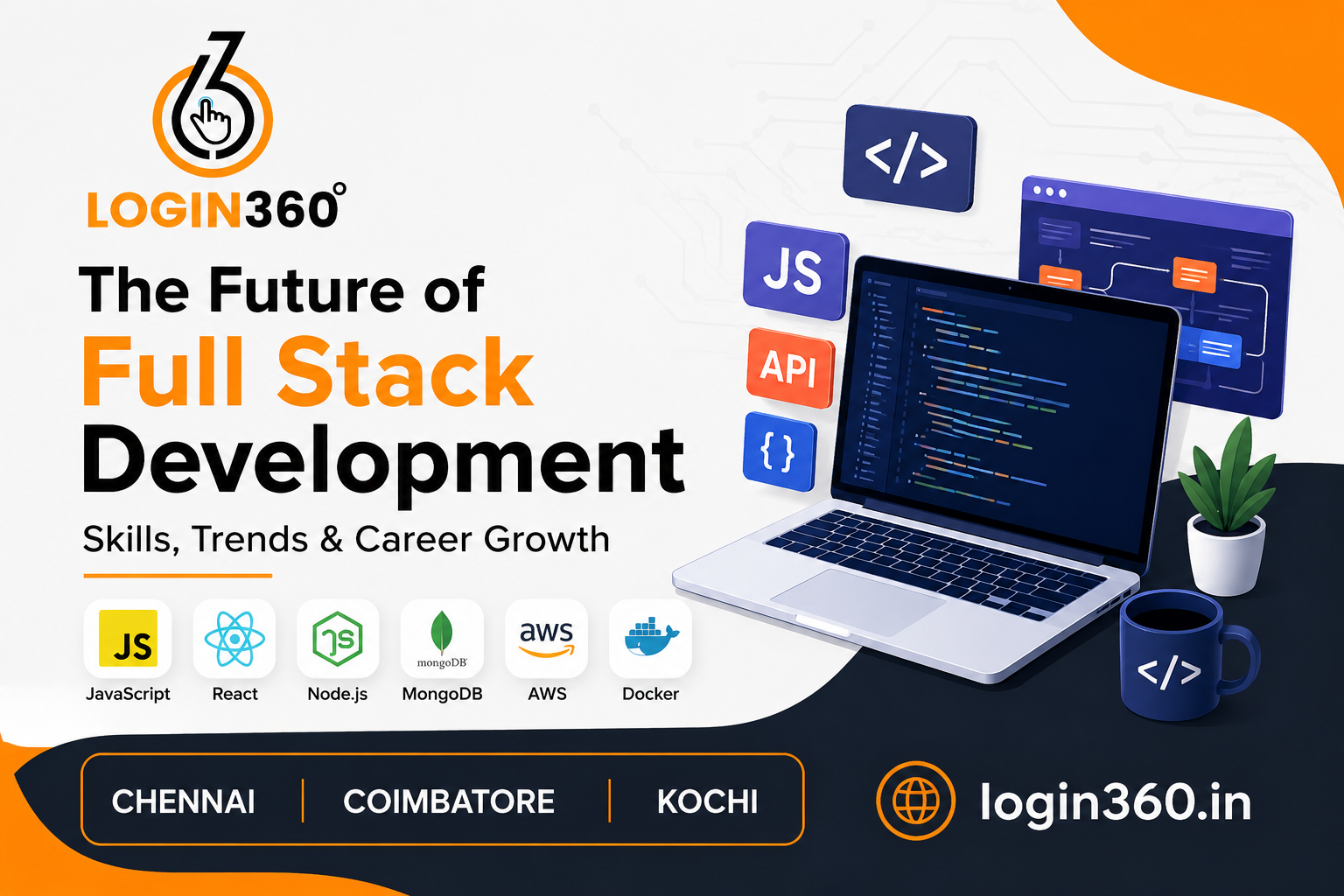
The Future of Full Stack Development: Skills, Trends & Career Growth
Introduction
Full stack development has become one of the most in-demand careers in the technology industry. As businesses continue to embrace digital transformation, companies are looking for developers who can build complete web applications from front-end design to back-end functionality. The future of full stack development is driven by emerging technologies like Artificial Intelligence (AI), cloud computing, low-code platforms, and modern JavaScript frameworks. For aspiring developers and IT professionals, learning the right skills and staying updated with industry trends can open the door to exciting career opportunities. In this blog, we'll explore the future of full stack development, the essential skills you need, the latest trends shaping the industry, and how you can build a successful career.
Why Full Stack Development is the Future
The demand for full stack developers continues to grow because businesses prefer professionals who can handle both client-side and server-side development. This versatility reduces development time, improves collaboration, and helps organizations launch products faster. Startups, enterprises, and software companies all value developers who understand the complete application lifecycle.
Essential Skills Every Full Stack Developer Needs
To stay competitive in the evolving tech industry, full stack developers should master both technical and soft skills.
Front-End Development Skills
Front-end development focuses on creating responsive and user-friendly interfaces. Developers should have strong knowledge of HTML, CSS, JavaScript, and modern frameworks such as React, Angular, or Vue.js. Understanding responsive design and UI/UX principles also helps create better user experiences.
Back-End Development Skills
Back-end development manages server logic, databases, and APIs. Popular programming languages include Node.js, Python, Java, PHP, and C#. Developers should also understand RESTful APIs, authentication, and server-side architecture.
Database Management
Every full stack developer should know how to work with SQL databases like MySQL and PostgreSQL as well as NoSQL databases such as MongoDB. Database optimization and security are valuable skills for handling modern applications.
Cloud Computing and DevOps
Cloud platforms like AWS, Microsoft Azure, and Google Cloud are becoming essential for deploying scalable applications. Knowledge of Docker, Kubernetes, CI/CD pipelines, and version control tools like Git makes developers more valuable in today's job market.
Soft Skills
Technical expertise alone isn't enough. Problem-solving, communication, teamwork, adaptability, and time management are equally important for working efficiently in modern development teams.
Latest Trends in Full Stack Development
Technology evolves quickly, and full stack developers need to stay updated with industry trends.
Artificial Intelligence Integration
AI-powered applications are becoming common across industries. Developers are integrating chatbots, recommendation systems, automation tools, and AI APIs into web applications to deliver smarter user experiences.
Serverless Architecture
Serverless computing allows developers to focus on writing code without managing servers. Platforms like AWS Lambda simplify application deployment while reducing infrastructure costs.
Progressive Web Applications (PWAs)
PWAs combine the best features of websites and mobile apps, offering faster loading times, offline access, and improved user engagement.
Low-Code and No-Code Platforms
Although low-code tools simplify development, businesses still need skilled full stack developers to build custom features, integrate systems, and manage complex applications.
Cybersecurity Focus
As cyber threats increase, secure coding practices are becoming a core responsibility for developers. Understanding authentication, encryption, and vulnerability prevention is now an essential skill.
Career Growth Opportunities
A career in full stack development offers excellent growth potential. Beginners often start as junior developers before progressing to full stack developer, senior developer, technical lead, software architect, or engineering manager. Many professionals also choose freelance opportunities or launch their own tech startups. Since nearly every industry relies on web applications, full stack developers can work in healthcare, finance, education, e-commerce, entertainment, and many other sectors.
How to Prepare for the Future
To remain competitive, developers should continuously improve their skills. Build real-world projects, contribute to open-source communities, learn cloud technologies, stay updated with new frameworks, and earn industry-recognized certifications. Creating a strong portfolio and maintaining an active GitHub profile can significantly improve job prospects.
Conclusion
The future of full stack development is filled with exciting opportunities as businesses continue to adopt modern technologies and digital solutions. By mastering both front-end and back-end development, learning cloud platforms, embracing AI, and keeping up with industry trends, developers can build rewarding and future-proof careers. Continuous learning and practical experience will remain the key to long-term success in this fast-changing field.
- Digital Agency
- Literie
- Location de voitures
- Restaurant
- Restaurant
- Mode
- Mode
- Information
- Marketing
- Tourisme
- Développement
- Découverte
- Législation
- Gastronomie
- Pâtisserie
- Event
- Art
- Causes
- Crafts
- Dance
- Drinks
- Film
- Fitness
- Food
- Games
- Gardening
- Health
- Home
- Literature
- Music
- Networking
- Other
- Party
- Religion
- Shopping
- Sports
- Theater
- Wellness
 English
 Indian
 French
 Arabic
 Spanish
 Portuguese
 Deutsch
 Turkish
 Dutch
Dutch
 Italiano
 Russian
 Romaian
 Portuguese (Brazil)
 Greek
Greek
