Introduction
For generations, finger millet has been an important part of Indian agriculture and regional cuisines. Today, as more people seek wholesome and nutrient-rich food choices, ragi atta has become increasingly popular in everyday kitchens. Made by grinding whole finger millet into fine flour, it is naturally rich in essential nutrients and fits well into a balanced diet. Whether prepared as rotis, dosas, pancakes, porridge, or baked recipes, this millet flour offers both versatility and nutrition. It is suitable for people looking to diversify their grain intake while enjoying traditional flavors that have stood the test of time. Its growing popularity reflects a broader shift toward healthier eating habits without compromising taste or convenience.
What Is Ragi Atta?
Finger millet, commonly known as ragi, is one of India's oldest cultivated grains. It has been grown for centuries across Karnataka, Tamil Nadu, Andhra Pradesh, Telangana, Maharashtra, and parts of Uttarakhand. The grain thrives in dry climates and requires relatively less water than many cereal crops, making it a sustainable agricultural choice.
The flour made from finely milled finger millet is valued for its naturally occurring calcium, iron, dietary fiber, amino acids, and plant-based nutrients. Unlike refined flour, it retains much of the grain's nutritional value when processed carefully. It has an earthy flavor and pairs well with vegetables, lentils, and spices, making it suitable for a wide variety of traditional and modern recipes.
Nutritional Benefits
Ragi is widely appreciated because of its balanced nutritional profile. It contains complex carbohydrates that release energy gradually, helping people feel satisfied for longer periods. The grain is naturally rich in dietary fiber, which supports healthy digestion and contributes to regular eating habits.
Another standout feature is its calcium content. Compared to many other commonly consumed grains, finger millet contains significantly higher levels of naturally occurring calcium, making it a valuable addition to meals across different stages of life. It also provides iron, magnesium, phosphorus, potassium, antioxidants, and several essential amino acids that contribute to overall nutrition.
Since it is naturally gluten-free, it is often chosen by individuals who avoid gluten under medical guidance or personal dietary preferences. However, those with celiac disease should always ensure the flour is processed in certified gluten-free facilities to avoid cross-contamination.
Why Families Are Choosing Ragi Atta
Modern lifestyles have encouraged consumers to rethink everyday ingredients. Many families now look for whole grains that deliver better nutrition while remaining easy to cook. This has contributed to the growing popularity of ragi atta in both urban and rural households.
Parents often include it in children's meals through porridges, pancakes, or homemade snacks because of its nutritional value. Adults appreciate its fiber content and versatility, while older individuals frequently enjoy traditional millet-based recipes that have been part of regional diets for generations.
Its mild nutty flavor also makes it easy to combine with wheat flour or other grains for softer rotis while gradually introducing millet into regular meals.
Popular Ways to Use Ragi Flour
One of the reasons finger millet flour remains relevant today is its versatility. It adapts well to both traditional cooking and modern recipes.
Some common preparations include:
- Soft rotis and bhakris
- South Indian dosas and idlis
- Healthy breakfast porridge
- Homemade cookies and biscuits
- Pancakes and waffles
- Muffins and breads
- Thickening soups and gravies
- Energy balls and nutritious snacks
Many home cooks also combine it with wheat flour to achieve a softer texture while increasing the nutritional value of everyday meals.
Suitable Age Groups
One of the strengths of finger millet is that it can fit into meals across different stages of life.
Children can enjoy it in porridges, pancakes, or baked foods when introduced according to pediatric guidance. Teenagers and working adults often appreciate its ability to support balanced meals that provide lasting energy. Older adults may include it because of its naturally occurring minerals and fiber.
Pregnant women and individuals with specific nutritional needs should always consult healthcare professionals before making significant dietary changes, but finger millet has long been part of traditional Indian family diets.
How to Store Ragi Flour Properly
Like other whole grain flours, finger millet flour contains natural oils that help preserve its nutritional quality but also make it more susceptible to spoilage if stored incorrectly.
For the best freshness:
- Keep it in an airtight container.
- Store it in a cool, dry place.
- Protect it from moisture and direct sunlight.
- Refrigerate during humid weather for extended shelf life.
- Purchase quantities that can be consumed within a reasonable period for maximum freshness.
Freshly milled flour often delivers better aroma, flavor, and texture compared to products stored for long periods.
Understanding Multigrain Options
While finger millet flour works well on its own, many households also enjoy blends that combine multiple nutritious grains. A good example is multigrain atta 1 kg, which typically contains wheat along with carefully selected millets, pulses, and other grains. These blends offer variety in taste and nutrition while remaining suitable for daily cooking. Choosing between a single-grain flour and a multigrain blend depends on individual dietary preferences, cooking habits, and the types of recipes prepared at home. Many families keep both options in their pantry to enjoy greater flexibility in meal planning.
Buying Good Quality Flour
The quality of flour has a noticeable impact on both taste and nutrition. While purchasing finger millet flour, consumers should consider several factors.
Look for products that mention whole grain processing rather than refined ingredients. Fresh milling dates can be helpful indicators of quality. Packaging should remain sealed without signs of moisture or damage. Ingredient lists should ideally contain only finger millet without unnecessary additives or preservatives.
Stone-milled flour is often preferred by many consumers because traditional milling methods generate less heat, helping preserve the grain's natural flavor and nutritional characteristics.
Conclusion
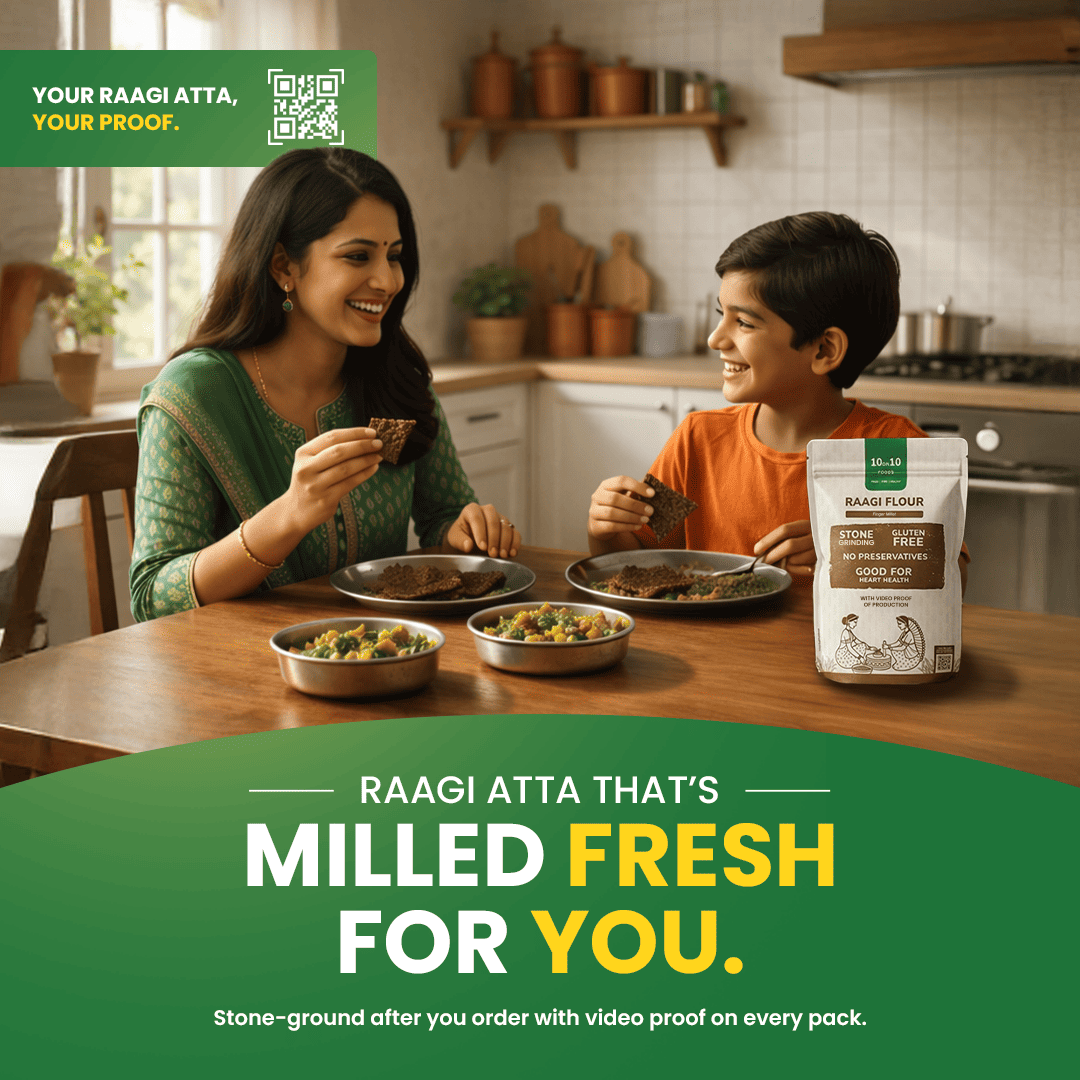
As interest in wholesome grains continues to grow, ragi atta remains one of the most practical choices for families seeking nutritious and versatile flour for daily meals. Its rich nutrient profile, culinary flexibility, traditional heritage, and compatibility with modern recipes make it a valuable addition to balanced eating habits. Whether used independently or alongside other wholesome grains, it offers a simple way to diversify everyday diets. For those looking for freshly milled, high-quality flour prepared with care, 10on10foods provides options that focus on freshness, purity, and traditional milling methods to help bring wholesome nutrition to every kitchen.
FAQs
1. What is ragi made from?
Ragi flour is made by grinding whole finger millet grains into a fine flour suitable for various recipes.
2. Is ragi naturally gluten-free?
Yes, finger millet is naturally gluten-free, but individuals with celiac disease should choose products processed in certified gluten-free facilities.
3. Can ragi flour be used every day?
Yes. It can be included as part of a balanced diet through rotis, dosas, porridges, baked foods, and many other recipes.
4. Which Indian states commonly consume ragi?
Ragi is widely consumed in Karnataka, Tamil Nadu, Andhra Pradesh, Telangana, Maharashtra, and several other regions of India.
5. How should finger millet flour be stored?
Store it in an airtight container in a cool, dry place away from moisture and direct sunlight. Refrigeration can help extend freshness in humid climates.
6. Can ragi flour be mixed with wheat flour?
Yes. Many households combine it with wheat flour to prepare softer rotis while adding the nutritional benefits of finger millet.



 Romaian
 Indian
 English
 French
 Arabic
 Spanish
 Portuguese
 Deutsch
 Turkish
 Dutch
Dutch
 Italiano
 Russian
 Portuguese (Brazil)
 Greek
Greek
