


Surgical Positioning Gel Pads: Lithotomy, Supine & Lateral Support Explained
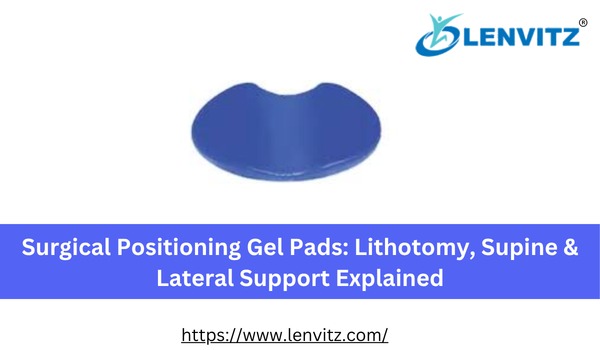
Not every surgery positions a patient the same way, and that's exactly why one type of padding can't cover every procedure. Depending on where the surgeon needs access, a patient might be positioned on their back, their side, or with legs raised and supported, each requiring a completely different kind of cushioning. Getting this wrong risks pressure injuries and nerve damage that have nothing to do with the surgery itself.
Why Positioning Equipment Changes by Procedure
Surgical teams choose positioning based on what the procedure needs to access, not patient comfort alone, though comfort and safety still have to be managed throughout. Each position creates its own pressure points, which is why hospitals stock several different types of padding rather than relying on one general-purpose pad for everything.
Lithotomy Position Gel Pads: Supporting Legs Safely
lithotomy position gel pads are used when a patient's legs are raised and supported in stirrups, common in gynaecological, urological, and colorectal procedures. These pads cushion the calves and backs of the knees, where straps and stirrup contact can otherwise compress nerves and blood vessels during a long procedure.
Why This Position Needs Extra Care
● Nerve compression risk in the legs increases with procedure length
● Poor padding can restrict circulation in the calves
● Hip and lower back support still matters even with legs elevated
Supine Position Gel Pads: The Most Common Setup
Lying flat on the back is the most frequently used position in surgery, but supine position gel pads are still essential. Pressure builds up at the heels, sacrum, and back of the head over time, and without proper support, even this seemingly simple position can lead to pressure injuries during longer procedures.
Because supine positioning is used so often, across general surgery, cardiac procedures, and many others, it's easy to underestimate the padding it needs. Teams that treat it as low-risk simply because it looks straightforward tend to see more pressure-related issues over time.
Lateral Positioner and Lateral Position Gel Pads
When a patient needs to lie on their side, typically for chest, kidney, or hip procedures, a lateral positioner holds the body securely in place, while Lateral position gel pads cushion the areas bearing the most weight, the shoulder, hip, and knee on the down side of the body.
This position is particularly prone to pressure injury because the entire body weight rests on a narrow strip of contact points, making proper gel support more important here than in almost any other position.
Choosing the Right Setup for Each Position
The right combination of positioner and padding depends on the specific procedure, expected duration, and the patient's body type. Facilities that stock the correct equipment for each position, rather than trying to make one setup work for everything, see far fewer positioning-related complications after surgery.
It also helps to review positioning equipment periodically, since a pad or positioner that's been in use for years may no longer hold its shape or support the way it did when new, even if it looks fine at a glance.
Final Thoughts
Every surgical position comes with its own pressure points and risks, and the right gel pads and positioners exist specifically to manage them. Investing in the correct equipment for lithotomy, supine, and lateral positioning is a small but essential part of keeping patients safe throughout surgery.
- Digital Agency
- Literie
- Location de voitures
- Restaurant
- Restaurant
- Mode
- Mode
- Information
- Marketing
- Tourisme
- Développement
- Découverte
- Législation
- Gastronomie
- Pâtisserie
- Evento
- Art
- Causes
- Crafts
- Dance
- Drinks
- Film
- Fitness
- Food
- Giochi
- Gardening
- Health
- Home
- Literature
- Music
- Networking
- Altre informazioni
- Party
- Religion
- Shopping
- Sports
- Theater
- Wellness
 Italiano
 Indian
 English
 French
 Arabic
 Spanish
 Portuguese
 Deutsch
 Turkish
 Dutch
Dutch
 Russian
 Romaian
 Portuguese (Brazil)
 Greek
Greek
