


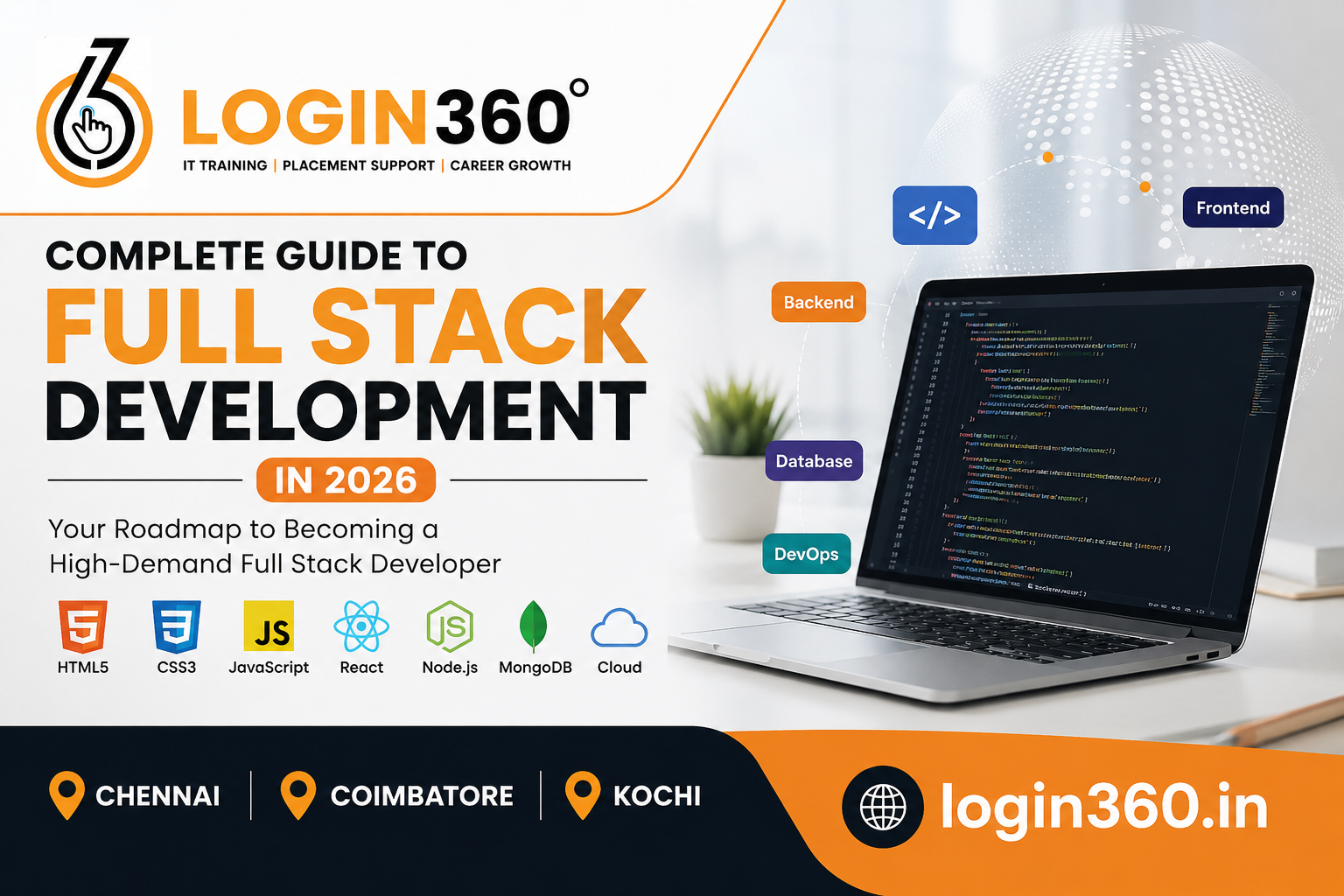
Complete Guide to Full Stack Development in 2026
Introduction
Full stack development continues to be one of the most in-demand skills in the technology industry. In 2026, businesses are looking for developers who can build complete web applications, from designing user-friendly interfaces to managing databases and deploying applications to the cloud. Whether you are a beginner starting your coding journey or an experienced developer looking to upgrade your skills, understanding full stack development can open the door to exciting career opportunities. This guide explains everything you need to know in simple, easy-to-understand language.
What is Full Stack Development?
Full stack development refers to the process of building both the front-end and back-end of a web application. A full stack developer works on everything users see on the website as well as the server, database, and application logic behind the scenes. This combination of skills allows developers to create complete, functional, and scalable web applications.
Why Full Stack Development is Popular in 2026
The demand for full stack developers has increased because companies prefer professionals who can handle multiple aspects of software development. Businesses can reduce costs, improve collaboration, and speed up project delivery by hiring developers with a broad skill set. In addition, the rise of AI-powered tools, cloud computing, and modern JavaScript frameworks has made full stack development more efficient than ever.
Essential Front-End Technologies
The front end is responsible for creating the visual experience users interact with. Every aspiring full stack developer should learn:
- HTML5 for webpage structure
- CSS3 for responsive design and styling
- JavaScript (ES2026) for interactive features
- React, Next.js, or Vue.js for modern web applications
- Tailwind CSS for faster UI development
These technologies help developers build responsive, fast, and user-friendly websites.
Essential Back-End Technologies
The back end handles business logic, authentication, and communication with databases. Popular back-end technologies in 2026 include:
- Node.js with Express.js
- Python with Django or FastAPI
- Java with Spring Boot
- PHP with Laravel
- .NET Core for enterprise applications
Choosing the right back-end technology depends on project requirements and career goals.
Database Skills Every Developer Needs
Databases store application data securely and efficiently. Full stack developers should understand both SQL and NoSQL databases.
Popular database options include:
- MySQL
- PostgreSQL
- MongoDB
- Firebase
- Redis for caching
Learning database design and optimization helps improve application performance.
Cloud and DevOps Knowledge
Modern applications are often deployed to cloud platforms. Developers should learn cloud hosting, version control, and automation tools.
Important skills include:
- Git and GitHub
- Docker
- Kubernetes basics
- AWS, Microsoft Azure, or Google Cloud
- CI/CD pipelines
These skills simplify deployment and improve software reliability.
AI and Automation in Full Stack Development
Artificial Intelligence is transforming software development in 2026. AI coding assistants help developers write cleaner code, detect bugs, generate documentation, and automate repetitive tasks. While AI improves productivity, developers still need strong programming knowledge to design secure and scalable applications.
Best Practices for Becoming a Full Stack Developer
Learning theory is important, but practical experience is even more valuable. Build real-world projects, contribute to open-source communities, maintain a GitHub portfolio, and continuously learn new technologies. Focus on writing clean, maintainable code while understanding security, performance optimization, and responsive design principles.
Career Opportunities
Full stack developers can work in startups, large enterprises, software agencies, or as freelancers. Common job roles include Full Stack Developer, Software Engineer, Web Developer, Technical Consultant, DevOps Engineer, and Solutions Architect. With experience, developers can also move into leadership positions or build their own SaaS products.
Conclusion
Full stack development in 2026 offers excellent career opportunities for anyone willing to learn modern technologies and continuously improve their skills. By mastering front-end development, back-end programming, databases, cloud platforms, and AI-powered tools, developers can build complete web applications that meet today's business needs. Consistent practice, hands-on projects, and staying updated with industry trends will help you become a successful full stack developer in an ever-evolving technology landscape.
- Digital Agency
- Literie
- Location de voitures
- Restaurant
- Restaurant
- Mode
- Mode
- Information
- Marketing
- Tourisme
- Développement
- Découverte
- Législation
- Gastronomie
- Pâtisserie
- Event
- Art
- Causes
- Crafts
- Dance
- Drinks
- Film
- Fitness
- Food
- Games
- Gardening
- Health
- Home
- Literature
- Music
- Networking
- Other
- Party
- Religion
- Shopping
- Sports
- Theater
- Wellness
 English
 Indian
 French
 Arabic
 Spanish
 Portuguese
 Deutsch
 Turkish
 Dutch
Dutch
 Italiano
 Russian
 Romaian
 Portuguese (Brazil)
 Greek
Greek
