


The Health Risks and Side Effects of Poor Posture
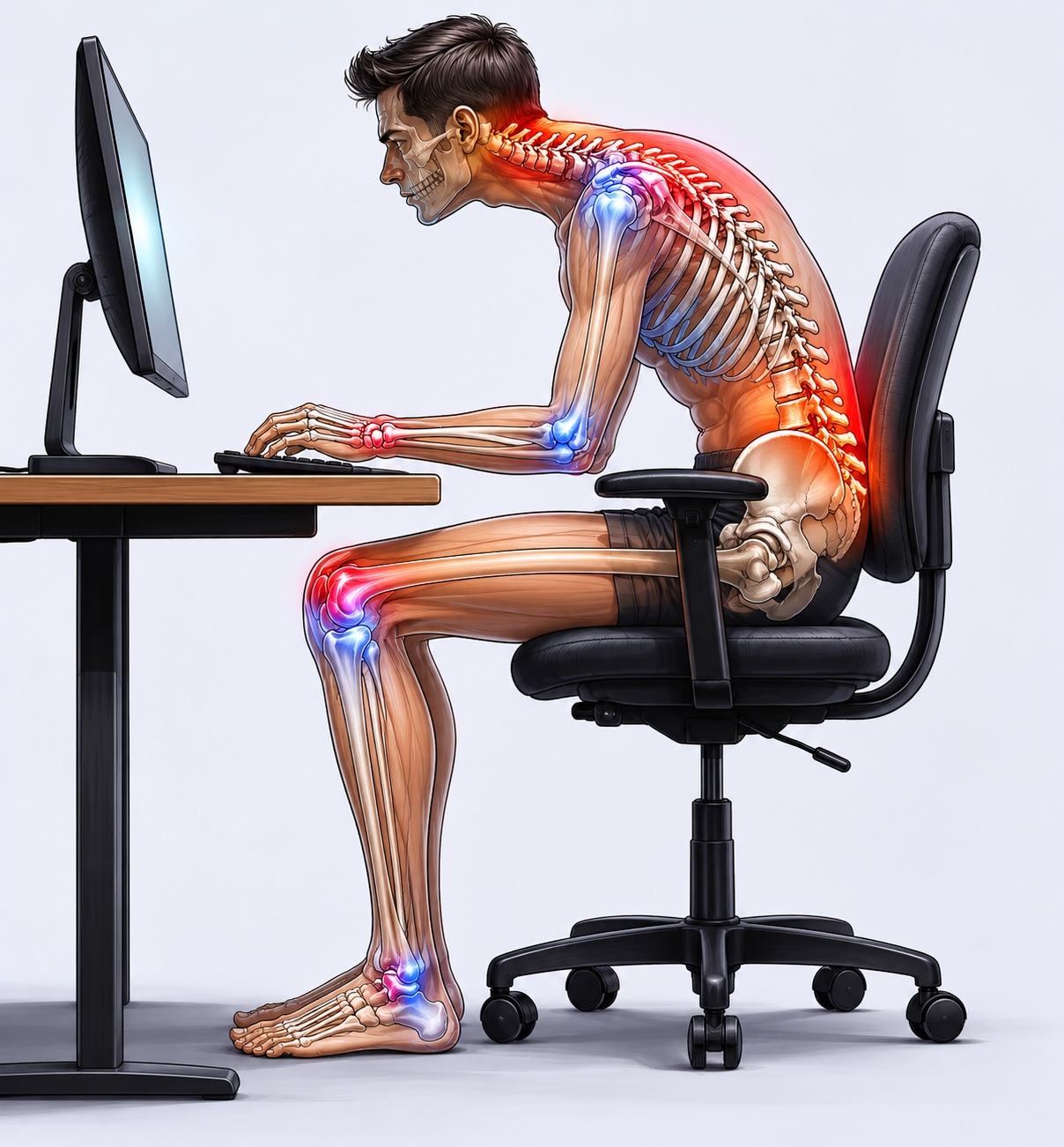
Poor posture has become one of the most common lifestyle problems today, especially with increased screen time and sedentary routines. One widely known condition linked to this is often called “tech neck,” where repeated forward bending of the head places excessive strain on the neck and upper spine.
However, this is just one example. Poor posture affects far more than the neck — it can influence multiple systems in the body. Understanding how posture impacts your health is the first step toward preventing long-term problems and improving overall well-being.
What Is Good Posture?
Posture refers to how you position your body while sitting, standing, or moving, particularly in relation to the alignment of your spine.
Good posture allows:
-
Proper distribution of body weight
-
Reduced stress on muscles and joints
-
Efficient movement and balance
There are two main types of posture:
Dynamic Posture
This is how your body is aligned while you are moving — such as walking, running, or exercising.
Static Posture
This refers to how you hold your body when you are not moving — for example, while sitting, standing, or sleeping.
Both types are equally important for maintaining overall physical health.
How Posture Affects Your Health
Posture plays a role in many functions of the body. When alignment is compromised, it can lead to a wide range of issues.
1. Joint Health
The human body contains hundreds of joints that rely on proper alignment to function efficiently.
When posture is poor:
-
Joints experience uneven pressure
-
Movement becomes less efficient
-
Risk of wear and tear increases
Over time, this may lead to joint discomfort, restricted movement, and added stress on surrounding tissues.
2. Circulation and Digestion
Posture can influence how well blood flows through your body.
Sitting or standing in a slouched position may:
-
Reduce efficient blood circulation
-
Cause pooling of blood in the lower body
-
Increase strain on the cardiovascular system
In addition, poor posture can compress the abdominal area, which may:
-
Slow down digestion
-
Cause bloating or discomfort
-
Contribute to acid reflux symptoms
3. Energy Levels and Daily Performance
Body alignment affects how efficiently your muscles work.
When posture is poor:
-
Muscles must work harder to support the body
-
Energy is used inefficiently
-
Fatigue can set in more quickly
This is one reason why people with poor posture often feel tired even without significant physical activity.
4. Neck and Back Pain
One of the most noticeable effects of poor posture is pain in the neck and back.
Repeated habits like:
-
Looking down at screens
-
Slouching while sitting
-
Leaning forward for long periods
can place excessive strain on the spine and surrounding muscles.
Over time, this may result in stiffness, discomfort, and reduced flexibility.
5. Muscle Imbalance and Structural Stress
Poor posture disrupts the natural balance of the body.
Some muscles become:
-
Tight and overactive
While others become:
-
Weak and underused
This imbalance can affect movement patterns and increase the risk of long-term structural issues if not corrected.
6. Breathing Efficiency
The position of your spine and chest directly affects your ability to breathe properly.
Slouched posture can:
-
Limit lung expansion
-
Reduce oxygen intake
-
Lead to shallow breathing
This may impact both physical performance and mental clarity.
7. Confidence and Body Language
Posture also influences how you feel and how others perceive you.
Standing or sitting upright can:
-
Improve body awareness
-
Create a more confident appearance
-
Positively affect mood and mindset
On the other hand, slouched posture is often associated with low energy and reduced confidence.
Common Causes of Poor Posture
Several everyday habits and factors contribute to posture problems:
-
Prolonged sitting, especially at desks
-
Excessive use of mobile devices
-
Lack of physical activity
-
Improper workstation setup
-
Muscle weakness or tightness
-
Previous injuries
-
Poor footwear choices
-
Stress and mental fatigue
Being aware of these factors can help in preventing posture-related issues.
Ways to Maintain Good Posture
Improving posture requires consistent effort and awareness. Simple daily habits can make a significant difference.
-
Sit and stand with your spine aligned
-
Keep screens at eye level
-
Avoid staying in one position for too long
-
Take regular movement breaks
-
Stretch tight muscles and strengthen weak areas
-
Maintain a comfortable and supportive workspace
-
Walk with your head up and shoulders relaxed
-
Choose footwear that provides proper support
When Additional Help May Be Needed
In some cases, posture-related problems may not improve with basic changes alone.
If discomfort becomes persistent or begins to affect daily life, a structured approach focusing on alignment, movement, and muscle balance may be required.
Addressing these issues early can help prevent long-term complications.
Final Thoughts
Poor posture is often overlooked, but its effects can extend far beyond simple discomfort. From joint stress to reduced energy levels, the way you hold your body plays a crucial role in your overall health.
The good news is that posture can be improved with awareness, consistency, and the right approach. Small changes in daily habits can lead to significant long-term benefits.
- Digital Agency
- Literie
- Location de voitures
- Restaurant
- Restaurant
- Mode
- Mode
- Information
- Marketing
- Tourisme
- Développement
- Découverte
- Législation
- Gastronomie
- Pâtisserie
- Evenement
- Art
- Causes
- Crafts
- Dance
- Drinks
- Film
- Fitness
- Food
- Jeux
- Gardening
- Health
- Domicile
- Literature
- Music
- Networking
- Autre
- Party
- Religion
- Shopping
- Sports
- Theater
- Wellness
 French
 Indian
 English
 Arabic
 Spanish
 Portuguese
 Deutsch
 Turkish
 Dutch
Dutch
 Italiano
 Russian
 Romaian
 Portuguese (Brazil)
 Greek
Greek
