


Mastering Behavioral & Mental Health Billing Services in the USA: The Ultimate Guide for 2026
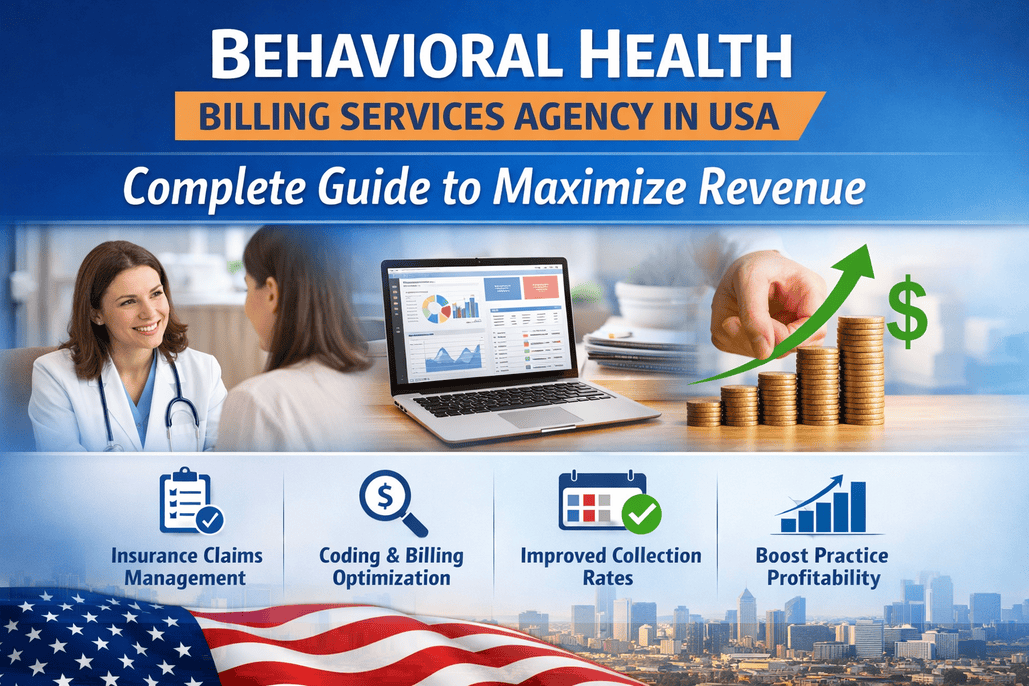
The demand for behavioral and mental healthcare across the country has reached unprecedented levels. Yet, while clinicians are busier than ever providing life-changing care, many practices are struggling behind the scenes with a less visible crisis: declining revenue due to denied claims, shifting regulations, and overwhelming administrative burdens.
If you have ever felt like behavioral health billing operates in a completely different universe than standard medical billing, you are entirely correct. The rules are constantly evolving—from the complexities of telehealth modifiers to brand-new codes for digital therapeutics and collaborative care. For modern practices, finding reliable behavioral & mental health billing services is no longer just a luxury; it is a critical necessity for survival and growth.
In this comprehensive guide, we will explore the unique intricacies of mental health billing, the latest trends shaping the industry in 2026, and how partnering with specialized experts can streamline your operations, allowing you to focus on what matters most—your patients.
Why Behavioral Health Billing is Uniquely Complex
Most standard medical billing relies on a straightforward fee-for-service model based on physical procedures. Behavioral health, however, is nuanced, subjective, and heavily regulated. It requires a delicate balance of precise documentation, strict privacy adherence, and accurate time-tracking.
1. The Nuance of Time-Based Coding
In fields like cardiology or orthopedics, a procedure is a procedure regardless of how long it takes. In mental health, time is the foundational metric for reimbursement. Psychotherapy codes (such as CPT 90832, 90834, and 90837) are strictly tied to the duration of the session. A clinician must accurately document the exact start and stop times, and failing to justify a 60-minute session (90837) with appropriate medical necessity in the clinical notes is one of the leading causes of claim denials and audits.
2. Intensive and Bundled Services
Mental health treatment often involves intermediate levels of care, such as Intensive Outpatient Programs (IOP) or Partial Hospitalization Programs (PHP). These do not follow standard single-visit billing rules. Instead, they often utilize bundled billing, where multiple services—like individual therapy, group counseling, and case management—are grouped together under a specific code for a day or week of treatment. Every insurance payer has a distinct set of rules regarding what can and cannot be included in these bundles, creating a minefield for inexperienced billers.
3. Stricter Privacy Regulations
Behavioral health information is protected by some of the strictest privacy laws in the country. Beyond standard HIPAA compliance, mental health and substance use disorder records are often subject to additional layers of confidentiality, such as 42 CFR Part 2. Navigating the release of information for prior authorizations and claims without violating these federal protections requires deep expertise.
4. The Shift from DSM-5 to ICD-10
Clinicians diagnose using the criteria found in the DSM-5-TR, but insurance companies require ICD-10-CM codes to process claims. Translating a subjective clinical diagnosis into the highest level of specificity required by an insurance payer (for example, coding "Major depressive disorder, recurrent, moderate" rather than just an "unspecified" depression code) is essential. Vague coding directly leads to claims being rejected for lacking medical necessity.
Key Trends Reshaping Mental Health Billing in the USA
As we move deeper into 2026, the landscape of behavioral healthcare is rapidly transforming. Government mandates, technological advancements, and payer policies are shifting how providers are reimbursed.
The Rise of Digital Therapeutics
One of the most exciting developments in modern mental health care is the integration of technology into treatment plans. In recent years, Medicare and commercial payers have begun covering FDA-approved digital mental health devices and applications. However, billing for these digital therapeutics requires new HCPCS codes and incredibly specific documentation. Clinicians must prove that the patient is actively using the app or device and link that usage directly to clinical decision-making.
Tighter Rules on Telehealth
Telehealth exploded out of necessity a few years ago and remains a cornerstone of behavioral health access. While Medicare has made home-based tele-mental health a permanent fixture, the technical requirements to bill for it have tightened considerably. Payers are enforcing stricter rules around the use of place-of-service codes and specific telehealth modifiers (such as Modifier 95). Furthermore, while audio-only visits are still permitted in certain scenarios, they require precise documentation to prove why a video connection was not possible.
Integration of Behavioral and Primary Care
The healthcare industry is aggressively moving toward collaborative care models that treat the whole patient. Behavioral Health Integration (BHI) and Collaborative Care Management (CoCM) allow mental health professionals to coordinate with primary care doctors. While this drastically improves patient outcomes, it introduces complex new billing rules, requiring validated clinical rating scales, patient registries, and shared care plans to secure reimbursement.
Increased Payer Scrutiny and AI Audits
With the surge in mental health utilization, insurance companies are heavily scrutinizing claims. They are utilizing data analytics to identify outlier billing patterns, shifting their denial reasons from "service not covered" to "documentation insufficient". To combat this, leading practices are implementing pre-billing AI tools to analyze claims and clinical notes before they are sent to the payer, catching code mismatches and documentation gaps before they turn into costly denials.
The Ecosystem of Professional Healthcare Administration
Handling the sheer volume of changes, codes, and payer guidelines requires a specialized approach. This is where partnering with dedicated experts becomes invaluable. A comprehensive financial strategy for a mental health practice relies on four interconnected pillars.
Precision in Medical Coding Services
Coding is the language that translates your clinical work into billable revenue. Because behavioral health relies on highly specific CPT and HCPCS codes—such as differentiating between a standalone psychiatric diagnostic evaluation (90791) and one that includes medical services (90792)—accuracy is non-negotiable. Professional medical coding services ensure that the correct modifiers are applied, that E/M codes are accurately combined with psychotherapy add-on codes when appropriate, and that your clinical notes actually support the codes you are billing.
Proactive Medical Billing Services
Once a claim is coded, it must be submitted to the payer seamlessly. Specialized medical billing services take over the heavy lifting of claim generation, scrubbing, and submission. A dedicated team will follow up on unpaid claims, appeal unjust denials, and track authorization limits. By having experts handle the constant back-and-forth with insurance companies, mental health providers can reclaim hours of their week.
The Importance of Credentialing
You cannot bill an insurance company if you are not properly enrolled in their network. For behavioral health providers, credentialing is notoriously slow, complex, and frustrating. It involves verifying your education, licensure, liability insurance, and practice details with every single payer you wish to work with. If a provider's credentialing lapses, or if a new clinician joins a group practice but isn't properly linked, every claim they submit will be denied. Having an administrative partner manage your enrollments, re-attestations, and CAQH profiles ensures your cash flow is never interrupted by bureaucratic red tape.
End-to-End Revenue Cycle Management
Ultimately, coding, billing, and credentialing are just pieces of a larger puzzle known as revenue cycle management (RCM). RCM encompasses the entire lifecycle of a patient's account, starting from the moment they schedule an appointment to the final payment of their balance. An effective RCM strategy involves verifying insurance eligibility upfront, securing prior authorizations before the first session, submitting clean claims, posting payments, and managing patient collections transparently.
How 247 Medical Billing Services Elevates Your Practice
Navigating the turbulent waters of behavioral health reimbursement requires a partner who truly understands the specialty. Choosing the right partner can mean the difference between barely breaking even and running a thriving, profitable practice.
This is exactly where 247 Medical Billing Services steps in. We recognize that mental health professionals are facing rising caseloads and unprecedented burnout. You did not enter this field to spend your weekends arguing with insurance representatives over denied claims or studying the latest updates to Medicare fee schedules.
By utilizing 247 Medical Billing Services, your practice gains access to a dedicated team of experts who live and breathe behavioral health billing. We provide specialized medical coding services to ensure your documentation aligns perfectly with payer requirements. We handle the exhausting process of credentialing to get your providers in-network faster. Most importantly, we offer comprehensive revenue cycle management that proactively prevents denials, accelerates your cash flow, and provides you with transparent financial reporting. We act as an extension of your practice, ensuring that your hard work is compensated accurately and promptly.
Actionable Strategies to Prevent Claim Denials Today
While partnering with an expert is the ultimate solution, there are internal protocols your practice can implement immediately to protect your revenue.
-
Implement Strict Upfront Verification: Never assume a patient's coverage is active just because they have an insurance card. Verify benefits, copays, deductibles, and specific behavioral health carve-outs before their very first session.
-
Track Authorizations Relentlessly: Mental health treatments, especially intensive programs or psychological testing, often require prior authorization. Track how many authorized visits a patient has left and initiate the re-authorization process long before the current approval expires.
-
Ensure Documentation Matches the Code: If you bill for a 60-minute therapy session, your clinical note must reflect the complexity and depth of a 60-minute session. Insufficient documentation is a primary trigger for payer audits.
-
Stay Current with Payer Policies: Insurance companies update their clinical policies annually. Ensure your billing staff is continuously trained on new modifiers, changing telehealth rules, and updated DSM-to-ICD crosswalks.
Frequently Asked Questions (FAQs)
1. What is the difference between standard medical billing and behavioral health billing? Standard medical billing is generally focused on tangible, physical procedures and straightforward diagnoses. Behavioral health billing is highly subjective, relies heavily on time-based coding (the exact length of a therapy session), often involves strict prior authorization requirements, and must adhere to highly sensitive privacy laws.
2. Why are my mental health claims constantly being denied for "medical necessity"? Payers are increasingly scrutinizing behavioral health claims. If a claim is denied for medical necessity, it usually means the clinical documentation did not adequately describe the severity of the patient's symptoms, functional impairment, or progress toward specific treatment goals to justify the level of care billed.
3. Can I bill for a psychiatric evaluation and a therapy session on the same day? Generally, no. Most insurance payers will not allow a provider to bill a comprehensive psychiatric diagnostic evaluation (CPT 90791 or 90792) alongside standard psychotherapy codes (90832–90837) on the exact same date of service, as the evaluation is considered a standalone event.
4. What role does credentialing play in the billing process? Credentialing is the foundational step before billing can even occur. It is the process of getting a provider approved and in-network with an insurance company. If a clinician provides a service before their credentialing is fully approved by that specific payer, the resulting claims will be denied, and the provider cannot retroactively bill the insurance.
5. How do digital therapeutics factor into mental health billing? As of recent updates, Medicare and several commercial payers recognize FDA-cleared digital mental health apps and devices as billable treatments. However, providers must use specific new HCPCS codes and thoroughly document the patient's active enrollment, usage metrics, and how the device data influences the ongoing treatment plan.
6. Is telehealth still fully covered for behavioral health in the USA? Yes, telehealth remains a massive part of behavioral health, and Medicare has made home-based mental health visits permanent. However, the "pandemic flexibility" era is over. Providers must strictly adhere to current rules regarding synchronous video requirements, place-of-service codes, and specific modifiers to avoid denials.
7. Why should a practice outsource to specialized behavioral & mental health billing services? Outsourcing to a specialized billing company removes the massive administrative burden from your clinical staff. Experts stay ahead of coding changes, aggressively pursue unpaid claims, handle complex appeals, and streamline the entire revenue cycle, ultimately leading to higher reimbursement rates and better financial stability for the practice.
Conclusion
Providing mental and behavioral health care is complex, emotionally demanding, and incredibly vital work. Your practice's financial operations shouldn't add to that stress. As payer rules become more stringent and coding requirements grow more complex, trying to manage the financial side of a practice without specialized knowledge is a recipe for burnout and lost revenue.
By understanding the current trends and securing the right administrative partnerships, you can protect your practice's bottom line. When your medical billing, coding, and credentialing are handled with precision, you create a stable, thriving environment where your primary focus can remain exactly where it belongs: on the well-being and recovery of your patients.
- Digital Agency
- Literie
- Location de voitures
- Restaurant
- Restaurant
- Mode
- Mode
- Information
- Marketing
- Tourisme
- Développement
- Découverte
- Législation
- Gastronomie
- Pâtisserie
- Evento
- Art
- Causes
- Crafts
- Dance
- Drinks
- Film
- Fitness
- Food
- Giochi
- Gardening
- Health
- Home
- Literature
- Music
- Networking
- Altre informazioni
- Party
- Religion
- Shopping
- Sports
- Theater
- Wellness
 Italiano
 Indian
 English
 French
 Arabic
 Spanish
 Portuguese
 Deutsch
 Turkish
 Dutch
Dutch
 Russian
 Romaian
 Portuguese (Brazil)
 Greek
Greek
