


Demystifying Urgent Care Billing: A Comprehensive Guide to Optimizing Revenue in the USA Healthcare Landscape
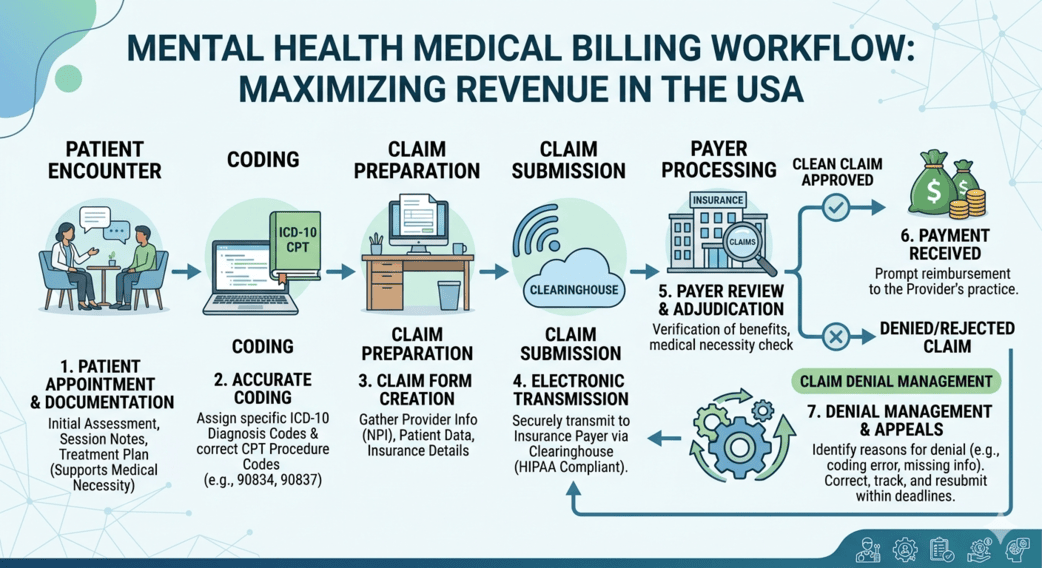
The healthcare landscape in the USA has shifted dramatically over the last decade, with urgent care centers emerging as a vital bridge between primary care physicians and overcrowded emergency rooms. These facilities offer patients immediate, walk-in access to acute medical care, treating everything from minor fractures to sudden respiratory infections. However, behind the seamless patient experience lies a highly complex financial web. Managing urgent care billing effectively requires navigating a unique maze of regulatory requirements, hybrid coding systems, and unpredictable payer contracts that can easily drain a clinic’s bottom line if left unchecked.
Unlike traditional family practices that schedule appointments weeks in advance, urgent care centers must be prepared for anything at any time. This unpredictability extends directly into the billing department. To stay financially viable while delivering top-tier patient care, providers must implement robust operational strategies that streamline data capture, eliminate claim errors, and accelerate cash flow. Mastering the nuances of urgent care billing is not just an administrative necessity; it is the ultimate foundation of a clinic's long-term sustainability.
The Complexities of the Urgent Care Financial Ecosystem
Urgent care centers occupy a unique space in the American medical system. They operate under a hybrid model, often blending elements of primary care and emergency medicine. This dual nature reflects heavily in how claims are processed and reimbursed.
The Challenge of POS (Place of Service) Codes
One of the most frequent stumbling blocks in this sector is the proper application of Place of Service (POS) codes. While a standard doctor's office uses POS Code 11, urgent care facilities typically use POS Code 20.
Using the incorrect code can lead to immediate claim rejections or underpayments. Some payers have strict policies regarding what qualifies as an urgent care visit, and failing to align your documentation with POS 20 guidelines can signal red flags to insurance auditors.
S-Codes vs. CPT Codes
Another layer of complexity is the choice between global billing and fee-for-service billing. Many commercial insurance contracts in the USA utilize "S-codes" (such as S9088) to represent a global urgent care visit fee, encompassing all services rendered during that encounter.
Conversely, other payers require traditional CPT coding, where every evaluation, X-ray, and lab test is billed individually. Staff must know precisely which contract applies to which patient before the claim is generated.
Common Roadblocks in Urgent Care Reimbursement
To optimize your financial performance, you must first identify the hidden leaks in your revenue pipeline. Urgent care centers face several specific obstacles that frequently delay payments.
-
Eligibility Verification Failures: Because walk-in patients are the norm, front-desk staff often rush the registration process. Failing to verify insurance coverage in real-time leads to claims being submitted to inactive policies.
-
Upcoding and Downcoding: Documenting a level-four visit when the clinical notes only support a level-two visit (upcoding) invites audits. Conversely, downcoding out of fear of audits means leaving hard-earned money on the table.
-
Missing Modifiers: Urgent care visits frequently involve procedures like splinting, suturing, or rapid strep tests alongside an evaluation and management (E&M) service. Failing to apply appropriate modifiers, such as Modifier 25, results in the bundled denial of secondary services.
Strategies to Streamline Front-End Operations
A successful billing cycle does not start in the billing department—it starts at the front desk. Front-end operations set the trajectory for the entire revenue cycle.
Real-Time Insurance Verification
Implementing automated tools that instantly verify a patient's active benefits, copay responsibilities, and deductible status when they walk through the door is critical. Since urgent care copays are typically higher than standard primary care copays, knowing the exact amount upfront allows the front-desk team to collect the patient's responsibility before care is delivered.
Clear Financial Policies
Patients appreciate transparency. Displaying clear signage and providing concise financial responsibility forms during check-in reduces friction later. When patients understand that they are responsible for balances not covered by insurance, point-of-service collection rates skyrocket.
The Role of Advanced Coding and Compliance
Accurate documentation is the lifeblood of compliance and clean claim submission. Without precise coding, even the most efficient clinic will face high denial rates.
+---------------------------+-------------------------------------------------------+
| Coding Element            | Critical Impact on Urgent Care Billing                |
+---------------------------+-------------------------------------------------------+
| Place of Service (POS 20) | Identifies the facility type; ensures correct fee     |
|                           | schedule alignment.                                   |
+---------------------------+-------------------------------------------------------+
| Modifier 25               | Separates a significant, identifiable E&M service     |
|                           | from a minor surgical procedure on the same day.      |
+---------------------------+-------------------------------------------------------+
| ICD-10-CM Specificity     | Prevents denials based on medical necessity by        |
|                           | mapping exact diagnoses to the treatment provided.    |
+---------------------------+-------------------------------------------------------+
As guidelines evolve, continuous education for clinical staff on thorough charting is non-negotiable. If a procedure or diagnostic rationale is not explicitly written in the medical chart, it legally did not happen.
Elevating Financial Health with Professional Specialized Services
As an urgent care practice scales, managing administrative burdens internally often becomes inefficient. The sheer volume of daily encounters can overwhelm a small in-house billing team, leading to backlogs, missed filing deadlines, and unappealed denials. This is where partnering with specialized external experts becomes a strategic advantage.
Utilizing dedicated medical billing services ensures that every claim is meticulously scrubbed for errors before submission, drastically reducing the initial rejection rate. Because urgent care documentation must capture acute injuries and immediate interventions, leveraging professional medical coding services helps translate complex clinical charts into accurate, compliant code sets.
Furthermore, integrating comprehensive medical billing and coding services bridges the gap between clinical documentation and financial reimbursement, allowing physicians to focus entirely on patient care rather than administrative paperwork.
Beyond daily claim submissions, maintaining long-term financial viability requires an overarching look at your practice's fiscal health. Partnering with a partner that specializes in revenue cycle management services allows urgent care centers to track Key Performance Indicators (KPIs) such as Days in Accounts Receivable (DAR) and clean claim rates.
Additionally, as new providers join your expanding practice, utilizing professional credentialing services ensures that your doctors are properly enrolled with major insurance networks without costly delays, preventing situations where a provider renders care but cannot legally bill for it.
Why Outsource to 247 Medical Billing Services?
Navigating the volatile terrain of healthcare reimbursement in the USA requires an experienced ally. 247 Medical Billing Services provides a comprehensive, end-to-end solution designed specifically to meet the high-volume, fast-paced demands of modern urgent care centers. By combining industry-certified coding specialists with cutting-edge billing technology, they eliminate the operational bottlenecks that delay your cash flow.
When you partner with 247 Medical Billing Services, your practice gains access to dedicated teams proficient in the precise application of urgent care modifiers, global billing structures, and payer-specific contracts. Their proactive approach to error detection, denial management, and real-time electronic claims tracking ensures that your facility achieves optimal reimbursement rates while remaining fully compliant with federal and state regulations.
Instead of burning internal resources on administrative overhead, your clinic can rely on their expertise to maximize revenue capture and maintain a healthy, predictable financial pipeline.
Frequently Asked Questions
1. What is the standard Place of Service (POS) code for urgent care billing in the USA?
The standard code is POS 20. It explicitly designates the facility as an urgent care center, which provides immediate, short-term medical care on a walk-in basis. Using POS 11 (Office) or POS 23 (Emergency Room) incorrectly can lead to severe penalties or immediate claim denials.
2. How does a global "S-code" contract work in urgent care?
Under an S-code contract (commonly using code S9088), an insurance payer pays a flat, predetermined rate for the entire urgent care visit, regardless of how many procedures, X-rays, or lab tests are performed. It simplifies billing but requires careful contract analysis to ensure profitability.
3. When should Modifier 25 be applied in urgent care billing?
Modifier 25 should be used when a patient receives a significant, separately identifiable Evaluation and Management (E&M) service on the same day as a distinct procedure (such as repairing a laceration or setting a minor fracture). It informs the payer that both services were medically necessary and should be paid independently.
4. Why are credentialing services so critical for urgent care centers?
Because urgent care centers experience fluctuating patient volumes and often hire locum tenens or new full-time providers, swift enrollment is vital. If a physician is not properly credentialed with a patient's insurance network, the clinic cannot collect reimbursement for that provider's services, leading to severe financial losses.
5. What are the main benefits of outsourcing revenue cycle management services?
Outsourcing allows your clinic to leverage advanced billing technology, reduce internal administrative overhead, minimize billing errors, and accelerate the collection of outstanding accounts receivable. It shifts the burden of appealing denials and tracking policy changes to dedicated specialists.
- Digital Agency
- Literie
- Location de voitures
- Restaurant
- Restaurant
- Mode
- Mode
- Information
- Marketing
- Tourisme
- Développement
- Découverte
- Législation
- Gastronomie
- Pâtisserie
- Evento
- Art
- Causes
- Crafts
- Dance
- Drinks
- Film
- Fitness
- Food
- Giochi
- Gardening
- Health
- Home
- Literature
- Music
- Networking
- Altre informazioni
- Party
- Religion
- Shopping
- Sports
- Theater
- Wellness
 Italiano
 Indian
 English
 French
 Arabic
 Spanish
 Portuguese
 Deutsch
 Turkish
 Dutch
Dutch
 Russian
 Romaian
 Portuguese (Brazil)
 Greek
Greek
