


Mental Health Medical Billing in the USA: Strategies to Improve Revenue, Compliance, and Practice Growth
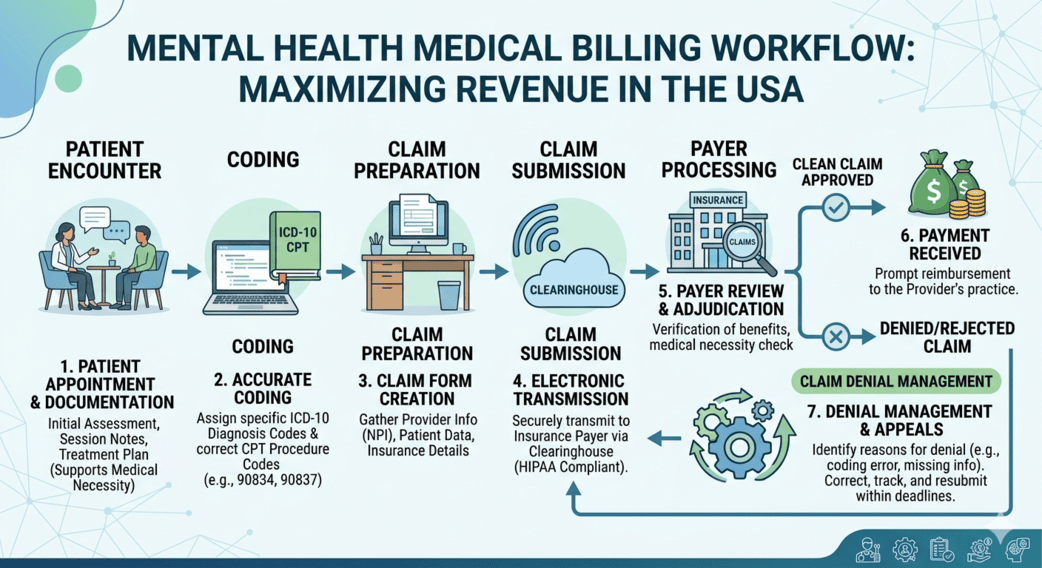
Mental health providers across the USA are experiencing increasing demand for behavioral healthcare services. From private counseling practices and psychologists to psychiatrists and community mental health centers, providers are serving more patients than ever before. However, while delivering quality care remains the top priority, managing the financial side of a practice has become increasingly complex.
This is where effective mental health medical billing plays a critical role. Accurate billing ensures providers receive proper reimbursement, maintain compliance with payer requirements, and sustain long-term practice growth. Unfortunately, mental health billing involves unique challenges that differ significantly from other medical specialties.
In this article, we'll explore how mental health billing works, common challenges providers face, and how specialized billing support can improve revenue and operational efficiency.
Understanding Mental Health Medical Billing
Mental health medical billing is the process of submitting and managing claims for behavioral health services provided by psychiatrists, psychologists, therapists, counselors, social workers, and other mental health professionals.
Unlike many medical specialties, mental health billing often involves:
- Time-based CPT coding
- Frequent payer policy updates
- Prior authorization requirements
- Telehealth billing regulations
- Documentation compliance standards
- Complex reimbursement structures
Because of these factors, providers need a billing process that ensures accuracy from patient registration through final payment collection.
A well-structured billing workflow helps reduce claim denials while improving cash flow and patient satisfaction.
Why Mental Health Billing Is More Complex Than Traditional Medical Billing
Behavioral healthcare services are often subject to different payer requirements than physical healthcare services.
Several factors contribute to billing complexity:
Session-Based Coding
Most mental health services are billed according to session duration rather than procedures alone. Even small documentation discrepancies can affect reimbursement.
Insurance Verification Challenges
Behavioral health benefits frequently differ from standard medical benefits. Coverage limitations, visit caps, and authorization requirements can vary significantly among payers.
Frequent Policy Changes
Insurance companies regularly update mental health reimbursement policies, requiring providers to stay informed and compliant.
Telehealth Requirements
The rapid growth of virtual mental healthcare has introduced additional coding and billing considerations that providers must understand.
Without proper oversight, these challenges can lead to delayed payments, denied claims, and revenue loss.
The Importance of Specialized Mental Health Billing Services
Many behavioral health practices choose professional mental health billing services to streamline operations and improve financial performance.
Specialized billing teams understand:
- Behavioral health CPT codes
- Psychiatric evaluation billing
- Therapy session reimbursement rules
- Telehealth claim requirements
- Insurance-specific guidelines
- Mental health parity regulations
By partnering with experts who focus on behavioral healthcare reimbursement, providers can spend less time managing administrative tasks and more time focusing on patient care.
Common Billing Challenges for Mental Health Providers
Even experienced practices face billing obstacles that impact revenue collection.
Claim Denials
One of the most common issues involves claim denials caused by:
- Incorrect CPT codes
- Missing documentation
- Authorization errors
- Eligibility verification problems
- Modifier inaccuracies
Each denied claim requires additional administrative effort to correct and resubmit.
Delayed Payments
Slow reimbursement cycles can create cash flow challenges for mental health practices.
Common causes include:
- Incomplete claim submissions
- Payer processing delays
- Documentation requests
- Coding discrepancies
Credentialing Delays
Providers often experience payment delays when credentialing is incomplete or outdated.
Ensuring enrollment with insurance networks is essential before services are rendered.
Underpayment Issues
Many providers focus on denied claims while overlooking underpaid claims.
Regular payment audits help identify reimbursement discrepancies and recover lost revenue.
Best Practices for Billing for Mental Health Services
Successful practices implement strategies that improve accuracy and reimbursement outcomes.
Verify Insurance Before Every Visit
Patient benefits can change frequently.
Eligibility verification should confirm:
- Active coverage
- Copayment amounts
- Deductible status
- Authorization requirements
- Covered behavioral health services
Maintain Detailed Documentation
Clinical documentation should clearly support:
- Medical necessity
- Treatment goals
- Session duration
- Provider credentials
- Services rendered
Proper documentation strengthens claims and supports compliance during audits.
Submit Claims Promptly
Timely filing is essential because each payer has specific claim submission deadlines.
Delays can result in lost reimbursement opportunities.
Monitor Key Performance Indicators
Tracking billing metrics helps identify revenue cycle weaknesses.
Important indicators include:
- First-pass claim acceptance rate
- Days in accounts receivable
- Denial rate
- Collection rate
- Net reimbursement percentage
Consistent monitoring enables proactive problem-solving.
How Mental Health Billing Companies Support Practice Growth
Professional mental health billing companies provide more than claim submission support.
Their services often include:
Revenue Optimization
Experienced billing teams identify coding opportunities that maximize legitimate reimbursement.
Denial Management
Dedicated specialists investigate denied claims and pursue timely appeals.
Compliance Oversight
Billing experts stay informed about evolving payer regulations and industry standards.
Reporting and Analytics
Comprehensive reporting helps providers understand financial performance and identify improvement opportunities.
Administrative Relief
Reducing billing responsibilities allows clinicians and office staff to focus on patient care rather than paperwork.
These advantages make specialized billing support a valuable investment for growing practices.
Choosing the Right Mental Health Billing Company
Not all billing partners offer the same level of expertise.
When evaluating a mental health billing company, providers should consider:
Industry Experience
Look for teams with extensive behavioral health billing knowledge.
Technology Capabilities
Advanced billing platforms improve claim tracking, reporting, and communication.
Transparency
Reliable billing partners provide clear performance reports and open communication.
Compliance Knowledge
A strong understanding of HIPAA requirements and payer regulations is essential.
Scalability
The billing solution should support future growth without disrupting operations.
Selecting the right partner can significantly improve financial outcomes and operational efficiency.
Mental Health Billing Solutions for Modern Practices
Today's healthcare environment requires advanced mental health billing solutions that combine technology, expertise, and strategic revenue management.
Modern solutions often include:
- Electronic claim submission
- Real-time eligibility verification
- Automated payment posting
- Denial tracking systems
- Revenue analytics dashboards
- Telehealth billing support
These tools help practices improve collections while reducing administrative burdens.
As behavioral healthcare continues to evolve, technology-driven billing processes are becoming increasingly important for long-term success.
The Role of Medical Billing and Coding Services in Behavioral Healthcare
Accurate coding is the foundation of successful reimbursement.
Professional medical billing and coding services help ensure claims accurately reflect the services provided.
Certified coding specialists stay current with:
- CPT updates
- ICD-10 changes
- Payer-specific billing requirements
- Behavioral health coding guidelines
When coding errors are minimized, claim acceptance rates typically improve.
In addition, comprehensive medical coding services help reduce compliance risks while supporting proper reimbursement.
Providers who invest in coding accuracy often experience fewer denials and faster payments.
Revenue Cycle Management Services for Mental Health Practices
Effective revenue cycle management services encompass every stage of the patient payment journey.
The revenue cycle includes:
- Patient scheduling
- Insurance verification
- Charge capture
- Claim submission
- Payment posting
- Denial management
- Accounts receivable follow-up
- Patient collections
A strong revenue cycle strategy helps practices improve financial stability while maintaining positive patient experiences.
For mental health organizations, efficient revenue cycle management is essential for sustainable growth and profitability.
Why Credentialing Services Matter
Before providers can bill many insurance plans, they must complete credentialing and enrollment requirements.
Professional credentialing services help streamline this process by:
- Managing applications
- Tracking approvals
- Maintaining provider records
- Monitoring renewals
- Supporting payer enrollment
Proper credentialing reduces reimbursement delays and ensures providers can participate in desired insurance networks.
Many practices overlook credentialing until problems arise, but proactive management helps prevent costly interruptions.
The Future of Billing Services for Mental Health Providers
Behavioral healthcare demand continues to rise throughout the United States.
As regulations evolve and reimbursement requirements become more sophisticated, the need for specialized billing services for mental health providers will continue to grow.
Emerging trends include:
- Expanded telebehavioral health services
- Greater automation in claims processing
- Data-driven revenue optimization
- Enhanced compliance monitoring
- Artificial intelligence-assisted workflow management
Practices that embrace efficient billing processes will be better positioned to navigate industry changes and maintain financial health.
Supporting Long-Term Success Through Specialized Billing Expertise
For mental health providers, financial stability is closely tied to billing accuracy, compliance, and operational efficiency.
Whether operating a solo counseling practice or a multi-provider behavioral health organization, investing in effective billing for mental health services can improve reimbursement outcomes while reducing administrative stress.
Organizations such as 247 Medical Billing Services support healthcare providers through comprehensive solutions that may include medical billing services, medical coding services, medical billing and coding services, revenue cycle management services, and credentialing services. By combining industry expertise with proven processes, providers can strengthen their financial performance while remaining focused on delivering quality patient care.
Conclusion
Successful mental health billing requires more than simply submitting claims. It demands a thorough understanding of payer policies, behavioral health coding requirements, compliance standards, and revenue cycle best practices.
As the demand for mental healthcare continues to increase across the USA, providers who implement specialized mental health medical billing strategies will be better equipped to reduce denials, accelerate reimbursement, and support sustainable practice growth. With the right processes, technology, and professional support in place, mental health organizations can create a stronger financial foundation while continuing to serve patients effectively.
Frequently Asked Questions
1. What is mental health medical billing?
Mental health medical billing is the process of coding, submitting, tracking, and managing insurance claims for behavioral health services provided by therapists, psychologists, psychiatrists, counselors, and other mental health professionals.
2. Why is mental health billing different from general medical billing?
Mental health billing often involves time-based coding, session documentation requirements, telehealth regulations, and specialized payer policies that differ from many traditional medical specialties.
3. How can mental health billing services reduce claim denials?
Professional mental health billing services improve coding accuracy, verify insurance eligibility, manage authorizations, and ensure claims meet payer requirements before submission.
4. What are mental health billing solutions?
Mental health billing solutions include technologies and services that help practices manage eligibility verification, claim submission, payment posting, denial management, reporting, and revenue optimization.
5. Why are credentialing services important for mental health providers?
Credentialing services help providers enroll with insurance networks, maintain compliance, and avoid reimbursement delays caused by incomplete or expired credentials.
6. How do revenue cycle management services benefit behavioral health practices?
Revenue cycle management services help improve cash flow, reduce claim denials, accelerate reimbursements, enhance collections, and provide better financial visibility throughout the billing process.
- Digital Agency
- Literie
- Location de voitures
- Restaurant
- Restaurant
- Mode
- Mode
- Information
- Marketing
- Tourisme
- Développement
- Découverte
- Législation
- Gastronomie
- Pâtisserie
- Event
- Art
- Causes
- Crafts
- Dance
- Drinks
- Film
- Fitness
- Food
- Games
- Gardening
- Health
- Home
- Literature
- Music
- Networking
- Other
- Party
- Religion
- Shopping
- Sports
- Theater
- Wellness
 English
 Indian
 French
 Arabic
 Spanish
 Portuguese
 Deutsch
 Turkish
 Dutch
Dutch
 Italiano
 Russian
 Romaian
 Portuguese (Brazil)
 Greek
Greek
