


From Forts to Taj: A 6-Day Journey Through India's Golden Triangle
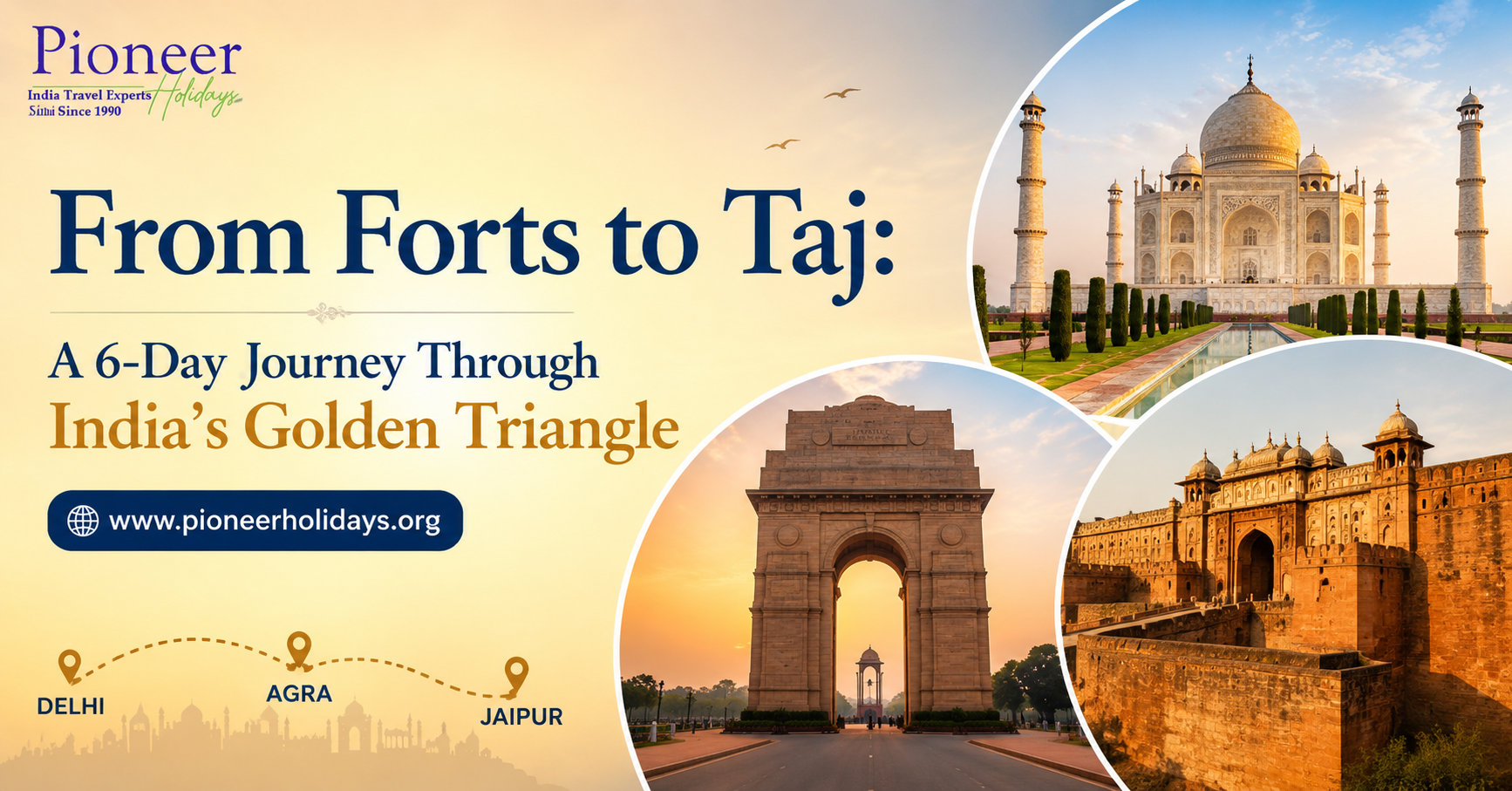
India is a country that hits you all at once — the colors, the chaos, the history layered so thick you can almost feel it in the air. But if you are visiting for the first time and wondering where to begin, the answer is almost always the same: the Golden Triangle. Delhi, Agra, and Jaipur — three cities, one unforgettable loop, and six days that will change the way you see the world.
This blog is your honest, practical, and detailed guide to planning an india golden triangle tour 6 days — covering what to see, where to stay, how to move between cities, and why this route has been welcoming travelers for decades without ever getting old.
Why Six Days Works Perfectly for the Golden Triangle
A lot of people try to rush this circuit in three or four days. That is a mistake. You end up skipping things, feeling exhausted, and missing the actual soul of each city. Six days, on the other hand, gives you enough time to breathe, wander into a side street, sit at a chai stall, and actually absorb what is around you.
Six days means two days per city — and in Delhi, Agra, and Jaipur, two days is just enough to cover the highlights without burning yourself out.
Day 1 & 2 — Delhi: Where Old and New Collide
Delhi is not a city. It is several cities stacked on top of each other across thousands of years of history. Your first two days here will set the tone for the entire trip.
Old Delhi is where you start. Chandni Chowk, one of Asia's oldest markets, is a sensory overload in the best possible way. Narrow lanes, rickshaws weaving through crowds, shops selling everything from spices to wedding clothes, and the smell of freshly fried jalebis in the morning air. Take a cycle rickshaw ride through the lanes — it is slow, intimate, and one of the most authentic things you can do in this city.
The Jama Masjid, built by Mughal Emperor Shah Jahan in the 17th century, stands at the heart of Old Delhi. It is one of the largest mosques in India and its marble courtyard gives you a rare moment of stillness in an otherwise loud neighborhood.
From here, head to Red Fort — the red sandstone structure that has watched over Delhi for nearly 400 years. The audio guide is worth it. The history here is not just Indian; it is the story of empires, invasions, revolts, and independence.
Day two shifts to New Delhi, the capital built by the British in the early 20th century. Humayun's Tomb is where you want to begin your morning. It is often called the prototype of the Taj Mahal, and standing inside its gardens you will understand why. The symmetry, the proportions, the silence — it is remarkable.
Qutub Minar, a UNESCO World Heritage Site, is another must. The 73-meter tower built in 1193 is the oldest minaret in India, surrounded by ruins that tell the story of Delhi's very first Islamic sultanate.
End your evening at India Gate and walk down Rajpath as the sun goes down. It is the kind of ending that makes Delhi feel like it was always meant to be your starting point.
Day 3 & 4 — Agra: The City That Needs No Introduction
On the morning of day three, your driver picks you up early. The drive from Delhi to Agra takes roughly three to four hours on the Yamuna Expressway — smooth, fast, and surprisingly scenic once you leave the city behind.
You already know what is waiting for you. But no photograph, no matter how many you have seen, prepares you for the Taj Mahal in person.
Go at sunrise. This is not just a travel cliché — it is genuinely the best time to visit. The crowds are thinner, the light is soft and golden, and the white marble seems to glow from within. The Taj Mahal was built by Emperor Shah Jahan between 1632 and 1648 as a mausoleum for his wife Mumtaz Mahal. It took over 20,000 artisans and craftsmen from across Asia and beyond to complete it.
Walk up close. Look at the inlay work — semi-precious stones like lapis lazuli, carnelian, and jade set into white marble in floral patterns so fine they look painted. It is called pietra dura, and it is breathtaking up close.
Spend your afternoon at Agra Fort, just a few kilometers away. This massive red sandstone fort was the seat of Mughal power for generations. Inside, you will find palaces, mosques, and audience halls — and if you know where to stand, a distant view of the Taj Mahal framed through a marble window. Shah Jahan himself spent his last years imprisoned here by his son Aurangzeb, gazing at the monument he had built for the love of his life.
On day four morning, before leaving for Jaipur, consider a quick stop at Fatehpur Sikri, about 40 kilometers from Agra. This ghost city was built by Emperor Akbar in the 1570s and abandoned just 14 years later, possibly due to water shortages. Walking through its perfectly preserved sandstone palaces and courtyards, you get the strange feeling of being in a place that time simply walked away from.
Day 5 & 6 — Jaipur: The City That Dresses in Pink
The drive from Agra to Jaipur takes about four to five hours and passes through the flat, dusty landscape of Rajasthan. As you get closer to the city, the architecture begins to change — more arches, more color, more grandeur. And then Jaipur appears, pink-walled and proud.
Jaipur was founded in 1727 by Maharaja Sawai Jai Singh II, and it was the first planned city in India. The old city was painted pink in 1876 to welcome the Prince of Wales, and the tradition has stuck ever since.
Day five starts at the Amber Fort, situated on a hillside about 11 kilometers from the city center. It is one of the finest examples of Rajput architecture anywhere in India. The Sheesh Mahal or Mirror Palace inside the fort is extraordinary — the ceiling is covered with thousands of tiny mirrors arranged in intricate patterns, and a single candle flame is said to light up the entire room. Take the path up through the fort slowly. The views over the surrounding hills and the lake below are stunning.
Back in the city, the City Palace complex is your next stop. Part of it is now a museum, and part is still home to the royal family of Jaipur. The artifacts on display — royal costumes, weapons, paintings, and astronomical instruments — give you a real sense of the scale and sophistication of Rajput court life.
Just outside the City Palace walls stands the Jantar Mantar, a UNESCO-listed astronomical observatory built by Maharaja Jai Singh II in the early 18th century. The instruments here, made entirely of stone and marble, were used to track planetary movements and measure time with remarkable accuracy. The largest sundial in the world still sits here, accurate to within two seconds.
You cannot leave Jaipur without spending time at the Hawa Mahal — the Palace of Winds. Its iconic five-story facade with 953 small windows was designed so that royal women could observe street life without being seen. From the inside, you can climb to the upper floors and look out through the latticed windows at the busy market street below.
Day six is for slower things. Jaipur's markets are among the best in India. The Johari Bazaar is where you go for jewelry — Rajasthan is famous for its kundan and meenakari work. Bapu Bazaar is for textiles, quilts, and traditional Rajasthani mojari shoes. Tripolia Bazaar has the best brassware and lacquerware.
If you have the energy, a morning visit to Nahargarh Fort gives you the best panoramic view of the entire walled city — a perfect way to end the trip with a view you will remember for a long time.
Practical Things You Need to Know
Best Time to Visit: October to March is ideal. The weather is cool, the skies are clear, and outdoor sightseeing is comfortable. Avoid the summer months (April to June) when temperatures can cross 45°C.
How to Get Around: The most common and comfortable way to do this circuit is by hiring a private car with a driver for all six days. The roads connecting Delhi, Agra, and Jaipur are well-maintained, and having your own vehicle gives you flexibility. Trains are a good alternative if you book in advance — the Gatimaan Express (Delhi to Agra) and several fast trains on the Delhi-Jaipur route are reliable and comfortable.
Where to Stay: Each city has options across all budgets. In Delhi, areas like Connaught Place and Karol Bagh are well-located. In Agra, stay near the Taj Mahal for easy early morning access. In Jaipur, the old city area or near MI Road puts you close to most attractions.
Entry Fees: Foreign nationals pay higher entry fees than Indian nationals at most monuments. The Taj Mahal entry is currently around ₹1300 for foreign visitors. The ASI Composite Ticket covers multiple monuments and can save you money — check what is current when you visit.
Guided Tours: Having a local guide at key monuments — especially the Taj Mahal and Amber Fort — makes a significant difference. The history, the hidden details, the stories — a good guide brings all of it to life.
Why Book With a Professional Travel Company
Planning an india golden triangle tour 6 days on your own is absolutely possible, but it takes time, research, and a fair amount of coordination. Flights or trains, hotel bookings, car arrangements, monument entry, guided tours — there are a lot of moving parts.
Working with a travel company like Pioneer Holidays (pioneerholidays.org) simplifies all of that. They handle the logistics so you can focus on the experience. From airport pickups to hotel check-ins to guided monument visits, having someone manage the details means you spend your energy on actually enjoying the journey rather than worrying about whether your car arrives on time.
Pioneer Holidays has put together well-designed itineraries for this route, with options for different budgets and travel styles — solo travelers, couples, families, and groups. Their knowledge of the region means you get practical, up-to-date advice on everything from which gate to enter at the Taj Mahal to which restaurants in Jaipur are worth your time.
A Few Things First-Time Visitors Often Overlook
- Carry cash. Many smaller shops, local eateries, and rickshaw drivers do not accept cards or digital payments.
- Bargain at markets. The first price you are quoted is almost never the final price. It is part of the culture — be polite, smile, and negotiate.
- Dress modestly at religious sites. Covering your shoulders and knees at mosques, temples, and forts is respectful and often required.
- Stay hydrated. Even in cooler months, the dry air in Rajasthan can catch you off guard. Carry a water bottle everywhere.
- Leave room in your bag. You will buy things. Rajasthani textiles, blue pottery, marble souvenirs, spices — you will not leave empty-handed.
Final Thoughts
The Golden Triangle is popular for a reason. It is a compact, accessible route that puts some of the most extraordinary history, architecture, and culture in the world within easy reach of each other. Six days is enough to see it properly — not rushed, not overwhelming, but full and satisfying.
Whether you are standing at the gates of the Taj at sunrise, climbing through the passages of Amber Fort, or sitting on a rooftop in Old Delhi watching the city move below you, this part of India has a way of staying with you long after you have come home.
If you are thinking about it, stop thinking and start planning. An india golden triangle tour 6 days might just be the best travel decision you ever make.
For itineraries, bookings, and personalized advice, visit pioneerholidays.org and let the team help you put it all together.
Frequently Asked Questions (FAQs)
Q1. How many days are enough for the India Golden Triangle Tour? Six days is the recommended minimum to cover Delhi, Agra, and Jaipur comfortably. It gives you two days per city, enough to visit the main attractions without feeling rushed.
Q2. What is the best time of year to visit the Golden Triangle? October to March is the best time. The weather is pleasant and cool, making outdoor sightseeing comfortable. Avoid April to June due to extreme heat.
Q3. Is it safe to travel the Golden Triangle as a solo traveler or couple? Yes, it is generally safe. The cities on this route are well-traveled tourist destinations with established infrastructure. As with any trip, basic precautions — staying aware of your surroundings, using trusted transportation, and keeping your valuables secure — are all you need.
Q4. How do I travel between Delhi, Agra, and Jaipur? The most convenient option is a hired private car with a driver for the full six days. Trains are also a great option — the Gatimaan Express for Delhi-Agra and several fast trains for Delhi-Jaipur are reliable. Book train tickets well in advance.
Q5. What is the entry fee for the Taj Mahal? Entry fees change periodically. For foreign nationals, it is currently around ₹1300. Check the official Archaeological Survey of India website or ask your travel company for updated rates.
Q6. Can I do the Golden Triangle tour on a budget? Yes. Budget options exist for accommodation, food, and transport at every stop. Eating at local dhabas, traveling by train, and staying in guesthouses rather than hotels can significantly bring down the cost.
Q7. Do I need a guide at each monument? It is not mandatory, but highly recommended. Local guides at the Taj Mahal, Amber Fort, and Red Fort add enormous value — they know the history, the hidden details, and the stories that information boards simply cannot give you.
Q8. Can Pioneer Holidays customize a Golden Triangle itinerary for me? Yes. Pioneer Holidays (pioneerholidays.org) offers fully customizable Golden Triangle packages for solo travelers, couples, families, and groups. You can adjust the pace, accommodation level, and add-on experiences based on your preferences and budget.
- Digital Agency
- Literie
- Location de voitures
- Restaurant
- Restaurant
- Mode
- Mode
- Information
- Marketing
- Tourisme
- Développement
- Découverte
- Législation
- Gastronomie
- Pâtisserie
- Evento
- Art
- Causes
- Crafts
- Dance
- Drinks
- Film
- Fitness
- Food
- Juegos
- Gardening
- Health
- Inicio
- Literature
- Music
- Networking
- Otro
- Party
- Religion
- Shopping
- Sports
- Theater
- Wellness
 Spanish
 Indian
 English
 French
 Arabic
 Portuguese
 Deutsch
 Turkish
 Dutch
Dutch
 Italiano
 Russian
 Romaian
 Portuguese (Brazil)
 Greek
Greek
