Spot weld aluminium has become a critical requirement in modern manufacturing industries, especially in automotive, aerospace, EV battery systems, and lightweight structural applications. As industries shift toward lighter, stronger, and more energy-efficient materials, aluminium is increasingly replacing steel in structural assemblies. However, joining aluminium through resistance spot welding presents unique technical challenges that require precise process control, advanced equipment, and engineering expertise.
This article explores the principles, challenges, and best industrial practices for spot welding aluminium, along with how advanced resistance welding solutions from Heron Welder support high-quality, repeatable production in modern manufacturing environments.
What is Spot Welding Aluminium?
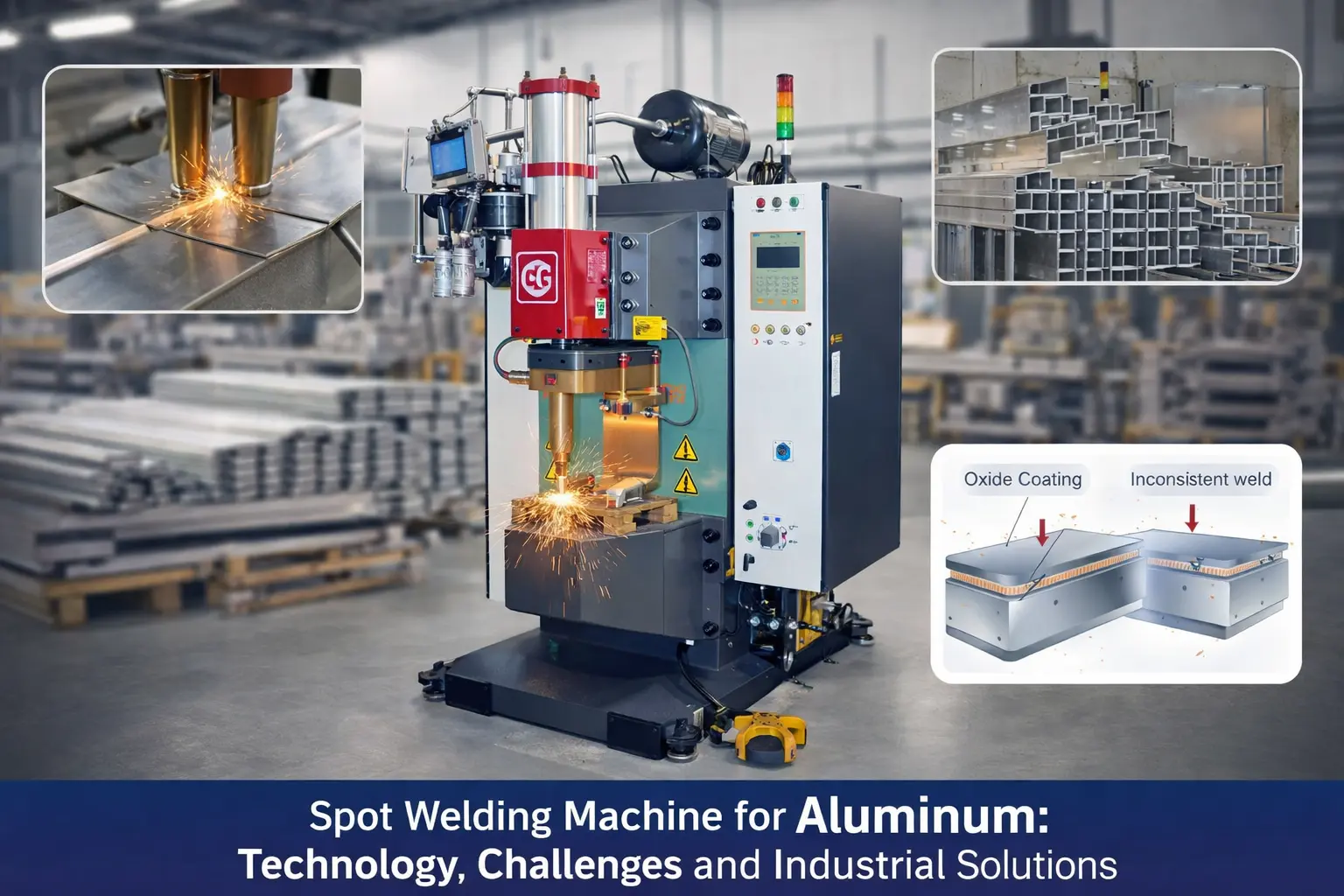
Spot welding aluminium is a resistance welding process used to join aluminium sheets or components at discrete points by applying heat generated from electrical resistance and pressure from electrodes.
In simple terms:
- Two aluminium sheets are pressed together
- High electrical current passes through the contact point
- Heat is generated due to resistance
- The aluminium melts locally and forms a weld nugget
- Pressure is maintained until solidification occurs
Unlike arc welding, spot welding aluminium is fast, clean, and highly suitable for automation, making it ideal for mass production environments.
Why Aluminium is Difficult to Spot Weld
Aluminium is widely used, but it is significantly more challenging to weld compared to steel. Engineers must account for several physical and metallurgical properties:
1. High Electrical Conductivity
Aluminium conducts electricity very efficiently, which reduces heat generation at the weld interface. This makes it harder to reach the required welding temperature.
2. Oxide Layer Formation
Aluminium naturally forms a thin but extremely stable oxide layer (Al₂O₃) on its surface. This layer:
- Has a much higher melting point than aluminium itself
- Increases contact resistance inconsistently
- Affects weld quality if not properly managed
3. Low Melting Point and Narrow Process Window
Aluminium melts quickly once heated, leaving a narrow margin between insufficient fusion and burn-through.
4. Electrode Wear
Due to its softness and surface characteristics, aluminium accelerates electrode wear, affecting consistency in high-volume production.
Resistance Spot Welding Principles for Aluminium
The resistance spot welding process for aluminium relies on three critical parameters:
1. Current Intensity
High current is required to compensate for aluminium’s conductivity. Typically, aluminium requires significantly higher current than steel.
2. Electrode Force
Proper force ensures consistent contact resistance and prevents expulsion of molten material.
3. Welding Time
Short but controlled welding cycles are essential to prevent overheating while ensuring proper nugget formation.
The balance of these three parameters determines weld strength, consistency, and structural integrity.
Key Equipment Requirements for Aluminium Spot Welding
Spot welding aluminium requires advanced systems capable of precise control and high repeatability.
MFDC Welding Systems
Medium Frequency Direct Current (MFDC) systems are widely preferred because they offer:
- Stable energy output
- Better heat control
- Reduced power consumption
- Improved weld consistency
Servo-Controlled Welding Guns
Servo-driven guns provide accurate force control, which is essential for aluminium’s sensitive process window.
Advanced Controllers
Modern welding controllers allow:
- Real-time current adjustment
- Adaptive feedback control
- Multi-pulse welding programs
- Data monitoring for quality assurance
Heron Welder specializes in these advanced resistance welding systems, supporting high-precision aluminium joining across industrial applications.
Industrial Applications of Aluminium Spot Welding
Spot welding aluminium is widely used in industries where weight reduction and production efficiency are critical.
Automotive Manufacturing
- Body-in-white structures
- Door panels and frames
- Crash-resistant lightweight structures
Electric Vehicles (EVs)
- Battery enclosures
- Lightweight chassis components
- Thermal management structures
Aerospace Industry
- Aircraft fuselage panels
- Lightweight structural assemblies
- Interior cabin structures
Consumer and Industrial Equipment
- HVAC systems
- Enclosures and housings
- Transportation equipment
Best Practices for Spot Welding Aluminium
To achieve consistent, high-strength welds, manufacturers must follow strict process guidelines:
1. Surface Preparation
Proper cleaning is essential to reduce oxide interference. Mechanical or chemical cleaning improves weld consistency.
2. Electrode Material Selection
Copper alloys with high thermal conductivity and wear resistance are commonly used to improve performance.
3. Optimized Weld Scheduling
Multi-pulse welding schedules help break down oxide layers and improve nugget formation.
4. Cooling and Maintenance Control
Active cooling systems extend electrode life and maintain process stability.
5. Process Monitoring
Real-time monitoring ensures defects are detected early, reducing production waste.
Common Defects and Troubleshooting
Even with optimized systems, aluminium spot welding may present certain defects:
1. Expulsion
Occurs when excessive heat forces molten metal out of the weld zone. Usually caused by:
- Excess current
- Low electrode force
2. Incomplete Fusion
Caused by insufficient heat or poor surface preparation.
3. Electrode Degradation
Leads to inconsistent welds over time.
4. Porosity and Weak Nuggets
Often due to contamination or improper welding cycle timing.
Addressing these issues requires precise parameter control and high-quality welding equipment.
Alternative Joining Methods vs Spot Welding Aluminium
Manufacturers often compare spot welding aluminium with other joining techniques:
Mechanical Clinching
- No heat required
- Good for dissimilar materials
- Lower structural strength compared to welding
Self-Pierce Riveting (FSPR)
- Excellent for mixed-material assemblies
- Higher cost per joint
- Requires consumables (rivets)
MIG/TIG Welding
- Strong joints
- Slower process
- More heat distortion
Why Spot Welding is Preferred
- High-speed automation
- Low per-joint cost
- Ideal for mass production
- Clean and repeatable process
Heron Welder: Engineering Reliable Aluminium Spot Welding Solutions
In modern high-volume manufacturing, consistency and automation are critical. Heron Welder provides advanced resistance welding technologies designed specifically for challenging materials like aluminium.
Our solutions include:
- MFDC resistance spot welding machines
- Automated welding production lines
- High-precision welding guns
- Intelligent welding controllers
- Custom-engineered joining systems for OEM production
Heron systems are designed to improve:
- Weld quality consistency
- Production efficiency
- Equipment lifespan
- Process automation integration
By combining engineering expertise with advanced control systems, Heron supports manufacturers in achieving stable aluminium spot welding performance even in demanding industrial environments.
FAQs
1. Can aluminium be spot welded effectively?
Yes, aluminium can be spot welded effectively using high-current MFDC systems, proper surface preparation, and optimized welding parameters.
2. Why is aluminium harder to spot weld than steel?
Aluminium has high conductivity, a strong oxide layer, and a narrow melting window, making process control more challenging.
3. What type of welding system is best for aluminium spot welding?
MFDC resistance welding systems with servo-controlled guns and advanced process controllers are the most effective.
4. How can weld quality be improved in aluminium spot welding?
Improving electrode maintenance, cleaning surfaces, optimizing current/time settings, and using real-time monitoring significantly enhances weld quality.
5. What industries commonly use aluminium spot welding?
Automotive, EV manufacturing, aerospace, HVAC systems, and industrial equipment manufacturing widely use aluminium spot welding.
Conclusion
Spot welding aluminium is a highly efficient and scalable joining method, but it demands precise engineering control, advanced equipment, and optimized process parameters. As industries continue to prioritize lightweight materials and automated production, the importance of reliable aluminium welding technology will only increase.
Heron Welder delivers industrial-grade resistance welding solutions engineered for high-performance aluminium joining, supporting manufacturers in achieving consistent quality and production efficiency.
If you are looking to upgrade your aluminium spot welding process or develop a fully automated welding production line, contact Heron Welder to request a customized solution or technical consultation tailored to your manufacturing needs.



 Romaian
 Indian
 English
 French
 Arabic
 Spanish
 Portuguese
 Deutsch
 Turkish
 Dutch
Dutch
 Italiano
 Russian
 Portuguese (Brazil)
 Greek
Greek
