


Gun Sight Guide: Types, Optics & Uses Explained
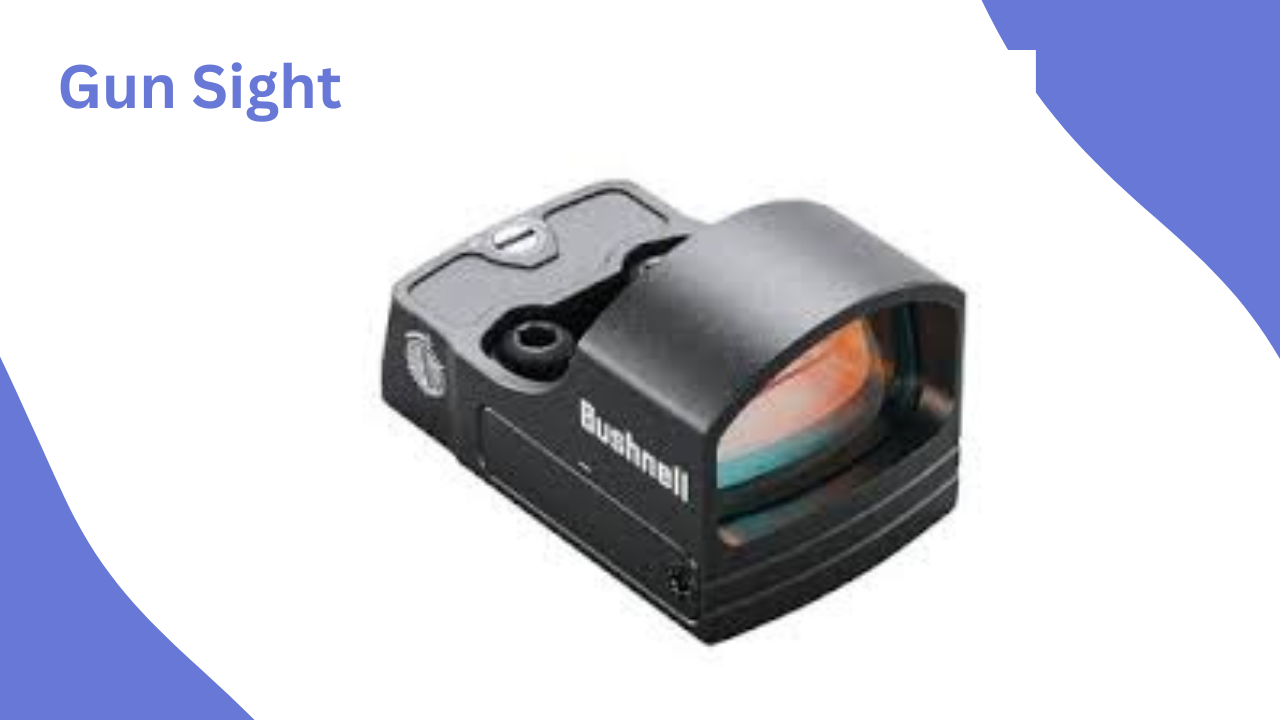
Gun sight is an optical aiming device mounted on firearms to improve target alignment and shooting accuracy. It helps users visually align the target with a reticle or dot system for better precision in different lighting and distance conditions. It is widely used in hunting and sport shooting.
Modern gun sights include red dot sights, holographic sights, reflex sights, and magnified scopes. Each type offers different optical performance, field of view, and targeting speed depending on shooting environment and user requirements.
Gun sight technology is widely used in modern optical systems, improving accuracy, target acquisition, and shooting stability in various environments for professional and recreational users in field applications.
What is a Gun Sight?
A gun sight is an optical alignment system designed to help users aim a firearm more accurately by providing a visual reference point. It replaces or enhances traditional iron sights using advanced optical or electronic components.
Modern gun sights use technologies such as collimated LED projection, lens magnification, and digital reticle systems to improve aiming precision in different conditions.
Types of Gun Sights
Gun sights are categorized based on their optical design and usage.
Red Dot Sights – These use LED projection to display a red aiming point. They offer fast target acquisition and wide field of view, commonly used in close to mid-range applications.
Reflex Sights – Similar to red dot systems, reflex sights use a reflective lens to project a reticle, allowing quick aiming with both eyes open.
Holographic Sights – These use laser-based holographic reticles for improved accuracy and better performance in dynamic conditions.
Magnified Scopes – These provide zoomed optical views for long-range observation and precision alignment.
Each type is designed for specific optical requirements and shooting environments.
How Gun Sights Work
Gun sights operate by aligning the user’s line of sight with a projected reticle or crosshair.
In red dot and reflex systems, a collimated LED beam reflects off a coated lens to create an infinite-focus aiming point. This allows the shooter to see both the target and reticle clearly.
Magnified scopes use multiple lens systems to enlarge distant objects while maintaining optical clarity and reducing distortion.
Holographic sights use laser interference patterns to project a floating reticle image, improving visibility and aiming consistency.
Key Components of Gun Sight Systems
Modern gun sights are made of precision optical and electronic components.
Objective Lens – Captures incoming light and defines image clarity.
Eyepiece Lens – Provides viewing magnification or focus adjustment.
Reticle System – The aiming reference point, either digital or etched.
Collimator or LED Module – Projects the aiming dot or pattern.
Housing Body – Protects internal optics and ensures alignment stability.
These components work together to ensure optical precision and durability.
Applications of Gun Sights
Gun sights are widely used in multiple fields requiring optical alignment systems.
In sport shooting, they help improve accuracy and consistency.
In hunting optics, they assist with target identification in varying light conditions.
In training environments, they are used for skill development and simulation systems.
They are also used in research and optical calibration systems where precise alignment is required.
Advantages of Modern Gun Sights
Modern gun sights offer several optical and functional advantages.
They provide faster target acquisition compared to traditional iron sights.
They improve accuracy by reducing alignment errors between eye and target.
Wide field of view systems like red dot and reflex sights enhance situational awareness.
Magnified optics support long-range clarity and detailed observation.
Limitations of Gun Sight Systems
Despite their benefits, gun sights have some limitations.
Electronic sights depend on battery power, which may require maintenance.
Magnified optics can reduce field of view at higher zoom levels.
Environmental factors such as fog or glare can affect optical performance.
However, modern coatings and improved electronics are reducing these issues.
Future of Gun Sight Technology
The future of gun sight systems is focused on digital integration and smart optics.
Advanced holographic displays and AI-assisted targeting systems are being developed for improved performance.
Augmented reality (AR) overlays may soon provide real-time environmental data in optical sights.
Lightweight materials and energy-efficient designs will further enhance usability and durability.
Conclusion
Gun sight technology is an essential part of modern optical aiming systems, improving accuracy, visibility, and user performance across different applications. From red dot and reflex sights to magnified scopes, each system serves a unique purpose in optical alignment.
With ongoing advancements in digital optics, holography, and smart targeting systems, gun sights will continue to evolve as highly precise and reliable tools in both professional and recreational fields.
- Digital Agency
- Literie
- Location de voitures
- Restaurant
- Restaurant
- Mode
- Mode
- Information
- Marketing
- Tourisme
- Développement
- Découverte
- Législation
- Gastronomie
- Pâtisserie
- Event
- Art
- Causes
- Crafts
- Dance
- Drinks
- Film
- Fitness
- Food
- Games
- Gardening
- Health
- Home
- Literature
- Music
- Networking
- Other
- Party
- Religion
- Shopping
- Sports
- Theater
- Wellness
 English
 Indian
 French
 Arabic
 Spanish
 Portuguese
 Deutsch
 Turkish
 Dutch
Dutch
 Italiano
 Russian
 Romaian
 Portuguese (Brazil)
 Greek
Greek
