


Beyond Makeup: The Permanent Evolution of the Brow Transplant
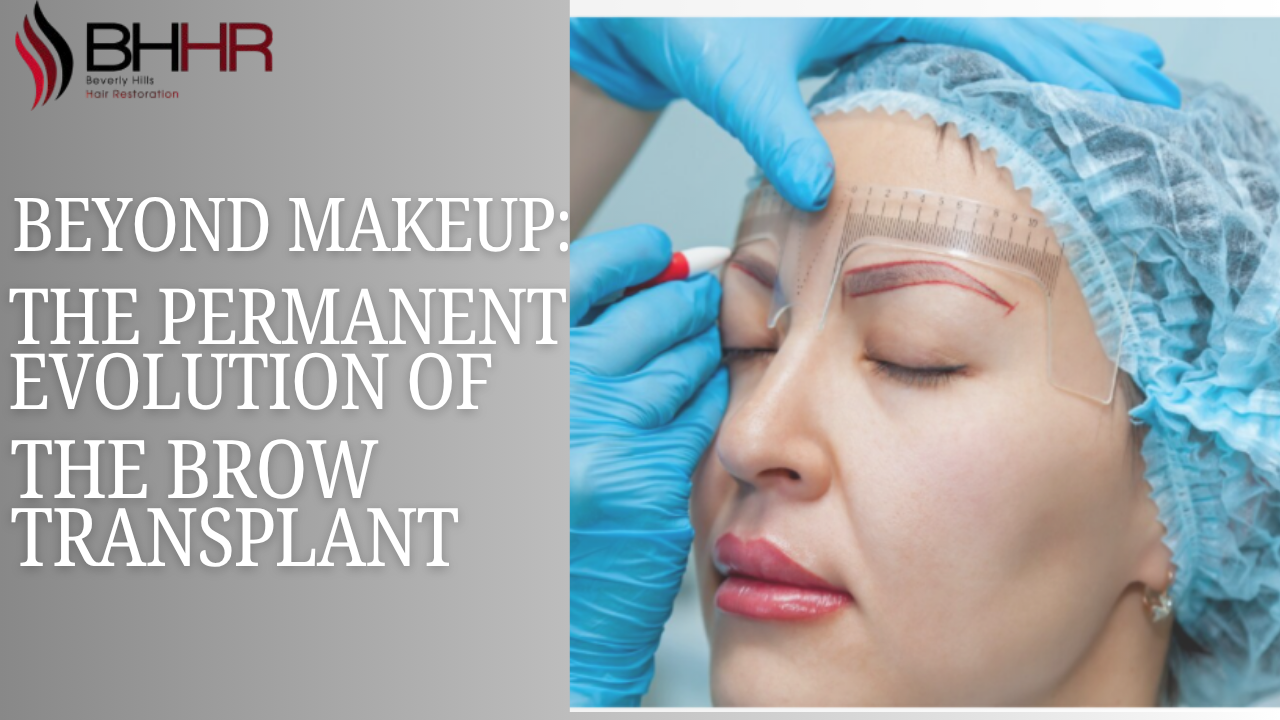
In the world of Aesthetics, Eyebrows are regarded as the frame of the face for good reason. They give shape and define our expressions, help enhance symmetry in the face and can improve our overall appearance by looking more full and defined. Unfortunately, many people deal with thinning, or absence of eyebrow hair, due to over-plucking, genetics, aging, or even some medical conditions and while pencils, powders and microblading can give temporary solutions; they require continual maintenance (and sometimes don't look 100% natural). For these reasons, a Brow Transplant provides a long-term solution for anyone who would like to have more full, well defined eyebrows and build their self-esteem/confidence.
The Science of Style: Understanding the Brow Transplant
An eyebrow transplant, or brow transplant, is a minimally invasive surgical procedure that involves transferring hair follicles from a donor region (typically the back of the scalp) to the eyebrow region. Unlike tattoos or semi-permanent makeup, this procedure uses your own living tissue, meaning the hair will grow, shed, and behave exactly like natural hair.
The procedure is highly artistic. Because every face is unique, the surgeon must meticulously plan the angle, direction, and density of each hair to mimic the natural growth pattern of an eyebrow.
Permanent Perfection: Why Choose a Brow Transplant Over Temporary Fixes?
For years, the go-to solutions for thin brows were makeup or microblading. While these have their merits, they come with significant drawbacks:
-
Maintenance: Makeup must be applied daily.
-
Fading: Microblading ink can fade or take on unnatural colors over time.
-
Two-Dimensionality: Tattoos lack the texture and depth of real hair.
A brow transplant solves these issues by providing a three-dimensional, permanent result. Once the transplanted follicles take root, they are there to stay. You can swim, sweat, and wake up without worrying about your "face" smearing off.
From Consultation to Creation: The Brow Transplant Process
The journey to better brows usually follows a structured clinical path. Most brow transplant procedures take between 3 and 4 hours and are performed under local anesthesia.
1. Artistic Mapping and Design
The surgeon works with you to draw the ideal shape. This is the most critical phase, as it ensures the new brows complement your bone structure and facial symmetry.
2. Precision Harvesting
FUE (Follicular Unit Extraction) method, is used by the surgeon in which individual hair follicles are harvested from the back of the head. These hairs are chosen because they are fine enough to look natural on the face.
3. Creating the Recipient Sites
Using specialized micro-needles, the surgeon creates tiny incisions in the brow area. The "art" of the brow transplant lies here; the incisions must be angled sharply against the skin so the hair grows flat rather than sticking straight out.
4. The Implantation Phase
The harvested follicles are placed into the sites one by one. A typical procedure might involve anywhere from 200 to 500 hairs per eyebrow.
Healing and Growth: What to Expect After Surgery
After an eyebrow transplant, healing and hair growth occur gradually. In the beginning, it is normal to experience some redness, mild swelling, and small scabs in the transplanted area.
"The crusts eventually come off on their own as the skin recovers. The transplanted hairs then temporarily shed, a process called as shock loss, which is natural because the follicles are safe beneath the skin. New hair begins to develop over time, however it may appear fine or uneven at first, gradually thickening & integrating more naturally.
Eventually, the eyebrows develop a fuller, denser, and well-defined appearance, providing long-lasting, satisfying results when proper care is maintained.
Candidate Profile: Is a Brow Transplant Right for You?
While the procedure is highly successful, it isn't for everyone. Ideal candidates for a brow transplant include those who:
-
Have lost hair due to trichotillomania (hair-pulling disorder).
-
Have scarring from accidents or burns.
-
Suffer from naturally sparse brows due to genetics.
-
Have permanent hair loss from years of over-tweezing.
If your hair loss is caused by an active autoimmune condition like Alopecia Areata, a surgeon may advise against the procedure, as the body might eventually attack the new follicles as well.
Investment and Long-Term Care
As with any cosmetic procedure, a brow transplant carries minor risks. These include localized infection or a small percentage of hairs growing in an undesirable direction. Choosing a board-certified hair restoration specialist is the best way to minimize these risks.
Cost is another factor to consider. A brow transplant is an investment, usually ranging from $6,000 and $12,000. However, when you calculate the lifetime cost of microblading touch-ups and high-end products, the transplant often pays for itself.
Maintenance Note: Because the hair is taken from the scalp, it will grow faster than the original eyebrow hair. You will need to trim your new brows about once a week to maintain the desired length.
The Verdict: Reclaiming Your Natural Expression
We live in an era where you no longer have to settle for features that don’t reflect how you truly want to look. By restoring the natural fullness of your brows, you’re not just enhancing your reflection—you’re redefining the frame of your face and reclaiming the confidence that comes with it.
A brow transplant represents the perfect fusion of advanced medical science and refined aesthetic artistry. It offers a sophisticated, long-lasting solution that goes beyond temporary fixes, delivering natural, beautifully shaped results that elevate both your appearance and self-assurance.
- Digital Agency
- Literie
- Location de voitures
- Restaurant
- Restaurant
- Mode
- Mode
- Information
- Marketing
- Tourisme
- Développement
- Découverte
- Législation
- Gastronomie
- Pâtisserie
- Event
- Art
- Causes
- Crafts
- Dance
- Drinks
- Film
- Fitness
- Food
- Games
- Gardening
- Health
- Home
- Literature
- Music
- Networking
- Other
- Party
- Religion
- Shopping
- Sports
- Theater
- Wellness
 English
 Indian
 French
 Arabic
 Spanish
 Portuguese
 Deutsch
 Turkish
 Dutch
Dutch
 Italiano
 Russian
 Romaian
 Portuguese (Brazil)
 Greek
Greek
