


Mastering Aluminum Spot Welding: Precision, Efficiency, and Industrial Solutions
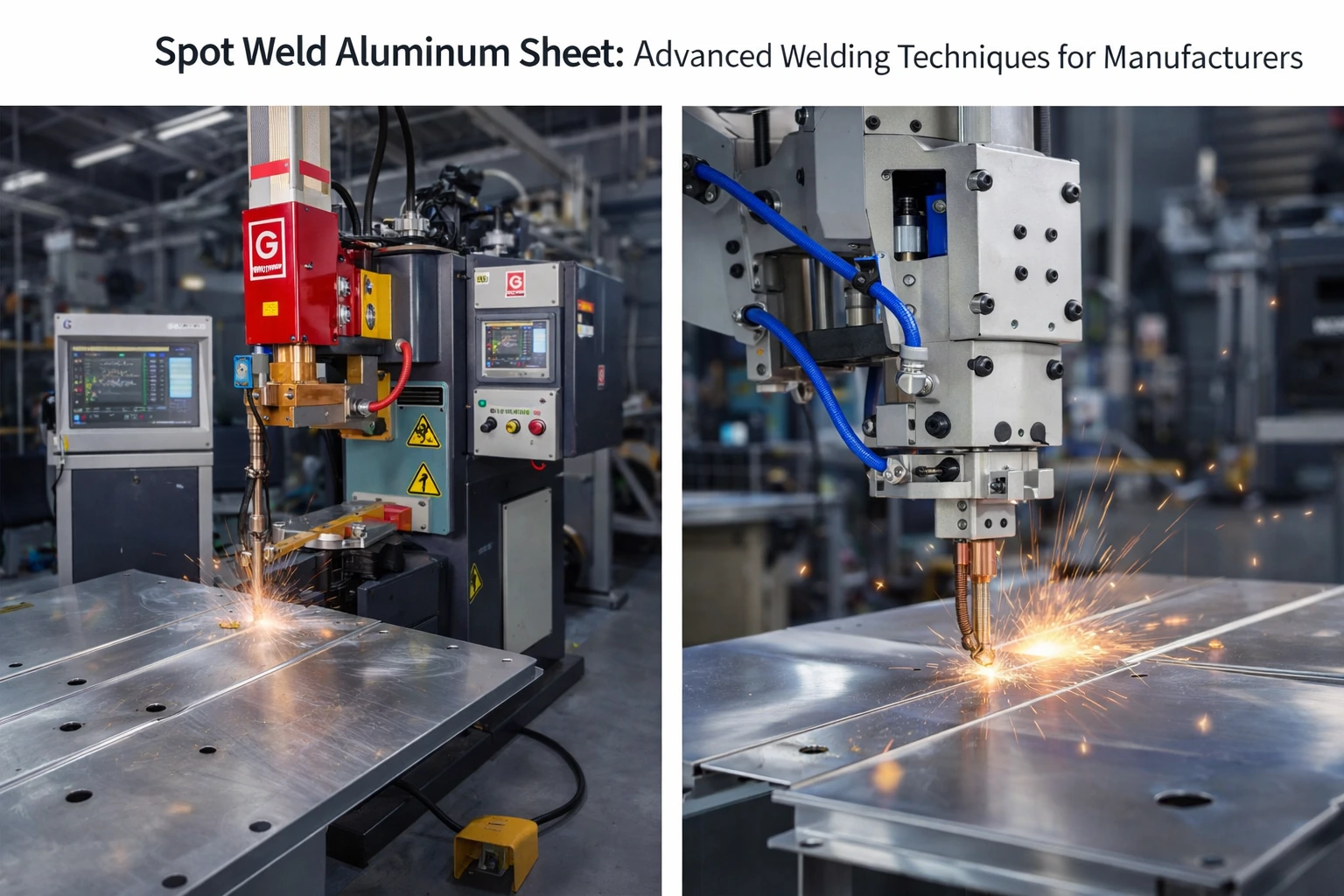
In modern manufacturing, joining aluminum components efficiently and reliably is critical for industries ranging from automotive and aerospace to electronics and construction. Among the most trusted techniques is aluminum spot welding, a process that ensures high-quality, repeatable metal joining with minimal material distortion. For OEMs, factory engineers, and automation integrators, understanding the nuances of aluminum spot welding is essential for optimizing production lines and maintaining consistent product quality.
Heron Welder, a global leader in industrial welding solutions, specializes in providing advanced aluminum spot welders and complete automated welding systems designed to meet the complex demands of today’s industrial manufacturers.
What Is Aluminum Spot Welding?
Spot welding is a type of resistance welding where heat generated by electrical resistance at the interface of two overlapping metal sheets melts the material locally, forming a strong joint upon cooling. Unlike steel, aluminum presents unique challenges due to:
- High thermal conductivity – Aluminum dissipates heat rapidly, requiring higher currents or precise timing.
- Oxide layer formation – Aluminum naturally forms an insulating oxide layer that can hinder proper weld formation.
- Soft material characteristics – Excessive pressure or energy can deform the sheets, impacting part quality.
An aluminum spot welder is specifically engineered to address these challenges with controlled energy delivery, robust electrode design, and precision control systems that ensure consistent, high-quality welds.
How Aluminum Spot Welders Work
Aluminum spot welding relies on the following key principles:
- Electrode Pressure – Proper force is applied via copper or alloy electrodes to maintain intimate contact between sheets.
- Current Control – Short, high-current pulses generate localized heat, melting the aluminum at the contact point.
- Cooling and Solidification – Controlled cooling ensures a strong nugget forms without excessive deformation.
- Automation and Feedback – Modern Heron systems incorporate real-time monitoring and adaptive control for process consistency.
Advanced MFDC (Medium-Frequency Direct Current) aluminum spot welders, offered by Heron, allow precise control over current and pulse duration, critical for thin or high-strength aluminum alloys.
Applications of Aluminum Spot Welding
Aluminum spot welding is widely used in industries where lightweight, high-strength metal joining is required. Common applications include:
- Automotive and EV Manufacturing – Joining body panels, chassis components, and battery enclosures with minimal heat distortion.
- Aerospace and Aviation – Fabricating fuselage panels, internal structural assemblies, and lightweight brackets.
- Electronics and Consumer Goods – Welding aluminum housings, frames, and components for reliable performance.
- Construction and HVAC – Joining aluminum panels, ducts, and architectural elements with precision.
Heron Welder provides both standalone spot welding machines and fully integrated robotic systems tailored to these applications, enabling manufacturers to scale production while maintaining quality standards.
Choosing the Right Aluminum Spot Welder
Selecting the ideal spot welder involves evaluating:
- Material Thickness – MFDC or capacitor discharge welders suit thin sheets, while robust AC systems handle thicker materials.
- Production Volume – High-speed automated systems are suitable for large-scale automotive or aerospace production.
- Electrode Type – Copper alloy electrodes resist wear and maintain thermal efficiency.
- Integration Needs – Welding guns and controllers can integrate with robotic cells or conveyor systems for fully automated lines.
Heron’s solutions are engineered for versatility, allowing manufacturers to customize setups according to part geometry, cycle time, and alloy type.
Advantages of Heron Aluminum Spot Welders
Choosing Heron Welder offers tangible benefits:
- Precision Control – Ensures consistent nugget formation across high-volume production runs.
- Reduced Material Waste – Optimized energy delivery prevents burn-through and distortion.
- Automation-Ready – Systems compatible with robotic arms and line integration for Industry 4.0 workflows.
- Expert Support – Heron’s engineering team provides guidance on process optimization, electrode selection, and maintenance planning.
By combining advanced resistance welding technology with automation expertise, Heron empowers manufacturers to improve throughput while safeguarding product quality.
Best Practices for Aluminum Spot Welding
To maximize performance and reliability:
- Clean Workpieces – Remove oils and debris to ensure proper contact.
- Monitor Electrode Wear – Replace or dress electrodes regularly to maintain consistent welds.
- Optimize Welding Parameters – Adjust current, force, and dwell time based on alloy type and thickness.
- Implement Quality Control – Use nugget testing, ultrasonic inspection, or inline monitoring to detect defects early.
- Integrate Automation Thoughtfully – Consider robotic or conveyor integration for repetitive, high-volume applications.
Following these practices minimizes downtime and extends electrode life while achieving high-quality welds.
Aluminum Spot Welding vs. Steel Spot Welding
While the principles are similar, aluminum requires specialized approaches compared to steel:
| Feature | Aluminum Spot Welding | Steel Spot Welding |
|---|---|---|
| Thermal Conductivity | High – dissipates heat quickly | Lower – heat localizes |
| Electrode Material | Copper alloys preferred | Standard copper electrodes |
| Current Requirement | Higher, controlled pulses | Moderate, shorter pulses |
| Surface Oxide | Needs cleaning or pre-treatment | Minimal |
| Distortion Risk | Higher due to soft material | Lower |
Understanding these distinctions helps engineers avoid common defects such as expulsion, inconsistent nuggets, or excessive sheet deformation.
FAQs About Aluminum Spot Welding
Q1: Can aluminum spot welders handle multiple alloy types?
Yes, Heron aluminum spot welders are designed for versatility, capable of processing common aluminum alloys including 5xxx and 6xxx series with precise parameter control.
Q2: What thickness range can be welded?
Depending on the system, Heron welders can handle thin foils (<1 mm) to thick sheets (up to 6–8 mm) efficiently using MFDC or AC power configurations.
Q3: Is automation necessary for high-volume production?
While standalone machines work for small batches, automation ensures consistent weld quality, reduced cycle times, and minimized operator error in large-scale operations.
Q4: How often should electrodes be replaced?
Electrode life depends on material thickness, current, and duty cycle. Routine inspection and dressing are recommended to maintain weld quality.
Q5: Can spot welding be integrated with other metal joining processes?
Yes, Heron systems can be combined with projection welding, FSPR riveting, or clinching for hybrid assembly lines, providing flexibility in complex production environments.
Partner With Heron for Aluminum Spot Welding Excellence
For manufacturers seeking high-performance aluminum spot welding solutions, Heron Welder delivers precision, reliability, and automation expertise. Our engineers work closely with clients to configure machines, optimize processes, and integrate systems for maximum efficiency.
Request a quote today or consult Heron for a customized welding and automation solution tailored to your production needs. Achieve superior quality, faster cycle times, and a competitive edge with Heron aluminum spot welders.
- Digital Agency
- Literie
- Location de voitures
- Restaurant
- Restaurant
- Mode
- Mode
- Information
- Marketing
- Tourisme
- Développement
- Découverte
- Législation
- Gastronomie
- Pâtisserie
- Etkinlik
- Art
- Causes
- Crafts
- Dance
- Drinks
- Film
- Fitness
- Food
- Oyunlar
- Gardening
- Health
- Ana sayfa
- Literature
- Music
- Networking
- diğer
- Party
- Religion
- Shopping
- Sports
- Theater
- Wellness
 Turkish
 Indian
 English
 French
 Arabic
 Spanish
 Portuguese
 Deutsch
 Dutch
Dutch
 Italiano
 Russian
 Romaian
 Portuguese (Brazil)
 Greek
Greek
