


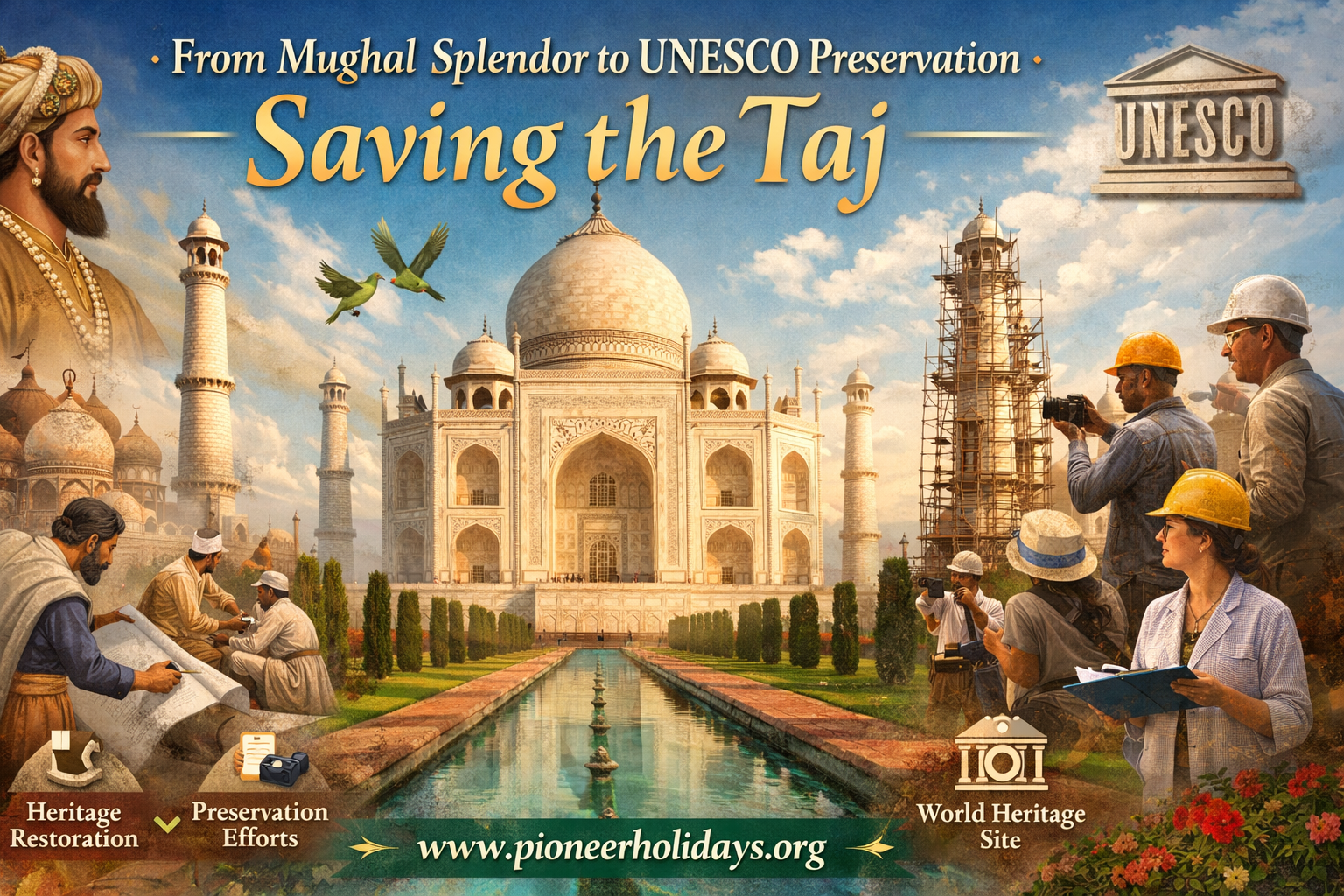
From Mughal Splendor to UNESCO Preservation: Saving the Taj
Introduction
The Taj Mahal stands as an eternal love story etched in marble, captivating millions with its timeless grace. Imagine a monument so pure, it mirrors the heavens in its reflection. Built in the 17th century by Emperor Shah Jahan, this ivory-white marvel in Agra symbolizes undying devotion to his wife Mumtaz Mahal. Yet, beneath its splendor lies a battle against time and neglect. Today, as a UNESCO World Heritage Site, the Taj faces threats from pollution, tourism, and climate change, sparking global efforts to preserve it. This journey from Mughal opulence to modern safeguarding reveals humanity's commitment to cultural icons.
In this blog, we'll explore the Taj's historical roots, the challenges it endures, UNESCO's pivotal role, and innovative preservation strategies—ensuring its legacy endures for generations.
The Mughal Legacy: Origins of Splendor
Shah Jahan's Vision of Eternal Love
The Taj Mahal's story begins with heartbreak and imperial ambition. Shah Jahan's grief fueled a masterpiece that defies mortality. After Mumtaz Mahal died in 1631 during childbirth, the emperor commissioned the mausoleum as her final resting place.
Construction started in 1632, involving 20,000 artisans from across Asia and Europe. Marble from Makrana shimmered under the sun, inlaid with semi-precious stones in intricate pieta dura work. The complex spans 17 hectares, featuring a mosque, guest house, and reflecting pool that amplifies its symmetry.
Key features that define Mughal grandeur:
-
Central Dome: Rising 73 meters, symbolizing the heavens.
-
Minarets: Four towering spires framing the structure like sentinels.
-
Gardens: Charbagh layout representing paradise.
This wasn't just architecture; it was poetry in stone. Every archway whispers tales of love amid empire's peak.
Architectural Marvels and Symbolism
Mughal architecture blended Persian, Islamic, and Indian styles seamlessly. The Taj's optical illusions make it appear to float ethereally. Its minarets lean slightly outward, a deliberate design to protect the main tomb if earthquakes strike.
Materials traveled thousands of miles: white marble from Rajasthan, red sandstone from Fatehpur Sikri, and jewels from Ceylon. Sunset transforms its facade into a rosy blush, a spectacle travelers chase endlessly.
This table unveils the layered genius behind the Taj's allure.
The monument's alignment with the rising sun adds cosmic poetry. As dawn breaks, it heralds renewal, much like its preservation story today.
Threats to the Taj: Modern Challenges
Pollution and Environmental Decay
Urban sprawl around Agra has choked the Taj with pollutants. Yellowing marble from acid rain tells a silent SOS. Factories emitted sulfur dioxide until 1996 bans, yet vehicular fumes persist.
The Yamuna River, once vital, is now a polluted drain, eroding the foundation. Climate change accelerates discoloration, turning white to ochre. Entomologists note insect infestments thriving in humid conditions.
Major threats in bullets:
-
Air Pollution: PM2.5 particles embed in marble pores.
-
Water Scarcity: Drying Yamuna weakens subsoil.
-
Tourism Pressure: 8 million visitors yearly accelerate wear.
Experts from the Archaeological Survey of India (ASI) monitor these daily. Without intervention, the Taj risks fading like forgotten empires.
Human Impact and Neglect
Over-tourism brings litter, graffiti, and footfall damage. Flash photography's UV rays subtly erode inlays over decades. Early post-independence neglect saw cracks widen unchecked.
In the 1970s, the site teetered on collapse from unchecked industrialization. A wake-up call sparked the shift to UNESCO guardianship. Today, visitor caps and no-fly zones help, but challenges evolve.
Visitor management strategies:
-
Restricted entry (7,000 daily cap).
-
Plastic bans and waste recycling.
-
Night viewings to disperse crowds.
Protecting this icon demands vigilance amid growing global tourism.
UNESCO's Intervention: World Heritage Savior
Designation and Global Recognition
In 1983, UNESCO inscribed the Taj Mahal as a World Heritage Site. This accolade mobilized international expertise for its defense. Criteria included outstanding universal value in art and architecture.
UNESCO's World Heritage Centre coordinates with ASI, providing funds and tech. From radar monitoring to bio-conservation, science meets heritage here.
The 27th session in 2003 highlighted risks, urging action. UNESCO's framework turned local efforts into a global symphony of preservation.
Key UNESCO Initiatives
UNESCO introduced the Taj Trapezium Zone (TTZ), a 10,400 sq km no-industry buffer. Over 1,000 factories relocated, slashing emissions by 75%.
These milestones showcase UNESCO's blueprint for heritage survival.
Ongoing projects include laser cleaning and AI-driven crack detection. Innovation ensures the Taj's whispers echo centuries ahead.
Preservation Efforts: Innovations and Successes
Technological Marvels in Action
Modern tools revive Mughal magic. Drones map erosion invisible to the naked eye. German experts deploy gramophone-like cleaners, blasting polluted layers without chemicals.
The 2018 Supreme Court mandate enforces cleaner fuels in TTZ. Bio-enzymatic treatments dissolve algae harmlessly. ASI's Rs 1,500 crore plan (2021-2026) focuses on subterranean water recharge.
Success stories:
-
Marble Restoration: Returned to pristine white post-2015 cleaning.
-
Wildlife Revival: Sarus cranes return to revived wetlands.
-
Digital Twins: 3D models predict future threats.
Technology bridges yesterday's splendor with tomorrow's safeguards.
Community and Sustainable Tourism
Local involvement is key. Agra's artisans revive traditional crafts, sustaining culture. Eco-tourism promotes off-peak visits via apps.
For seamless experiences, consider a taj mahal tour from delhi, blending history with comfort. Sustainable practices ensure footprints lighten, not burden.
NGOs like INTACH train youth in conservation. Communities guard what they cherish, perpetuating the legacy.
Conclusion
From Shah Jahan's tear-streaked vision to UNESCO's vigilant embrace, the Taj Mahal's preservation saga inspires. This beacon of love teaches us to nurture beauty against entropy. Challenges persist, but triumphs—from mud packs to green belts—prove humanity's resolve.
Let the Taj remind us: heritage thrives when we act with purpose. Explore responsibly, support conservation, and let its story stir your soul. For trusted journeys, pioneer holidays offers insights into this enduring wonder.
Frequently Asked Questions (FAQ)
What makes the Taj Mahal a UNESCO site?
Its unparalleled Mughal architecture and universal value as a love symbol earned inscription in 1983. UNESCO safeguards icons like this for all humanity.
How is the Taj Mahal protected from pollution?
TTZ bans industries, CNG vehicles replace diesel, and regular cleaning restores marble. These measures have reversed decades of damage.
Can the Taj Mahal change color?
Yes, pollution caused yellowing, but treatments whiten it periodically. Dawn's pink to moonlight's silver remains its natural magic.
What's the biggest threat to the Taj today?
Yamuna's depletion erodes foundations, worsened by climate shifts. Recharge projects aim to revive the river's flow.
How can tourists help preserve it?
Follow rules: no littering, use shuttles, visit early. Your mindful steps extend its life.
- Digital Agency
- Literie
- Location de voitures
- Restaurant
- Restaurant
- Mode
- Mode
- Information
- Marketing
- Tourisme
- Développement
- Découverte
- Législation
- Gastronomie
- Pâtisserie
- Event
- Art
- Causes
- Crafts
- Dance
- Drinks
- Film
- Fitness
- Food
- Παιχνίδια
- Gardening
- Health
- Κεντρική Σελίδα
- Literature
- Music
- Networking
- άλλο
- Party
- Religion
- Shopping
- Sports
- Theater
- Wellness
 Greek
Greek
 Indian
 English
 French
 Arabic
 Spanish
 Portuguese
 Deutsch
 Turkish
 Dutch
Dutch
 Italiano
 Russian
 Romaian
 Portuguese (Brazil)
