


Solving Beam Precision in Motorcycle MLA Projection Lighting
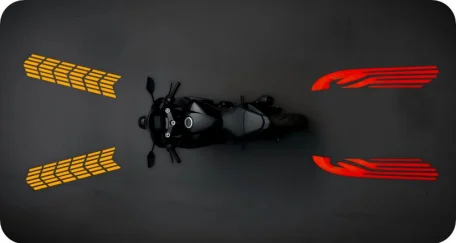
In the competitive landscape of B2B motorcycle manufacturing, the headlamp is no longer just a safety requirement; it is a primary styling element and a technical benchmark. As brands push for "slimline" aesthetics and ultra-compact front fairings, traditional parabolic reflectors and bulky projector lenses have become architectural liabilities.
The industry is currently pivoting toward Motorcycle MLA Projection Lighting (Micro-Lens Array) to achieve these design goals. However, moving from macro-scale optics to micro-scale arrays introduces a complex set of problems—ranging from "stray light" artifacts to thermal density issues—that can jeopardize a product’s homologation and performance.
The Problem: The Struggle for a Sharp Cutoff
For optical engineers at Tier 1 suppliers, the challenge is maintaining a precise beam pattern within a significantly reduced volume. Traditional systems rely on physical shields to create the "cutoff line" (the boundary that prevents blinding oncoming traffic). In a micro-optics environment, this becomes much harder to control:
-
Optical Crosstalk: In an MLA system, light from one micro-lens can bleed into the path of an adjacent lens. This creates "ghosting" or a fuzzy beam edge, which fails to meet stringent ECE R149 or DOT regulations.
-
Luminous Flux Efficiency: While MLA allows for a thinner profile, the "etendue" (the spread of light) must be perfectly managed. If the light source is not perfectly coupled with the micro-lens array, the system suffers from massive efficiency losses, requiring more power to achieve the same lux levels.
-
Thermal Concentration: Shrinking the projection unit means the heat from high-intensity LEDs is concentrated in a smaller area. Without advanced heat dissipation, the micro-lenses—often made of optical-grade polymers or thin-film glass—can suffer from thermal deformation, shifting the focal point and ruining the beam pattern.
Overcoming the Architecture Hurdles of MLA Systems
To successfully implement Motorcycle MLA Projection Lighting, engineering teams must move beyond basic illumination and focus on "beam shaping" at the microscopic level.
1. Advanced Aperture Arrays
To solve the issue of a blurred cutoff, high-end MLA modules now incorporate a "double-stack" lens configuration. By placing a microscopic aperture array between two layers of micro-lenses, the system can physically block stray photons at the source. This results in a razor-sharp horizontal cutoff that mimics a much larger projector lens, but at 1/10th of the thickness.
2. High-Aspect-Ratio Micro-Optics
Standard spherical micro-lenses often struggle with peripheral light distribution. For motorcycles, where side-road illumination is critical for spotting hazards during leans, engineers are turning to non-spherical (aspheric) micro-lenses. These allow for a wider "throw" of light without increasing the size of the headlamp opening, providing the necessary "spread" for winding roads.
Technical Reliability for the B2B Supply Chain
In the B2B world, durability is the silent partner of performance. A motorcycle MLA projection lighting system must withstand a lifecycle of vibration, UV exposure, and extreme temperature swings.
-
Material Integrity: Silicon-on-glass (SoG) or high-Tg (Glass Transition Temperature) polymers are essential for MLA substrates to ensure that the lenses do not yellow or warp under the intense UV radiation emitted by high-power LEDs.
-
Vibration Dampening: Because the alignment of the micro-lens to the LED die is measured in microns, the housing must be vibration-neutral. Even a 50-micron shift due to engine resonance can result in a noticeable tilt in the beam pattern.
-
Active Cooling Synergy: Modern MLA modules are often paired with high-conductivity aluminum or copper MCPCBs (Metal Core Printed Circuit Boards). This ensures that the heat is pulled away from the delicate micro-optics and dissipated through the bike's fairing or dedicated heat sinks.
Semantic Keywords for B2B SEO and Authority
To ensure this technical content reaches procurement officers and R&D leads, it is vital to integrate semantic keywords that signal industry depth. When search engines crawl your site, they look for terms that indicate a "subject matter expert":
-
Beam Homogeneity: The evenness of light across the road surface.
-
Collimation Optics: The process of making light rays parallel before they hit the MLA.
-
Luminance Uniformity: Ensuring there are no "hot spots" in the rider's field of vision.
-
Solid-State Projection: Distinguishing MLA from mechanical moving parts.
By centering your content on these terms, you move away from general "consumer" talk and position your brand as a sophisticated technical partner.
Conclusion
The transition to Motorcycle MLA Projection Lighting represents a "point of no return" for high-end motorcycle design. The ability to project a legal, high-intensity beam from a module no thicker than a smartphone is a game-changer for aerodynamics and styling.
However, success lies in the details—the management of thermal loads, the suppression of optical crosstalk, and the precision of the micro-lens fabrication. For B2B manufacturers, mastering these micro-optical challenges is the key to delivering the next generation of "signature" lighting that defines a brand.
- Digital Agency
- Literie
- Location de voitures
- Restaurant
- Restaurant
- Mode
- Mode
- Information
- Marketing
- Tourisme
- Développement
- Découverte
- Législation
- Gastronomie
- Pâtisserie
- Evento
- Art
- Causes
- Crafts
- Dance
- Drinks
- Film
- Fitness
- Food
- Jogos
- Gardening
- Health
- Início
- Literature
- Music
- Networking
- Outro
- Party
- Religion
- Shopping
- Sports
- Theater
- Wellness
 Portuguese (Brazil)
 Indian
 English
 French
 Arabic
 Spanish
 Portuguese
 Deutsch
 Turkish
 Dutch
Dutch
 Italiano
 Russian
 Romaian
 Greek
Greek
