


Mastering Projection Welding: Precision Metal Joining for Modern Manufacturing
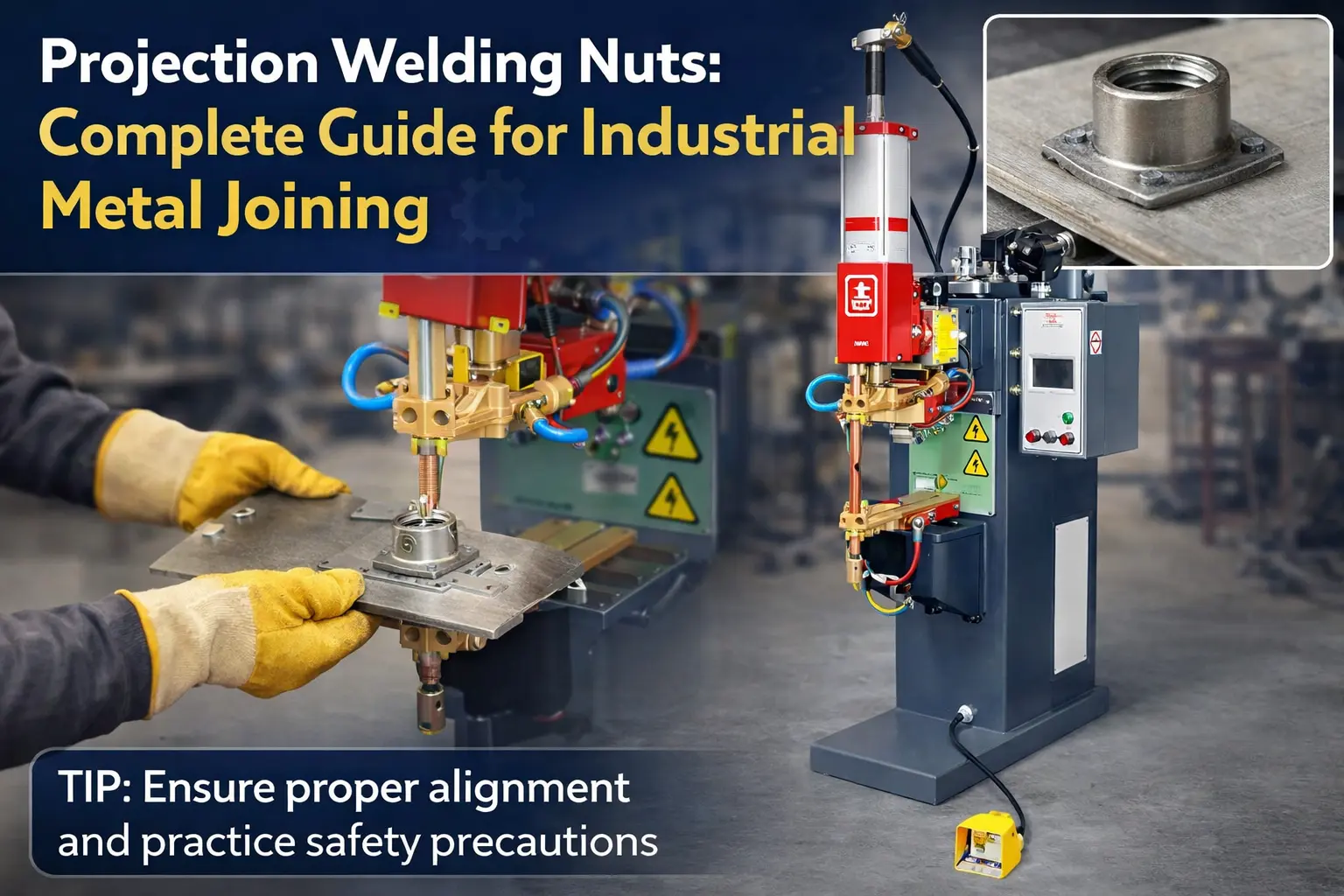
In today’s competitive manufacturing landscape, precision, speed, and repeatability are paramount. Projection welding has emerged as a cornerstone technology for industries requiring reliable, high-quality metal joining. From automotive components to heavy machinery, projection welding ensures strong, consistent welds while enabling automation and cost-efficient production.
At Heron Welder, we specialize in advanced resistance welding systems, including projection welding machines, seam welders, and fully automated production lines, helping OEMs, automation integrators, and manufacturing engineers optimize their metal-joining processes.
What is Projection Welding?
Projection welding is a specialized form of resistance welding that focuses electrical current and pressure on raised sections or projections on a workpiece. These projections concentrate heat and allow for controlled fusion at predetermined points, ensuring high-quality welds without excessive deformation of the surrounding material.
Unlike standard spot welding, where electrodes contact a flat surface, projection welding relies on engineered projections to create weld points efficiently. This method makes it ideal for complex assemblies, thin sheets, and multi-layer components.
How Projection Welding Works
The projection welding process involves three key steps:
-
Preparation of Workpieces
Projections are designed on one or both mating metal surfaces. These can be hemispherical bumps, embossments, or custom shapes depending on the joint design. -
Application of Pressure and Current
Electrodes press the workpieces together, and a controlled electrical current passes through the projections. Because the projections concentrate the current, the metal heats and melts locally at the tips. -
Formation of Weld Nugget
The molten projection fuses with the opposite surface, forming a solid weld nugget upon cooling. The result is a strong, repeatable joint with minimal distortion to the surrounding metal.
At Heron Welder, our projection welding machines provide precise control over current, force, and timing, ensuring consistent weld quality even in high-speed automated production lines.
Applications of Projection Welding
Projection welding is widely used across industries where strength, precision, and speed are crucial. Key applications include:
-
Automotive Manufacturing:
Joining nuts, studs, and fasteners to sheet metal in chassis, door panels, and engine components. -
Electrical Components:
Welding connectors, terminals, and battery tabs in electronics and battery packs. -
Industrial Machinery:
Fabricating metal assemblies, brackets, and structural components with minimal distortion. -
Aerospace & Heavy Equipment:
Producing high-strength, multi-layer joints where weld consistency is critical for safety and performance.
By leveraging projection welding, manufacturers reduce post-weld finishing, increase throughput, and maintain tighter tolerances on complex assemblies.
Projection Welding vs. Spot Welding
While both projection welding and spot welding are resistance-based, they differ significantly:
| Feature | Spot Welding | Projection Welding |
|---|---|---|
| Contact Area | Flat surface | Raised projections |
| Weld Points | Manually or automatically placed | Predefined projections allow multiple points at once |
| Material Deformation | Higher risk | Minimal, controlled |
| Suitable For | Simple joints | Complex, multi-layered, or heavy assemblies |
| Automation | Moderate | Highly suitable for automated lines |
Projection welding excels in applications where precise weld locations, reduced distortion, and higher joint strength are critical making it the preferred choice for automotive OEMs and automated assembly lines.
Best Practices for Efficient Projection Welding
To maximize the efficiency and reliability of projection welding:
-
Optimize Projection Design
Work with precision-engineered projections to ensure consistent heat concentration and weld quality. -
Maintain Electrode Health
Regular inspection and maintenance of electrodes prevent uneven pressure and current flow, which can compromise weld integrity. -
Control Process Parameters
Fine-tune current, force, and weld time according to material type and thickness. Advanced systems from Heron Welder provide programmable settings to meet production specifications. -
Integrate Automation
Pair projection welding machines with robotic handling or conveyor systems for high-volume, repeatable welding. -
Quality Monitoring
Implement real-time monitoring and testing to detect anomalies, ensuring compliance with manufacturing standards.
Why Choose Heron Welder for Projection Welding
At Heron Welder, we combine technical expertise with industrial-grade equipment to deliver superior projection welding solutions:
-
Comprehensive Equipment Range: MFDC projection welders, automated lines, welding guns, and controllers.
-
Customization: Machines configured for specific materials, geometries, and production speeds.
-
Automation Integration: Seamless compatibility with robotic systems and production lines.
-
Global Support: Service, training, and consultation to optimize welding processes anywhere in the world.
Our clients benefit from reduced production downtime, improved joint consistency, and scalable solutions tailored to their operational goals.
FAQs About Projection Welding
1. Can projection welding join multiple layers of metal?
Yes, projection welding is ideal for multi-layer assemblies, providing uniform welds without excessive distortion.
2. What materials are suitable for projection welding?
Commonly, steel, stainless steel, and aluminum alloys are used. Heron machines handle a variety of conductive metals efficiently.
3. How does projection welding improve automation?
Predefined projections allow precise, repeatable welds that are easily integrated into robotic and conveyor-based production lines.
4. How often should electrodes be replaced?
Electrode lifespan depends on material, current, and frequency of use. Regular inspection ensures consistent weld quality.
5. Is projection welding energy efficient?
Yes. By concentrating current at projections, energy consumption is minimized compared to traditional spot welding, reducing operating costs.
Take Your Welding to the Next Level
Whether you are optimizing automotive assembly, battery production, or industrial fabrication, Heron Welder provides projection welding solutions that combine precision, speed, and reliability.
Request a quote or consult our team today to explore customized welding machines, automated production lines, and expert guidance tailored to your manufacturing needs.
- Digital Agency
- Literie
- Location de voitures
- Restaurant
- Restaurant
- Mode
- Mode
- Information
- Marketing
- Tourisme
- Développement
- Découverte
- Législation
- Gastronomie
- Pâtisserie
- Evento
- Art
- Causes
- Crafts
- Dance
- Drinks
- Film
- Fitness
- Food
- Jogos
- Gardening
- Health
- Início
- Literature
- Music
- Networking
- Outro
- Party
- Religion
- Shopping
- Sports
- Theater
- Wellness
 Portuguese (Brazil)
 Indian
 English
 French
 Arabic
 Spanish
 Portuguese
 Deutsch
 Turkish
 Dutch
Dutch
 Italiano
 Russian
 Romaian
 Greek
Greek
