Hamsters may be small pets, but they require spacious, secure, and well-designed enclosures to thrive. Many first-time owners underestimate how much room these active animals need. In the wild, hamsters travel long distances each night, dig complex burrows, and explore constantly. A cramped or poorly ventilated cage can lead to stress, boredom, and health issues.
Choosing the best small animal cage for hamsters means focusing on floor space, ventilation, safety, and enrichment opportunities. The right cage supports natural behaviors such as digging, climbing, and running while making maintenance manageable for owners. This article explains what to look for and which cage types work best.
Why Cage Size Is Critical for Hamsters
One of the most important factors when selecting a hamster cage is size. While pet store starter cages may appear sufficient, they often provide minimal floor space.
Recommended minimum floor space:
Syrian hamsters generally require more space than dwarf hamsters. A larger enclosure reduces stress and supports healthier activity levels.
Best Types of Hamster Cages
1. Large Wire Cages
Wire cages with plastic bases are common and widely available.
Advantages:
Ensure the base is deep enough to hold at least 6 inches of bedding, allowing hamsters to burrow comfortably.
Bar spacing should be:
Proper spacing prevents escapes.
2. Glass Tank Enclosures
Glass tanks or aquarium-style cages provide solid walls and clear visibility.
Benefits:
However, proper ventilation is essential. Tanks must include mesh lids to ensure airflow.
These cages are ideal for owners who want a secure and clean setup.
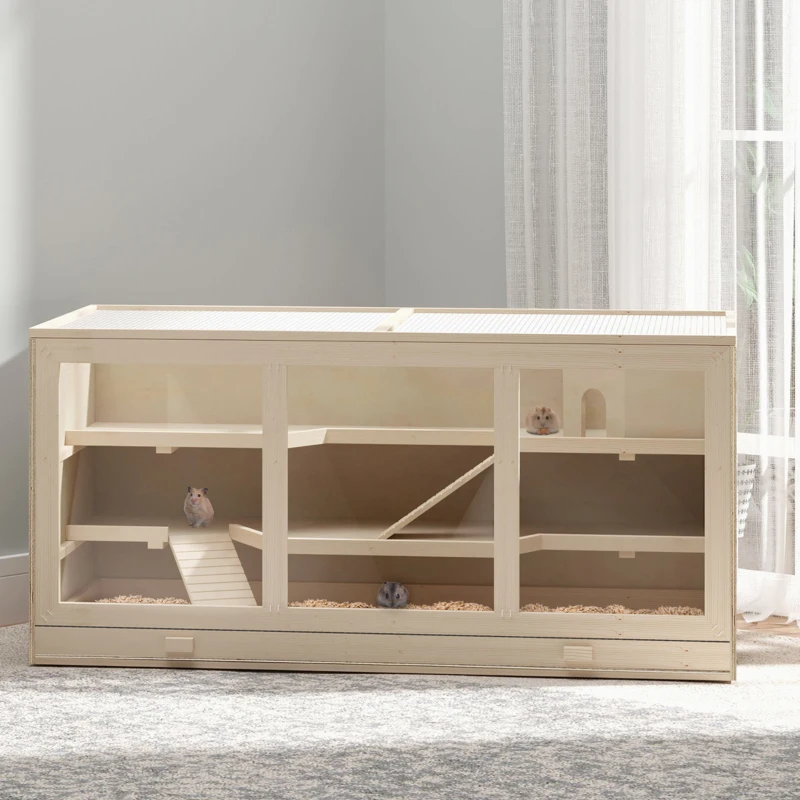
3. Multi-Level Cages
Some hamster cages include platforms, ramps, and tunnels.
Pros:
While vertical elements are beneficial, floor space remains the priority. Avoid sacrificing base size for additional levels.
4. Modular Cage Systems
Modular cages connect tubes and compartments.
Advantages:
However, ensure each connected section provides adequate space. Small tubes alone are not sufficient as primary living areas.
Essential Features to Look For
Deep Base for Bedding
Hamsters are natural burrowers. Provide:
A deeper base supports natural digging behavior.
Secure Locking Mechanisms
Hamsters are skilled escape artists.
Look for:
-
Strong latches
-
Tight-fitting doors
-
Secure lid closures
Regularly inspect cage integrity.
Proper Ventilation
Ventilation prevents moisture buildup and odors.
Wire cages offer natural airflow, while glass tanks require mesh tops.
Avoid fully enclosed plastic cages with limited air circulation.
Space for Accessories
The cage should accommodate:
Ensure there is enough open floor space even after adding accessories.
Choosing the Right Cage Based on Species
Syrian Hamsters
-
Require larger floor space
-
Larger wheels (10–12 inches)
-
Stronger cage construction
Dwarf Hamsters
-
Smaller bar spacing required
-
Slightly smaller wheel (8–10 inches)
-
Benefit from similar floor space
Regardless of species, more space leads to healthier behavior.
Cleaning and Maintenance
A practical cage design simplifies cleaning.
Look for:
-
Removable trays
-
Easy-access doors
-
Smooth interior surfaces
Regular cleaning reduces odor and maintains hygiene.
Common Mistakes to Avoid
-
Buying cages labeled as “starter kits” that are too small
-
Ignoring floor space requirements
-
Choosing cages with wide bar spacing
-
Using fully enclosed plastic cages with poor airflow
-
Overcrowding the cage with accessories
Careful selection prevents behavioral and health issues.
Indoor Placement Tips
Place the cage:
-
Away from direct sunlight
-
In a quiet but social area
-
Away from drafts
-
At stable room temperature
Avoid kitchens or high-humidity areas.
Budget Considerations
While larger cages may cost more initially, they provide long-term value.
Invest in:
-
Durable construction
-
Adequate floor space
-
Reliable ventilation
A quality cage reduces the need for future upgrades.
When to Upgrade a Cage
Consider upgrading if:
-
Your hamster shows repetitive pacing
-
Accessories barely fit
-
Bedding depth is insufficient
-
The cage appears overcrowded
Upgrading improves quality of life.
Conclusion
The best small animal cages for hamsters prioritize spacious floor area, deep bedding capacity, proper ventilation, and secure construction. Whether choosing a large wire cage, glass tank enclosure, or modular system, selecting an appropriately sized habitat supports natural behaviors and overall well-being.
Hamsters are active, curious creatures that thrive in environments designed to meet their physical and mental needs. By investing in a properly sized and thoughtfully designed cage, you create a safe, enriching space that promotes long-term health and happiness.



 Italiano
 Indian
 English
 French
 Arabic
 Spanish
 Portuguese
 Deutsch
 Turkish
 Dutch
Dutch
 Russian
 Romaian
 Portuguese (Brazil)
 Greek
Greek
