


How to Design a Scalable RS-485 IoT Gateway Network for Factories
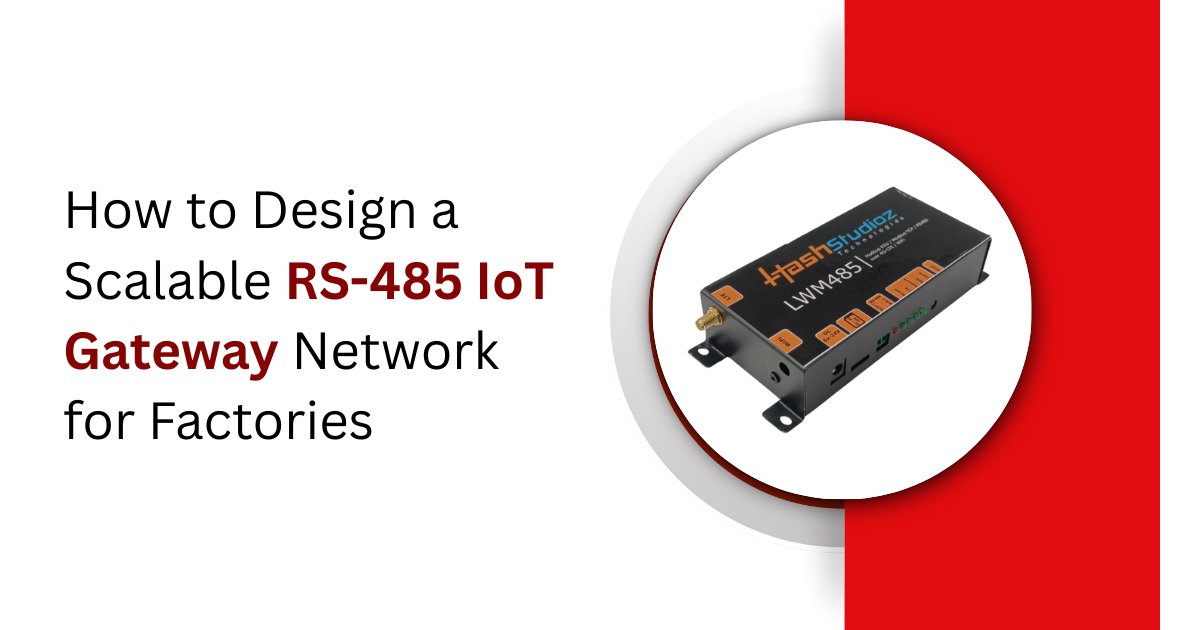
The rapid growth of the Industrial Internet of Things (IIoT) has pushed industries to adopt advanced networking technologies for efficient automation, monitoring, and control. One of the key technologies in industrial automation is the RS-485 IoT gateway, which serves as a critical component in connecting legacy devices to modern IoT systems. This article discusses how to design a scalable RS-485 IoT gateway network for factories, ensuring smooth communication between devices and providing flexibility for future expansion.
Introduction to RS-485 and IoT Gateways
RS-485 is a balanced differential serial communication standard commonly used in industrial environments for its robustness and long-distance communication capabilities. It allows multiple devices to communicate over a single twisted pair of wires, making it highly suitable for environments where noise and distance are concerns.
An RS-485 IoT gateway is a device that bridges RS-485-based legacy equipment, such as PLCs (Programmable Logic Controllers) and sensors, with modern IoT networks. These gateways collect data from the connected RS-485 devices and transmit it to IoT platforms or cloud services, enabling real-time monitoring and analytics.
Why RS-485 IoT Gateways are Critical in Industrial IoT Networks
1. Legacy Equipment Compatibility
Many industrial facilities continue to use RS-485-based devices that were developed before newer communication protocols like Ethernet or Wi-Fi became common. These legacy devices lack the capability to communicate directly with modern IIoT systems, necessitating the use of RS-485 IoT gateways for seamless integration.
2. Protocol Conversion
RS-485 IoT gateways play a critical role in protocol conversion. They enable communication between devices using RS-485 and modern IIoT networks by converting data into formats compatible with current technologies. This ensures that older systems can still exchange information with newer devices and cloud platforms.
3. Seamless Integration of Old and New Technologies
Industrial IoT systems often combine new and old technologies, which can be challenging due to protocol mismatches. RS-485 IoT gateways act as a bridge between these systems, ensuring smooth interoperability. This allows industrial plants to retain their legacy equipment while integrating with modern IoT infrastructure.
4. Cost Efficiency
Upgrading an entire industrial facility to use newer communication technologies can be prohibitively expensive. RS-485 IoT gateways provide a cost-effective solution by enabling the continued use of existing equipment. This minimizes the need for costly overhauls, reducing overall operational expenses.
5. Enhanced Monitoring and Control
With RS-485 IoT gateways, legacy systems can be connected to IoT platforms, enabling real-time monitoring and data analysis. This improves decision-making, enhances operational efficiency, and allows for predictive maintenance, thereby enhancing the overall performance of industrial operations.
Key Considerations for Designing a Scalable RS-485 IoT Gateway Network
When designing a scalable RS-485 IoT gateway network, there are several key factors to consider:
1. Network Topology and Architecture
The network topology defines how the RS-485 IoT gateways, legacy devices, and IoT platform interact with each other. For scalability, the design should allow easy integration of new devices without causing disruptions to the existing network.
Common Network Topologies:
-
Star Topology: In this configuration, each RS-485 device is connected to a central RS-485 IoT gateway. This approach is simple and easy to manage, but it may be limited by the number of devices that can be connected to a single gateway.
-
Bus Topology: Devices are connected in a linear fashion, with the RS-485 IoT gateway serving as a bridge between the legacy devices and the IoT platform. This design is more efficient for large networks but may require careful consideration of cable lengths and signal integrity.
-
Mesh Topology: This topology allows devices to communicate directly with one another. It is more complex but highly scalable, as additional devices can be easily added without overloading the network.
2. Device Compatibility and Protocol Conversion
Factories often use different devices that communicate over varying protocols. While RS-485 is the standard for many industrial devices, integrating other protocols, such as Modbus, CAN bus, or even wireless protocols, may be necessary.
An Industrial IoT Gateway should offer multi-protocol support and have the capability to perform protocol conversion. This allows the RS-485 IoT gateway to interface with different communication protocols, making it easier to manage and scale the network.
3. Data Transmission and Bandwidth Requirements
When designing an RS-485 IoT gateway network, data transmission rates and bandwidth are essential considerations. RS-485 can support data rates of up to 10 Mbps, but the actual data rate depends on the number of devices, the distance between devices, and environmental factors like interference.
To ensure that the gateway network can handle increased loads in the future, it’s crucial to:
-
Assess the data volume generated by devices.
-
Monitor network traffic to avoid bottlenecks.
-
Ensure sufficient bandwidth for cloud communication or centralized monitoring systems.
4. Scalability of the Gateway Infrastructure
A scalable RS-485 IoT gateway network can grow with the needs of the factory. The network should be designed so that it is easy to expand by adding more RS-485 devices or additional IoT gateways without requiring major infrastructure changes.
Key Features for Scalability:
-
Modular Design: IoT gateways should support modular expansion, allowing the addition of new ports or interfaces as more devices are added.
-
Cloud Integration: The gateway should be able to scale horizontally, meaning multiple gateways can connect to a central IoT platform or cloud system without issues.
-
Redundancy: Adding redundancy in network components, such as backup gateways, ensures uninterrupted operation in case of hardware failure.
5. Power and Environmental Considerations
In industrial environments, power supply and environmental factors such as temperature, humidity, and dust can impact the performance of IoT devices. RS-485 IoT gateways should be robust enough to handle these challenges.
Key Factors to Consider:
-
Power Over Ethernet (PoE): PoE allows IoT gateways to be powered through Ethernet cables, reducing the need for additional power sources.
-
Environmental Ratings: Choose RS-485 IoT gateways with appropriate environmental certifications (IP67, for example) for harsh industrial environments.
-
Redundant Power Supply: Ensure that there is a backup power source to maintain gateway operations during power outages.
Steps to Design a Scalable RS-485 IoT Gateway Network
Now that we have discussed the essential factors, let’s walk through the steps involved in designing a scalable RS-485 IoT gateway network for factories.
Step 1: Evaluate the Existing Infrastructure
Begin by assessing the current industrial equipment and network setup. Identify the types of legacy devices that use RS-485 and determine their communication needs. Understanding the existing setup will help you determine the appropriate RS-485 IoT gateway and network design.
Step 2: Select the Right RS-485 IoT Gateway
Choose an RS-485 IoT gateway that meets the factory’s requirements, such as:
-
Number of RS-485 ports (depending on the number of devices).
-
Support for other industrial protocols.
-
Compatibility with the chosen IoT platform.
-
Security features.
A high-quality gateway will ensure smooth communication between the legacy devices and the IoT platform, and also provide flexibility for future expansion.
Step 3: Plan the Network Topology
Decide on the appropriate network topology based on the size of the factory, the number of devices, and the desired scalability. For small factories, a star topology may be sufficient, but larger factories might require a bus or mesh topology to support many devices.
Step 4: Install the RS-485 IoT Gateway and Connect Devices
Physically install the RS-485 IoT gateway in a location where it can connect to the legacy RS-485 devices. Ensure that proper wiring techniques are used to minimize signal degradation and interference.
Step 5: Configure the Gateway and Integrate with the IoT Platform
Configure the gateway to communicate with the IoT platform or cloud system. Set up data collection intervals, protocol conversion settings, and cloud integration. It’s also important to configure network parameters such as IP addressing, routing, and security protocols.
Step 6: Monitor and Scale the Network
Once the RS-485 IoT gateway network is operational, continuously monitor its performance. Use analytics tools to detect any potential issues like bottlenecks or communication failures. As the factory grows, add more RS-485 devices and gateways to scale the network.
Example: Implementing a Scalable RS-485 IoT Gateway Network
Consider a factory that produces industrial equipment, with multiple production lines and legacy machines using RS-485 communication for monitoring and control. The factory wants to integrate these machines into a centralized IoT platform for real-time performance tracking.
-
Initial Setup: The factory installs a single RS-485 IoT gateway at the heart of the network, with a star topology connecting legacy machines to the gateway.
-
Protocol Conversion: The RS-485 IoT gateway supports Modbus RTU, allowing seamless communication between RS-485 devices and the cloud-based IoT platform.
-
Scalability: As production increases, the factory adds more RS-485 devices and installs additional IoT gateways. Each gateway integrates with the existing network, and the factory uses cloud-based software to manage and monitor the entire system.
This scalable setup ensures that the factory can grow without the need for complete network redesigns, and all legacy equipment is integrated into the modern IoT framework.
Conclusion
Designing a scalable RS-485 IoT gateway network for factories involves careful consideration of topology, device compatibility, data transmission, scalability, and security. By following a structured approach, manufacturers can ensure that their factory automation systems are future-proof, flexible, and capable of handling increased data and device loads. The Industrial IoT Gateway acts as a bridge between the old and new technologies, enabling factories to take full advantage of the Industrial IoT revolution.
With proper planning and execution, manufacturers can create a robust IoT infrastructure that not only meets current needs but also scales as their operations grow.
- Digital Agency
- Literie
- Location de voitures
- Restaurant
- Restaurant
- Mode
- Mode
- Information
- Marketing
- Tourisme
- Développement
- Découverte
- Législation
- Gastronomie
- Pâtisserie
- Evento
- Art
- Causes
- Crafts
- Dance
- Drinks
- Film
- Fitness
- Food
- Jogos
- Gardening
- Health
- Início
- Literature
- Music
- Networking
- Outro
- Party
- Religion
- Shopping
- Sports
- Theater
- Wellness
 Portuguese (Brazil)
 Indian
 English
 French
 Arabic
 Spanish
 Portuguese
 Deutsch
 Turkish
 Dutch
Dutch
 Italiano
 Russian
 Romaian
 Greek
Greek
