


Electric Resistance Welding: Principles, Applications & Best Practices for Modern Manufacturing
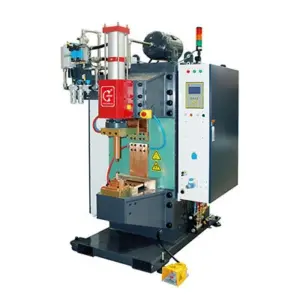
In today’s highly automated and precision‑driven manufacturing landscape, electric resistance welding (ERW) stands out as one of the most reliable, cost‑effective, and high‑throughput joining technologies. From automotive bodies and battery enclosures to appliance frames and high‑strength structural assemblies, ERW plays a pivotal role across industries demanding consistency, repeatability, and minimal post‑processing.
In this deep‑dive, we’ll explore the fundamentals of electric resistance welding, its key applications, performance advantages, and best practices for integration into advanced production lines while highlighting industrial solutions from Heron Welder, a global expert in resistance welding equipment and automation.
What Is Electric Resistance Welding?
Electric resistance welding is a process where heat generated by electrical resistance between metal surfaces is used to join those surfaces under controlled pressure. Unlike fusion welding which relies on melting filler and base material with an external heat source like a torch or arc ERW uses the inherent resistance of the material itself to build heat and create a solid‑state joint.
How ERW Works: The Physics Behind the Process
At its core, ERW relies on three physical principles:
-
Ohmic Heating: When an electrical current passes through a conductor, the electrical resistance of the material converts electrical energy to heat (described by Joule’s Law).
-
Pressure Application: Electrodes apply compressive force to hold parts in intimate contact, controlling deformation and ensuring metallurgical bonding.
-
Controlled Time & Current: Precise control of current magnitude and duration ensures consistent heat input and predictable joint properties.
A typical ERW cycle involves:
-
Clamping the workpieces between electrodes
-
Applying a high‑amperage current through the contact interface
-
Generating heat at the interface due to resistance
-
Holding under pressure until the joint solidifies
Variants of Electric Resistance Welding
Electric resistance welding isn’t a single technique it includes several processes adapted to specific geometries and production needs:
Spot Welding
The most common ERW method, especially in automotive assembly, spot welding joins overlapping sheet metal at discrete points. High current is applied momentarily to create “spots” of weld, ideal for rapid, repeatable joining of thin materials.
Projection Welding
Projection welding localizes current flow through raised features or embossments on one workpiece. These features concentrate heat precisely where it is needed, enabling multi‑spot welds in a single cycle often used in fastening studs, nuts, or clips.
Seam Welding
In seam welding, wheel‑shaped electrodes roll along overlapping material, producing a continuous, leak‑proof weld. This makes seam welding indispensable for applications like fuel tanks, drums, and HVAC ducts.
Capacitor Discharge Welding
Capacitor discharge (CD) welding delivers a high‑energy pulse over a very short time. It’s ideal for joining small parts that require minimal heat‑affected zones, such as battery tabs or fine electronic terminals.
Why Electric Resistance Welding Matters in Modern Manufacturing
High Throughput and Repeatability
ERW processes are inherently fast and easily automated. With cycle times measured in milliseconds to seconds, manufacturers can achieve throughput levels that would be impossible with traditional fusion welding.
Minimal Consumables and Post‑Processing
Electric resistance welding does not require filler materials, shielding gases, or extensive surface preparation. The result? Lower production costs, reduced inventory complexity, and minimal finishing work.
Strong, Consistent Joints
When properly specified and controlled, ERW produces joints with excellent mechanical properties and consistent strength across batches a non‑negotiable requirement for safety‑critical components in automotive, aerospace, and heavy equipment sectors.
Industrial Applications of Electric Resistance Welding
Electric resistance welding’s versatility makes it suitable for a wide range of applications:
Automotive & EV Manufacturing
Body‑in‑white structures, chassis rails, battery enclosures, and electrical conductors all benefit from ERW’s precision and repeatability. With the rise of electric vehicles, processes like seam and spot welding are increasingly critical for joining battery pack skins and busbars.
Consumer Appliances
From refrigerators to washing machines, appliance enclosures and frames are often joined using ERW for its cost‑effectiveness and aesthetic finish.
Electrical & Electronics
Capacitor discharge and precision resistance welding are used in joining fine electrical components where thermal control is critical such as battery terminals, connectors, and sensor assemblies.
Heavy Industrial Fabrication
Structural tubing, heat exchangers, and industrial frames are ideal candidates for ERW thanks to its robustness and scalability.
Integrating ERW Into Automated Production Lines
Today’s manufacturing environments demand not only robust welding but seamless integration with robotics, conveyors, and quality inspection systems. Here’s how successful ERW implementation achieves this:
1. Digital Control & Monitoring
Modern ERW systems provide digital interfaces for current, force, and time parameters. Closed‑loop feedback ensures each weld meets specified criteria, reducing defects and improving traceability.
2. Robotics & Material Handling
Robotic arms integrated with resistance welding guns enable precise positioning, consistent weld quality, and adaptable handling for complex assemblies.
3. Quality Inspection & Traceability
In‑line sensors, vision systems, and data logging allow engineers to monitor joint quality in real time and make process adjustments quickly, reducing scrap and rework.
Choosing the Right ERW Equipment: What to Look For
Selecting the right electric resistance welding equipment is a strategic decision. Here are key factors to consider:
-
Current Range & Duty Cycle: Ensure the machine can handle your material thickness and production rate.
-
Electrode Design & Cooling: Proper electrode geometry and cooling systems improve weld life and stability.
-
Control System & Software: Advanced controllers with data logging improve consistency across runs.
-
Service & Support: Responsive technical support accelerates integration and minimizes downtime.
Heron Welder: Industrial ERW Solutions Built for Performance
As a global manufacturer of industrial welding and metal‑joining equipment, Heron Welder delivers a comprehensive lineup of electric resistance welding machines including spot, projection, seam, MFDC, and capacitor discharge systems, as well as clinching, self‑pierce riveting (FSPR), welding guns, controllers, and automated production lines.
Heron systems are engineered for:
-
High‑precision resistance welding optimized for modern manufacturing demands
-
Seamless automation and robotics integration
-
Digital control for robust quality assurance
-
Custom configurations tailored to complex assembly needs
Whether you’re launching a new production line or upgrading existing equipment, Heron’s expert engineers partner with manufacturers to deliver solutions grounded in deep process knowledge and real‑world performance.
FAQs: Electric Resistance Welding
1. What materials can be joined with electric resistance welding?
Most conductive metals like steel, stainless steel, aluminum, and copper can be welded using ERW, provided appropriate current and electrode configurations are used.
2. How does ERW compare to traditional arc welding?
ERW offers faster cycle times, no consumables, and better repeatability for sheet and thin‑section joins, whereas arc welding may be preferred for thicker sections or more complex geometries.
3. Is ERW suitable for high‑volume production?
Yes — one of ERW’s greatest strengths is high throughput with consistent quality, making it ideal for automotive and appliance manufacturing.
4. Can ERW be automated?
Absolutely. ERW integrates effectively with robotics, conveyors, and digital control systems for flexible, automated production.
5. What is MFDC resistance welding?
Medium Frequency Direct Current (MFDC) welding provides stable, controllable welding current with reduced electrical interference, improving weld quality for critical applications.
Ready to Optimize Your Welding Process?
Electric resistance welding is a powerful, efficient, and scalable joining technology when the right equipment and expertise back it. Heron Welder combines deep technical knowledge with robust, customizable ERW systems designed for tomorrow’s manufacturing challenges.
Request a quote or consult with Heron’s experts today to explore tailored resistance welding and automation solutions for your production needs.
- Digital Agency
- Literie
- Location de voitures
- Restaurant
- Restaurant
- Mode
- Mode
- Information
- Marketing
- Tourisme
- Développement
- Découverte
- Législation
- Gastronomie
- Pâtisserie
- Evento
- Art
- Causes
- Crafts
- Dance
- Drinks
- Film
- Fitness
- Food
- Juegos
- Gardening
- Health
- Inicio
- Literature
- Music
- Networking
- Otro
- Party
- Religion
- Shopping
- Sports
- Theater
- Wellness
 Spanish
 Indian
 English
 French
 Arabic
 Portuguese
 Deutsch
 Turkish
 Dutch
Dutch
 Italiano
 Russian
 Romaian
 Portuguese (Brazil)
 Greek
Greek
