


High-Quality AAC Cable Solutions for Efficient Power Transmission | HNBF Power
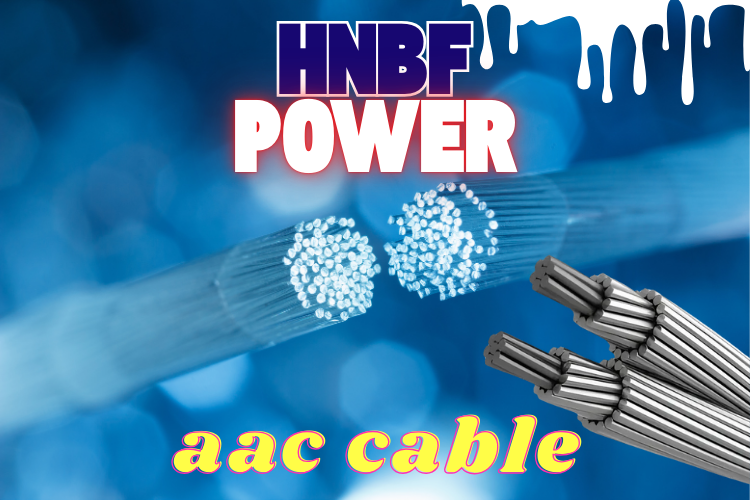
In modern power transmission and distribution systems, the choice of overhead conductors plays a critical role in ensuring reliability, efficiency, and safety. Among these, AAC cables (All Aluminum Conductor) are widely recognized for their excellent conductivity, lightweight properties, and cost-effectiveness. HNBF Power, a global leader in overhead conductors and power cable manufacturing, provides premium AAC cables engineered for both urban and rural electricity networks.
This article explores the features, benefits, and applications of AAC cables, helping engineers, procurement teams, and utility companies make informed decisions.
What is AAC Cable?
AAC (All Aluminum Conductor) cable is an overhead electrical conductor made entirely of high-purity aluminum. Unlike ACSR (Aluminum Conductor Steel Reinforced) cables, AAC cables do not have a steel core, making them lighter and ideal for low to medium-span applications.
Key properties of AAC cables include:
-
High electrical conductivity: Ensures minimal energy loss during transmission.
-
Lightweight design: Simplifies installation and reduces structural requirements for poles and towers.
-
Corrosion resistance: Suitable for areas with low mechanical stress and moderate weather conditions.
-
Cost-effective solution: Less expensive than steel-reinforced alternatives while maintaining efficient performance.
HNBF Power manufactures AAC cables with strict adherence to international standards, ensuring durability, reliability, and consistent performance for all types of distribution networks.
Advantages of Using AAC Cable
1. Excellent Conductivity
AAC cables are made from pure aluminum, which offers superior electrical conductivity. This characteristic makes AAC ideal for short to medium spans in overhead transmission systems, ensuring minimal power loss.
2. Lightweight and Easy Installation
The absence of a steel core reduces the overall weight of the conductor, facilitating easier handling, installation, and maintenance. For utility companies, this translates into reduced labor costs and faster project timelines.
3. Corrosion Resistance
Aluminum naturally forms a protective oxide layer, preventing corrosion over time. HNBF Power’s AAC cables are designed to withstand environmental challenges, ensuring long-term reliability in rural and urban applications.
4. Cost Efficiency
AAC cables are generally more affordable than ACSR cables, particularly for distribution lines that do not require high tensile strength. Utilities can achieve significant savings without compromising electrical performance.
Applications of AAC Cable
AAC cables are suitable for various power distribution and transmission projects, including:
-
Urban overhead distribution lines: Efficiently deliver power in cities and towns.
-
Rural electrification projects: Lightweight and easy to install over long distances.
-
Short-span transmission lines: Ideal where mechanical loads are minimal.
-
Industrial power connections: Reliable and durable for industrial facilities with moderate current requirements.
HNBF Power’s AAC cables are optimized for diverse applications, providing a balance of performance, cost-effectiveness, and longevity.
Why Choose HNBF Power for AAC Cables?
As a global manufacturer, HNBF Power is committed to delivering high-quality overhead conductors and power cables. Here’s why engineering and procurement teams prefer HNBF Power:
-
Global manufacturing standards: All AAC cables comply with ISO, IEC, and relevant national standards.
-
Customized solutions: Ability to produce AAC cables in various sizes and specifications tailored to project requirements.
-
Technical expertise: Dedicated support teams provide guidance on product selection, installation, and maintenance.
-
Reliable supply chain: Timely delivery to meet project deadlines worldwide.
By choosing HNBF Power, utilities and industrial customers can secure long-lasting, efficient AAC cable solutions for their transmission and distribution needs.
FAQs About AAC Cable
Q1: What is the difference between AAC and ACSR cables?
A1: AAC cables are made entirely of aluminum, whereas ACSR cables have a steel core for additional tensile strength. AAC is lighter and cost-effective, suitable for low to medium-span applications.
Q2: What are the standard sizes of AAC cables available?
A2: HNBF Power manufactures AAC cables in various cross-sectional areas, ranging from 16 mm² to 400 mm², depending on project requirements.
Q3: Can AAC cables be used in coastal or high-humidity areas?
A3: Yes, AAC cables are naturally resistant to corrosion. However, for areas with extreme mechanical loads or salty environments, additional protective measures may be recommended.
Q4: How long is the lifespan of AAC cables?
A4: When installed and maintained properly, AAC cables can last 25–30 years, offering a reliable long-term solution for power distribution.
Q5: Does HNBF Power provide customized AAC cable solutions?
A5: Absolutely. HNBF Power can manufacture AAC cables tailored to your specific requirements, including size, voltage rating, and packaging.
Conclusion
Choosing the right overhead conductor is critical for power efficiency, reliability, and cost management. AAC cables offer a lightweight, high-conductivity, and cost-effective solution for various electricity distribution projects. With HNBF Power’s expertise and global manufacturing standards, you can ensure the highest quality AAC cables for your infrastructure needs.
Contact HNBF Power today to discuss your project requirements and receive customized AAC cable solutions designed for optimal performance and durability.
- Digital Agency
- Literie
- Location de voitures
- Restaurant
- Restaurant
- Mode
- Mode
- Information
- Marketing
- Tourisme
- Développement
- Découverte
- Législation
- Gastronomie
- Pâtisserie
- مناسبة
- Art
- Causes
- Crafts
- Dance
- Drinks
- Film
- Fitness
- Food
- الألعاب
- Gardening
- Health
- الرئيسية
- Literature
- Music
- Networking
- أخرى
- Party
- Religion
- Shopping
- Sports
- Theater
- Wellness
 Arabic
 Indian
 English
 French
 Spanish
 Portuguese
 Deutsch
 Turkish
 Dutch
Dutch
 Italiano
 Russian
 Romaian
 Portuguese (Brazil)
 Greek
Greek
