


How colour-coated steel is made: from coil to finished roof sheet
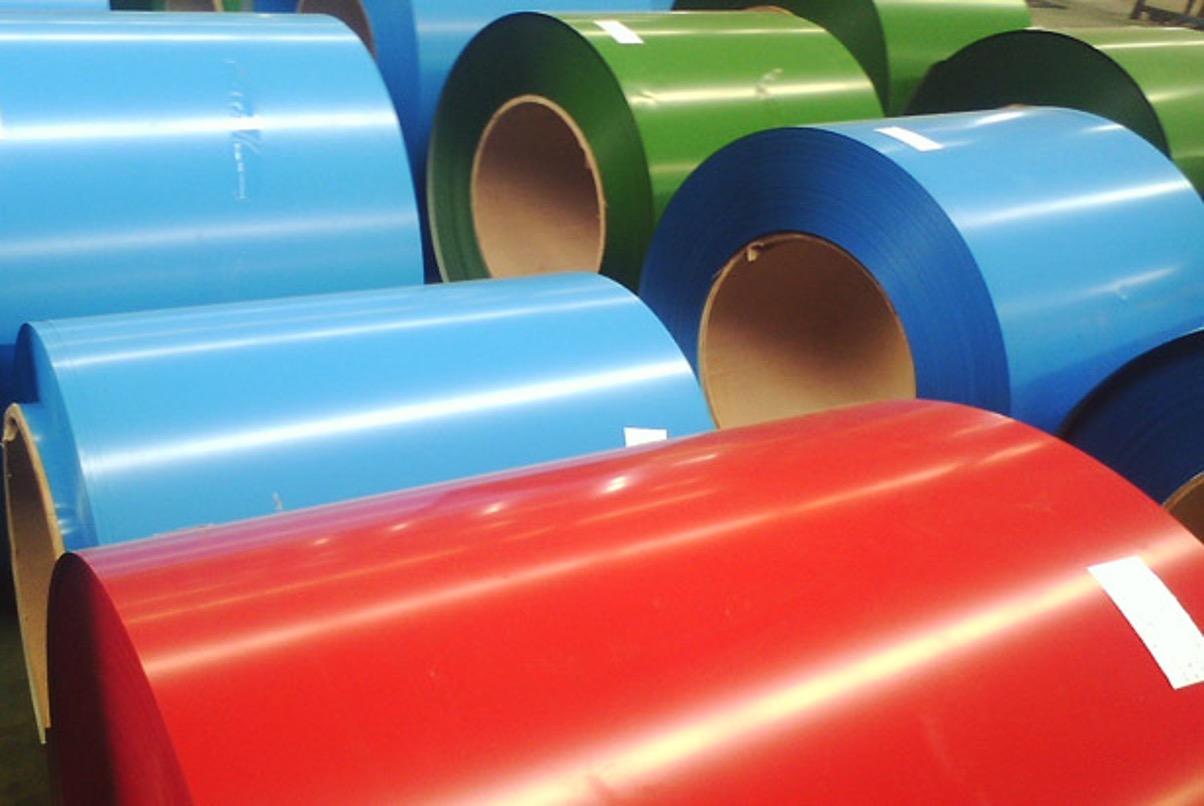
Colour-coated steel — often sold as PPGI/PPGL or simply “prepainted” coil — is a workhorse of modern roofing. It combines the structural strength of a steel substrate with a durable, factory-applied paint system that resists UV, corrosion and visual wear. Here’s a clear, step-by-step look at how a plain steel coil becomes a finished, profiled roof sheet.
1. Raw material: the steel coil
Production starts with hot-rolled or cold-rolled steel supplied in large coils. For colour coating, the substrate is commonly galvanized (zinc coated) or galvalume (zinc-aluminium alloy) to add corrosion protection before paint is applied. Coil width, thickness and surface condition are specified to match the end product (roof sheet profiles, trims, etc.).
2. Cleaning and surface preparation
The coil is unwound and runs through cleaning stations. Oil, mill scale and residues are removed using solvent or alkaline cleaning. Any remaining particles or surface films would compromise adhesion, so this step is critical. After cleaning, the strip is rinsed and dried to prepare it for chemical pretreatment.
3. Chemical pretreatment (conversion coating)
A thin chemical conversion layer — often a phosphate or chromate-free alternative — is applied to the metal. This micro-thin film improves paint adhesion and provides extra corrosion resistance. The strip is again rinsed and dried. Modern lines aim to control this layer precisely because it influences long-term performance.
4. Primer application
Next comes the primer — a thin polymer layer that bonds to the conversion coating and acts as a foundation for the topcoat. Primer thickness is typically measured in grams per square meter (g/m²) and is controlled tightly. The primer is applied by precision rollers or spray systems and then briefly passed through a furnace for partial curing.
5. Topcoat (colour) application
The topcoat — the visible coloured paint — is applied in one or more layers. Common coating chemistries include polyester (cost-effective), siliconized polyester (improved weathering), PVDF (high performance for severe climates) and higher-performance lacquers for special uses. Coil coating lines use doctor rolls to set an even film thickness. Multiple colours or special textures can be applied depending on the customer order.
6. Curing ovens and cooling
After coating, the steel passes through long curing ovens where the primer and topcoat fully polymerize. Oven temperature and residence time are tuned to the paint chemistry. Excessively high temperatures or uneven curing can cause defects, so modern lines have zoned ovens and continuous monitoring. Once cured, the strip is cooled under controlled conditions to avoid thermal stresses.
7. Post-treatment inspection and protective film
The painted coil is inspected visually and instrumentally for defects (pinholes, runs, colour variation). A protective plastic film may be applied to the top surface to protect the finish during handling and forming — especially for brighter or specialty colours. Protective film is removed before final installation.
8. Slitting, leveling and cut-to-length
Depending on the customer, the painted coil is slit into narrower coils or cut to length. Slitting yields coils sized for roll forming machines; cut-to-length produces flat sheets ready for further fabrication. Leveling (flattening) machines ensure the strip sits true before forming.
9. Roll forming into roof profile
Roll forming is where a flat painted strip becomes a profiled roof sheet. The strip passes through a series of precision rollers that bend it gradually into the required corrugation or trapezoidal profile. Forming is continuous, fast, and preserves the paint finish when done correctly. A cut-to-length shear then slices the continuous profile into usable sheet lengths.
10. Quality control and testing
Finished sheets undergo checks: dimensional tolerances, paint thickness, adhesion (cross-cut or peel tests), gloss and colour match, and sometimes salt-spray or accelerated weathering samples. Any irregular panels are rejected or reworked.
11. Packaging and delivery
Sheets are stacked with protective interleaving, strapped, and often wrapped to keep out moisture during transit. For roofing, manufacturers include edge trims, flashings and fixing recommendations. Proper packaging is crucial to prevent damage to edges and surfaces.
12. On-site considerations
Although factory finishing gives long life, proper handling during transport and installation matters. Remove protective film at the right time, avoid scratching surfaces, and follow manufacturer guidance on fasteners and sealants to preserve the warranty.
- Digital Agency
- Literie
- Location de voitures
- Restaurant
- Restaurant
- Mode
- Mode
- Information
- Marketing
- Tourisme
- Développement
- Découverte
- Législation
- Gastronomie
- Pâtisserie
- Event
- Art
- Causes
- Crafts
- Dance
- Drinks
- Film
- Fitness
- Food
- Games
- Gardening
- Health
- Home
- Literature
- Music
- Networking
- Other
- Party
- Religion
- Shopping
- Sports
- Theater
- Wellness
 English
 Indian
 French
 Arabic
 Spanish
 Portuguese
 Deutsch
 Turkish
 Dutch
Dutch
 Italiano
 Russian
 Romaian
 Portuguese (Brazil)
 Greek
Greek
