


On-Grid Solar Panel Installation Cost for Homes | Complete Cost Guide
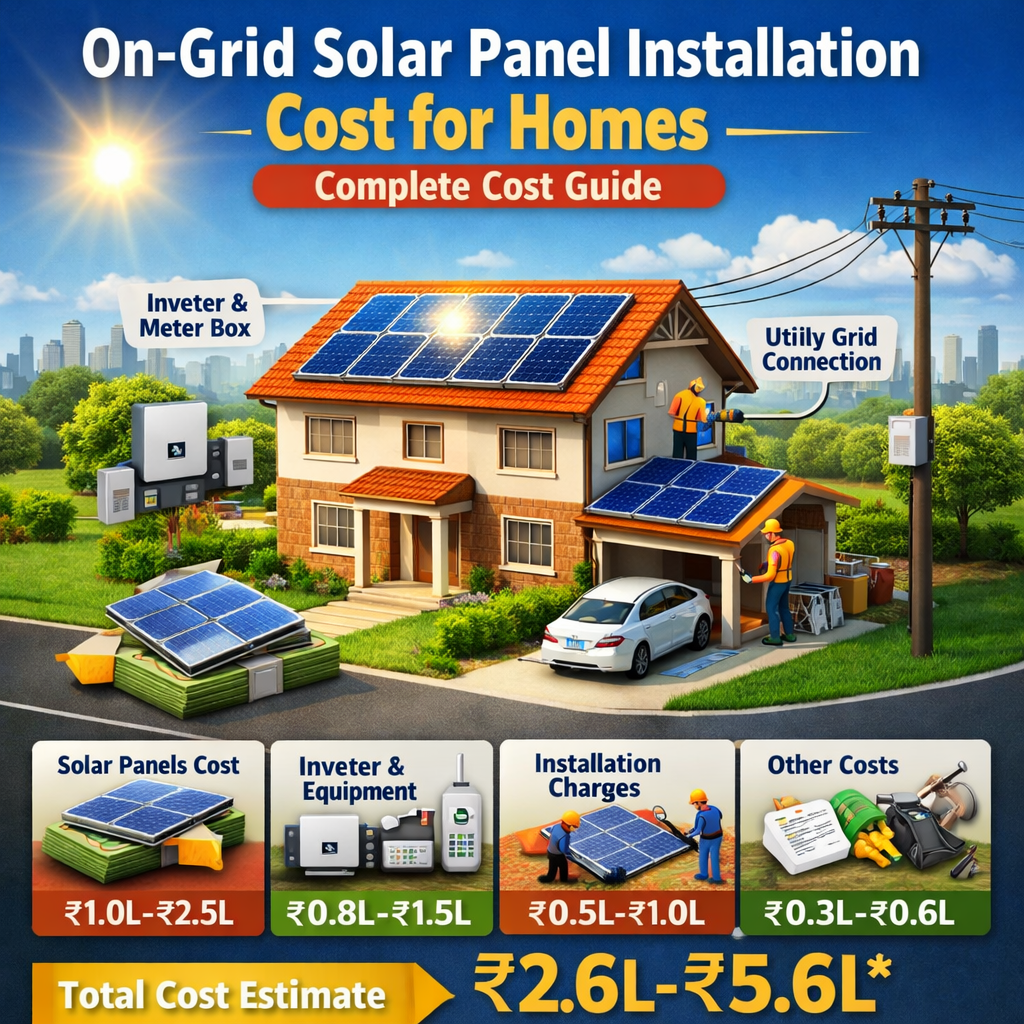
Installing solar panels is one of the smartest investments homeowners can make today. Rising electricity prices, frequent grid dependence, and increasing awareness of renewable energy have pushed more families toward solar power. Among the different solar options available, on-grid solar systems are the most popular for residential properties — mainly because they are affordable and offer excellent long-term savings.
But one of the biggest questions people ask is:
“What is the real cost of installing an on-grid solar system at home?”
This complete guide breaks down the costs, explains how pricing works, and helps you decide the right system size for your home.
What Is an On-Grid Solar System?
An on-grid solar system is directly connected to the electricity grid. It generates electricity during the day and sends excess power back to the utility through a process called net metering. When solar power is not available (for example, at night), the house uses electricity from the grid.
Key characteristics of an on-grid system:
-
No batteries needed
-
Lower installation cost compared to hybrid or off-grid systems
-
Earn credits for extra power sent to the grid
-
Best suited for homes with stable electricity supply
Because there is no battery storage, the system is simpler, easier to maintain, and more cost-effective.
How Much Does an On-Grid Solar System Cost for Homes?
The cost of residential on-grid solar installation depends mainly on system size. Larger systems generate more power but also cost more upfront.
Here’s a general cost breakdown by capacity (prices vary by brand, location, and equipment quality):
-
3 kW system – Suitable for small homes
-
5 kW system – Suitable for medium-sized homes
-
7.5 kW to 10 kW systems – Suitable for large houses or homes with higher electricity usage
The overall price usually includes:
-
On-grid inverter
-
Mounting structure
-
Wiring and electrical components
-
Net meter and approvals
-
Installation labor
Even though the initial investment may feel large, the system typically pays for itself through electricity savings within a few years.
Factors That Affect On-Grid Solar Installation Cost
1. System Size (kW)
The bigger the system, the higher the cost — but also the greater the savings. System size is based on:
-
Monthly electricity consumption
-
Roof size and direction
-
Sunlight availability
A professional installer will calculate the ideal capacity after a site survey.
2. Type and Quality of Solar Panels
Premium panels cost more but offer:
-
Higher efficiency
-
Longer lifespan
-
Better performance in low light
Choosing quality panels reduces long-term maintenance and increases savings.
3. Type of Inverter
A good inverter ensures stable energy output and efficient conversion. Higher-end inverters may cost more but improve performance and durability.
4. Installation Structure
Rooftop type, height, and material affect labor and mounting costs. Complex roofs may require custom mounting structures.
5. Wiring and Safety Equipment
High-quality cables, surge protection, earthing kits, and isolators are important for safety and longevity.
6. Permits and Net Metering
Approval fees vary by region but are essential to enable energy export and billing credits.
Additional Costs to Consider
While comparing quotes, make sure the following are included:
-
Site inspection
-
Design and documentation
-
Electrical upgrades (if required)
-
Maintenance packages
Sometimes cheaper quotes exclude these, which may increase costs later.
Government Subsidies and Incentives
Many regions offer subsidies or incentives on residential on-grid solar systems to encourage adoption. These financial benefits can significantly reduce upfront costs. Depending on your country or state, subsidies may apply to:
-
Solar panels
-
Installation
-
Net metering
-
Tax rebates
Check with certified installers or local energy departments to see what support is available in your area.
How Much Can You Save with On-Grid Solar?
Savings depend on:
-
System size
-
Local electricity tariffs
-
Your energy consumption
-
Net metering policy
In most cases, homeowners can reduce electricity bills by 60–90%. Over 20–25 years (the lifespan of most solar systems), the total savings can be substantial.
Payback Period: When Will Solar Pay for Itself?
The payback period is the time it takes for your savings to equal your installation cost. For most residential on-grid systems, the payback period is typically:
4 to 7 years
After that, most of the electricity your system produces is essentially free — while bills stay low for decades.
Pros and Cons of On-Grid Solar for Homes
Advantages
-
Lower installation cost
-
Maximum bill savings
-
Simple design and easy maintenance
-
Works seamlessly with household wiring
-
Eligible for subsidies and incentives
Limitations
-
Does not provide power during outages (no batteries)
-
Depends on grid availability
-
Requires net metering approval
If your area rarely experiences power cuts, an on-grid system is usually the best value.
Steps Involved in Installing an On-Grid Solar System
-
Site survey and load calculation
-
System design and quotation
-
Permit and net metering approval
-
Installation of panels and inverter
-
Wiring and safety testing
-
Final inspection and connection to grid
Working with licensed installers ensures safety, compliance, and warranty support.
Maintenance Requirements
On-grid systems require very little maintenance:
-
Clean panels periodically
-
Check inverter status
-
Ensure wiring and earthing are secure
-
Schedule routine inspections
Most issues can be detected through mobile monitoring apps provided by installers.
How to Choose the Right Installer
Select installers who provide:
-
Experience and certifications
-
Transparent pricing
-
After-sales service
-
Warranty on equipment and installation
-
Assistance with paperwork and subsidies
Always compare at least two or three quotes before finalizing.
Final Thoughts
An on-grid solar system is one of the most cost-effective ways for homeowners to reduce electricity bills, increase property value, and support clean energy. Understanding installation costs and the factors that influence them helps you make a confident, smart decision.
When designed correctly, an on-grid solar system is not just an expense — it is a long-term investment that continues delivering value year after year.
- Digital Agency
- Literie
- Location de voitures
- Restaurant
- Restaurant
- Mode
- Mode
- Information
- Marketing
- Tourisme
- Développement
- Découverte
- Législation
- Gastronomie
- Pâtisserie
- Veranstaltung
- Art
- Causes
- Crafts
- Dance
- Drinks
- Film
- Fitness
- Food
- Spiele
- Gardening
- Health
- Startseite
- Literature
- Music
- Networking
- Andere
- Party
- Religion
- Shopping
- Sports
- Theater
- Wellness
 Deutsch
 Indian
 English
 French
 Arabic
 Spanish
 Portuguese
 Turkish
 Dutch
Dutch
 Italiano
 Russian
 Romaian
 Portuguese (Brazil)
 Greek
Greek
