


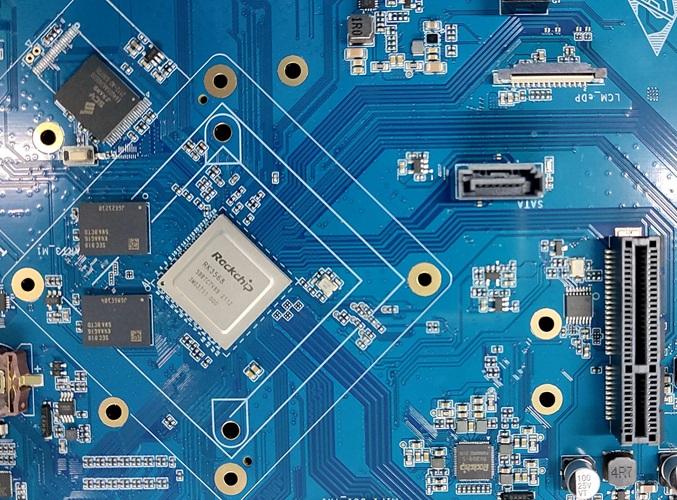

A Printed Circuit Board or PCB is a very useful technology that has penetrated many market sectors. The devices that we see and hold daily are comprised of these boards that are designed, fabricated and assembled following international standards and requirements. The common goal in every design is to produce PCBs that are efficient, reliable, compact and cost-effective.
The materials used in fabricating PCBs are selected according to product requirements, target functionality and cost boundaries. Many base materials are now developed to accommodate various needs from end customers. One type of substrate material that is still commonly used in many industries is the PCB FR4 material. In this article, we will gain knowledge on the structure, benefits and applications of FR4 PCBs.
What is an FR4 PCB?
An FR4 PCB is a type of PCB using an FR4 or Flame Retardant 4 dielectric material, which is a very popular substrate due to its various advantages, such as low cost and abundance. It is a composite material which is a woven fibreglass impregnated with epoxy resin type of laminate. The FR4 substrate comes in different thicknesses, resulting in different maximum ambient temperatures. FR4 PCB boards can be manufactured into multi-layered PCBs with established processing and quality controls.
The FR4 fabric is also coated with coupling agents to strengthen adhesion between the glass and the resin. The resin serves as a binder, which is also combined with additives, flame retardants and fillers in various ratios to meet the desired laminate properties. Flame retardants are available in either halogenated or halogen-free forms to suppress the flammability of laminates. Common FR4 PCB systems have glass transition temperature ranges from 125 to 135 degrees Celsius, which is suitable for wide applications.
Special types of FR4 PCBs were developed for specific requirements. The performance of FR4 PCB material properties may vary slightly depending on the application. These include high Tg (glass transition temperature) and halogen-free PCB boards. High Tg FR4 circuit boards have superior thermal performance, with a low coefficient of thermal expansion for reliability.
How is FR-4 PCB Fabricated?
FR4 PCBs are fabricated using the following processing steps in a highly controlled environment. These are the major steps in producing multi-layered FR4 circuit boards, which can slightly vary depending on the additional requirements.
- Pre-preg and Copper Clad Laminate Preparation. The prepregs are fabricated by semi-curing epoxy resin and impregnated on the fibreglass cloth. The prepregs are laminated by thermally pressing together the layers to form cores or laminates. Copper foil is applied by electrodepositing copper to produce copper-clad laminate.
- Etching. Using the photolithography technique, the circuit pattern is formed through an etching process. A photosensitive material is applied on top of the copper foil, which is later developed and exposed to reveal the needed circuitry.
- Drilling. Via or hole interconnects and through-hole channels are drilled, followed by plating processes. Copper is typically used as a plating material to make the vias conductive.
- Solder Masking. The FR4 PCB board surface is protected from the environment through solder masking. The areas that will be used for soldering, such as copper pads and traces, are left exposed.
- Surface Finish. The pads of the FR4 PCB must go through surface finishing techniques to enhance the solderability of the copper surface.
What are the Benefits of FR4 PCB?
Due to the diverse requirements in electronics, many alternative materials have been developed. Despite the rising popularity of other material types such as metal core PCBs and polyimide PCBs, many applications still prefer FR4 PCBs due to the following benefits:
- Low Cost. One of the critical benefits of FR4 circuit boards is their low cost. FR4 PCB has already long time as a traditional substrate material, thus it is already a more mature technology than other laminate materials, with lower cost and complexity. The abundance of PCB FR4 material makes it easily available, thus it is considered cheaper than other sourced materials such as Teflon and aluminium-based materials. Cost is further reduced by ordering high volumes.
- Flame Retardant. FR4 PCBs are formulated to suppress or delay fire in PCBs as part of the safety requirement. Underwriters Laboratories or UL is a certifying body that implements standards on PCB safety through flammability tests. The epoxy resin of the FR4 PCB board consists of flame-retardant systems and thus does not easily ignite.
- Excellent Moisture Resistance. FR4 PCBs are known to have excellent moisture resistance, which is an essential property in electronic devices. Moisture is an enemy in PCB circuits as it is the start of catastrophic failures related to corrosion, ionic migration and contamination. The glass reinforcement makes the FR4 PCB board absorb less moisture by acting as a moisture diffusion barrier.
- Good Mechanical Strength. Composite materials such as FR4 PCB have the advantage of good mechanical strength, which is highly favourable for devices that need to be exposed to vibrational and mechanical stresses. FR4 circuit boards are capable of physically supporting and electrically connecting components. The rigidity of FR4 PCB boards is used to strengthen the system and avoid deflection or bending during application.
FR4 PCBs’ moisture resistance helps in having consistent thermal and electrical performance.
What are the Applications of an FR4 PCB?
FR4 PCB material properties have FR4 PCBs have long been used as a default substrate layer for many common applications, such as the following:
- Automotive. The rate of integration of electronics in vehicles has further increased due to high demand for safer, reliable and automated systems. The FR4 PCB is present in the automotive camera, braking, lighting, engine control units and infotainment systems, enabling Advanced Driver Assistance Systems (ADAS). A circuit board made from PCB FR4 material is one of the preferred options in automotive devices due to its good mechanical strength and high chemical and wear resistance.
- Commercial. The FR4 PCB board also has a wide presence in commercial devices such as mobile phones, computers and televisions. These FR4 PCBs can be designed and fabricated up to several layers, which enables multi-tasking in a single device while still maintaining thermal and signal integrity. Smart appliances at home are also becoming increasingly sophisticated, thus the need for FR4 PCBs that have reliable circuitry for controlling and sensing.
- Industrial. The critical devices in industrial systems have internal FR4 PCB parts where components are housed for precise robotic operations. The circuit board made from PCB FR4 material is tested to withstand harsh conditions, such as high vibration and temperature. Sensors, power supplies and control systems in industrial equipment consist of rigid FR4 PCB substrates due to their exceptional mechanical strength.
- Medical. Life-critical applications such as medical devices are also dependent on FR4 PCB boards. Diagnostic equipment in healthcare, such as MRI scanners and ultrasound machines, has rigid circuit boards made from PCB Fr4 material. Thinner FR4 circuit boards are also designed for wearables technology, suitable for fitness trackers and smart watches. They are also integrated with a polyimide substrate for compact medical devices.
Conclusion
The FR4 PCB material properties can meet the requirements of general industrial and household applications. Due to their favourable price, the FR4 circuit board market has increased in terms of global sales with a heavy presence of manufacturing, especially in the Chinese region. Finding a reliable supplier that has extensive experience in manufacturing FR4 PCBs is extremely important to have a profitable and reliable finished PCB product. ViasionPCB company has established lasting partnerships with customers worldwide due to its credibility and quality services.

 Indian
 English
 French
 Arabic
 Spanish
 Portuguese
 Deutsch
 Turkish
 Dutch
Dutch
 Russian
 Romaian
 Portuguese (Brazil)
 Greek
Greek
