


Tennis Bracelet Buying Guide: What to Look For
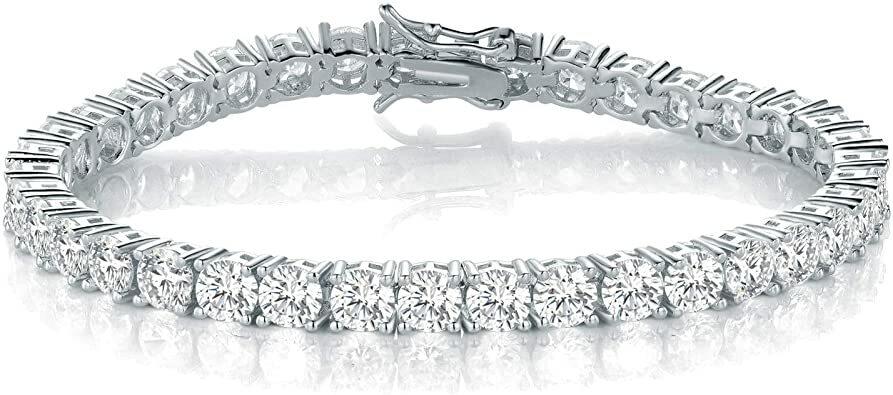
Tennis bracelets are timeless, they’re elegant, wearable, and instantly recognizable. Whether you’re buying one as a treat for yourself, a gift, or an investment piece, knowing what to look for will help you get the best value and the style that fits your life. This guide walks you through the key factors: style, metal, stones, quality marks, clasp security, fit, and care — all in plain language so you can shop confidently.
What is a tennis bracelet?
A tennis bracelet is a flexible line bracelet made of a continuous row of gemstones (most commonly diamonds) set in metal. The name became popular after professional tennis player Chris Evert lost her diamond bracelet during a 1978 match and asked to stop play until it was found; by the 1980s the term “tennis bracelet” was widely used. Today it refers to the look: slim, symmetrical, and sparkling.
Style & profile: classic vs. contemporary
Tennis bracelets come in many visual styles:
Classic: uniform round diamonds in prong or bezel settings. Clean, understated, perfect for everyday wear.
Station: gems separated by small metal links — slightly more casual.
Byzantine or link styles: feature more elaborate metalwork between stones, leaning dressier.
Colored stones: sapphires, rubies, emeralds, or mixed gems for a bold or personalized look.
Decide whether you want something minimalist and versatile (classic) or a statement piece with color or unusual cuts. Think about how often you’ll wear it — everyday pieces should be simpler and more durable.
Metal choices
The metal sets the tone and durability:
Platinum: extremely durable and hypoallergenic, with a silvery-white look that doesn’t fade. It’s heavier and usually pricier.
18k or 14k gold: warm (yellow), rosy (rose gold), or white (plated or alloyed). 14k gold is more durable than 18k; white gold is often rhodium-plated to increase brilliance.
Sterling silver: affordable and pretty, but softer and better suited to occasional wear.
If you plan daily wear, prioritize platinum or 14k gold for longevity. For a trendier look, rose gold is very popular.
Stones: diamonds vs. colored gems
Diamonds are the classic choice due to their hardness and brilliance. If you choose diamonds, know the basic 4 Cs: cut, color, clarity, and carat weight.
Colored gems (sapphires, rubies, emeralds) add personality and can be more affordable per carat than diamonds — but they require more care (emeralds are softer, for example).
Understanding the 4 Cs (for diamonds)
Cut: The most important for sparkle. A well-cut diamond reflects light beautifully; a poor cut will look dull even at higher color or clarity grades.
Color: Graded on a scale (commonly D–Z for white diamonds). Less color (D–F) is rarer; near-colorless (G–J) offers excellent value in most settings.
Clarity: Measures internal flaws. VS2–SI1 often look eye-clean in small stones like those in a bracelet, giving good value.
Carat weight: Total carat weight (TCW) is used for bracelets — the sum of all stone weights. Decide whether you want a delicate line (lower TCW) or a bold, high-impact piece (higher TCW).
For bracelets, prioritize cut and eye-clean clarity over chasing the absolute top color or clarity — you’ll often get more sparkle and better value.
Settings: security vs. style
Common settings include:
Prong (shared or individual): classic and shows lots of stone surface for sparkle; shared prongs reduce metal but can catch on clothing if not well-made.
Bezel: metal rim surrounds each stone — very secure and sleek, but hides some of the stone’s surface.
Channel: stones set between two metal strips — secure and modern-looking.
For everyday wear, choose strong settings (bezel or well-engineered prongs) and inspect prong thickness and stone security.
Clasp & safety
A tennis bracelet’s clasp is critical. Look for:
Box clasp with figure-eight safety or double-safety clasp — prevents accidental opening.
Hidden clasps that blend with the design but still lock securely.
Test the clasp feel: it should click firmly with no wobble. If you’re ordering online, check return policies and whether the piece is insured during shipping.
Fit & sizing
Bracelets should fit comfortably: not too tight (restricts movement) and not too loose (can slide and risk loss). A good rule:
Measure your wrist where you normally wear bracelets.
Add 1/4 to 1/2 inch for a snug fit, or 3/4 to 1 inch for a looser, more flowing look.
If buying in-store, try several sizes. Some designers offer micro-adjustments or removable links.
Certification & return policy
For diamond bracelets, ask for a certificate or appraisal that lists the total carat weight and quality details. Individual stones in a bracelet often won’t each have a separate GIA report (that’s rare and expensive), but reputable jewelers will provide a detailed appraisal and origin of the stones.
Also check the seller’s:
Return policy (at least 14–30 days is standard)
Warranty for manufacturing defects
Cleaning and repair services (prong tightening, re-plating white gold, etc.)
Budget & value tips
Decide your budget in total carat weight terms rather than chasing per-stone price. A higher TCW with mid-grade diamonds (G–I color, VS–SI clarity, excellent cut) often presents better visual value than tiny ultra-high-grade stones.
Consider lab-grown diamonds if you want bigger-looking sparkle for less money; they’re physically identical to mined diamonds but usually less expensive.
Compare TCW, metal purity, and craftsmanship. Two bracelets that look similar can have very different value due to metal weight and setting quality.
Care & maintenance
Remove your bracelet for heavy work, sports, or cleaning chemicals.
Clean gently at home with warm water, mild soap, and a soft brush; dry with a lint-free cloth.
Inspect prongs and settings periodically. A jeweler can tighten prongs, re-plate white gold, or replace lost stones.
Store flat and separate from other jewelry to avoid scratches.
Final checklist before buying
Do you like the overall style and metal tone?
Is the total carat weight appropriate for your taste and budget?
For diamonds: are the cut, color, and clarity balanced for value?
Is the setting secure for everyday wear?
Does the clasp have a redundant safety mechanism?
Is there documentation, a solid warranty, and a clear return policy?
Have you tried it on (or checked sizing instructions) for fit?
Conclusion
A tennis bracelet is both a statement and a staple. The best one for you balances beauty, durability, and budget. Prioritize secure settings and clasps if you plan to wear the bracelet often, and focus on cut and eye-clean clarity for the brightest sparkle per dollar. With a little attention to metal, stones, and craftsmanship, you’ll find a piece that feels effortless and lasts for years, the kind of jewelry that gets passed down.
- Digital Agency
- Literie
- Location de voitures
- Restaurant
- Restaurant
- Mode
- Mode
- Information
- Marketing
- Tourisme
- Développement
- Découverte
- Législation
- Gastronomie
- Pâtisserie
- Event
- Art
- Causes
- Crafts
- Dance
- Drinks
- Film
- Fitness
- Food
- Παιχνίδια
- Gardening
- Health
- Κεντρική Σελίδα
- Literature
- Music
- Networking
- άλλο
- Party
- Religion
- Shopping
- Sports
- Theater
- Wellness
 Greek
Greek
 Indian
 English
 French
 Arabic
 Spanish
 Portuguese
 Deutsch
 Turkish
 Dutch
Dutch
 Italiano
 Russian
 Romaian
 Portuguese (Brazil)
