


Which Goes First Engagement and Wedding Ring Style Guide
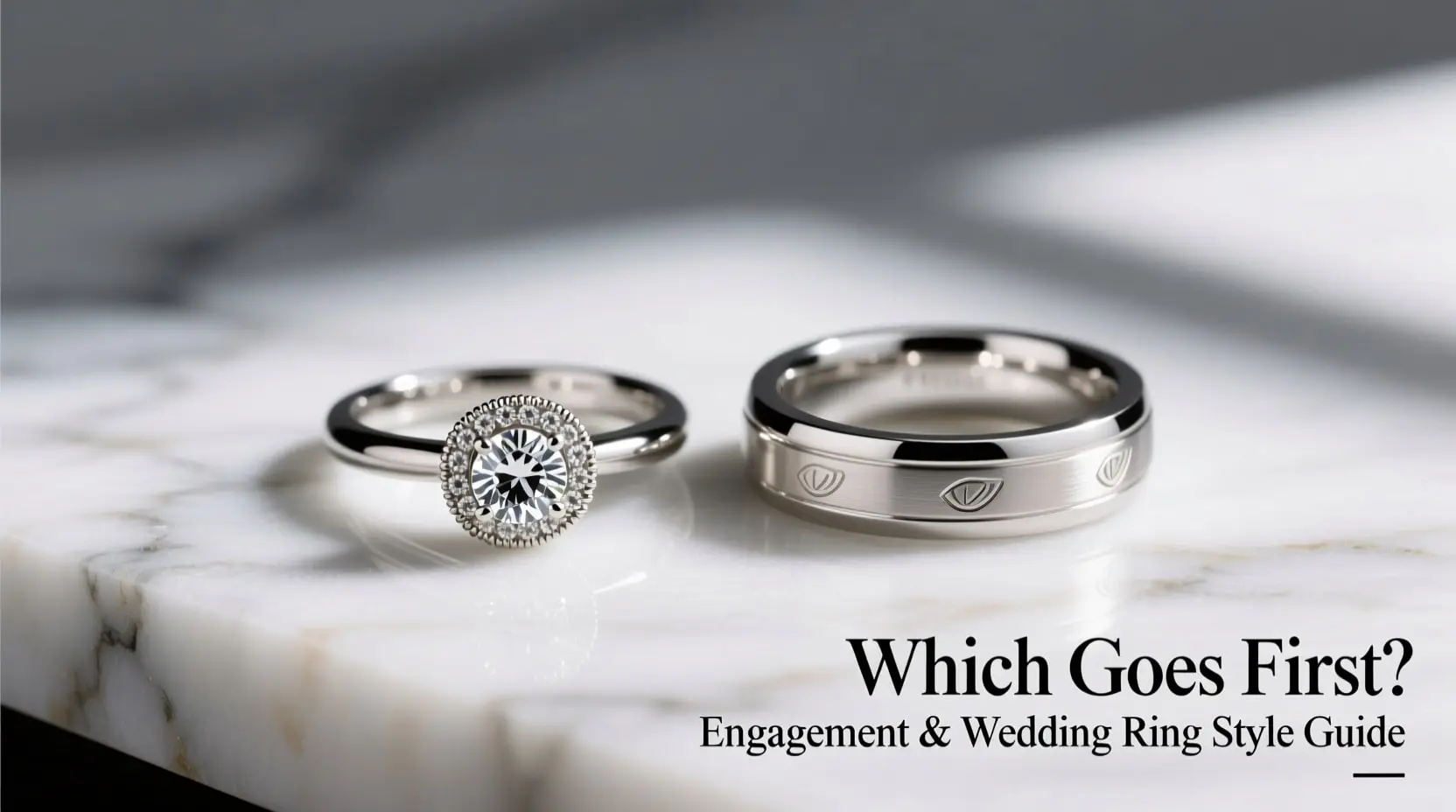
When you're preparing for one of the most important days of your life, every detail matters. Many brides find themselves puzzled about the proper way to wear their beautiful rings. Understanding which goes first, engagement and wedding ring, is essential for following tradition while still expressing your personal style. Throughout history, numerous couples have asked this question, and the responses have combined pragmatic elements with important symbolism.
A traditional response to this question is that the wedding band should be worn precisely near to the heart. More practically, the wedding band is worn closest to the finger, followed by the engagement ring. Such a setting is based on a beautiful romantic custom that has been around for a long time and is still popular among brides.
The Traditional Order Explained: Which Goes First Engagement and Wedding Ring?
The explanation for the given order of the rings is rooted in the ancient concepts of love and connection. Earlier, people held the belief that a vein called the "vena amoris" connected directly from the fourth finger on the left hand to the heart. Thus, placing the wedding ring first and closest to the finger indicates placing it closest to the heart.
During a couple's wedding ceremony, the wedding ring is placed on their finger first. Several brides switch their engagement ring to their right hand for a period of time before the wedding, allowing the groom to see his bride's wedding band while speaking vows. After the ceremony, the diamond engagement ring is placed back on the left hand, on top of the band.
Why Ring Placement Matters
Aside from its symbolic value, this arrangement has practical advantages. Wedding bands are far more modest and unobtrusive in style than engagement rings. The flat or slightly rounded surface of the wedding band allows the often quite expensive engagement ring to sit securely on it.
In general, an engagement ring features a raised setting, intricate decorations, and a large gemstone. In this scenario, the top layer should be the most exquisite, so the ring with the wedding band beneath can be highlighted, and the latter can support the first, resulting in a stunning arrangement of both. Furthermore, it places both of them such that neither is overly exposed to the inevitable friction and wear.
Modern Alternatives and Personal Preferences
Though traditions serve as a compass, couples of today mostly opt for those that represent their own personalities. A few brides decide to wear only their wedding band daily and keep the engagement ring for occasions that are special. The remaining ones pile up several bands next to the two rings they have, thus creating a more eye-catching effect.
There are some peculiarities in the design of a few engagement rings that make them better reversed. In case the ring has an unusual shape, curved band, or detailed sides, it can be more visually appealing when one wears it differently. Your engagement ring being a unique silhouette, you should try both setups till you find the one that pleases your eyes.
Choosing Rings That Work Together
When you are in the market for a wedding band, think about how it can match with your existing engagement ring. Apart from the dozen or so designs that are compatible without a doubt, most jewelers provide sets that are perfect mates designed to stick closely together. Usually these coordinated pairs feature complementary curves, metals that are identical, and elements of the design that are in harmony.
If you didn't finish the purchase of the engagement ring, do it together with the wedding band. Put on and off various combinations to check the interaction of different widths, metals, and styles with your engagement ring. To ensure a flawless and unified appearance, some couples decide to have custom-made wedding bands that fit snugly around the setting of the engagement ring.
Caring for Your Precious Rings
No matter in which order you have put on the rings, taking good care of them is what will keep their beauty for decades. When doing household chores, attending a gym, or going for a swim, it is advisable to take both rings off. Damaging of the precious metals as well as loosening of the settings for gemstones may result from hitting hard and using harsh chemicals.
Do the cleaning of your rings on a frequent basis, employing some mild soap and lukewarm water. The dirt that is left after some time and is in the details of your jewelry and under the elevated setting will be removed by the soft brush. Book professional cleanings and inspections at regular intervals to spot any potential problems in their early stages.
Making the Choice That Feels Right
Ultimately, understanding which goes first, engagement and wedding ring, gives you the foundation to make an informed decision. Tradition suggests the wedding band goes first, creating a meaningful connection to centuries of romantic symbolism. However, your personal comfort and aesthetic preferences matter equally.
Some women discover that reversing the traditional order works better for their specific ring designs. Others follow convention precisely because the symbolism resonates deeply with them. Neither choice is wrong because these rings represent your unique love story.
Consider trying both arrangements for a few days before your wedding. Notice which feels more comfortable and which displays your rings most attractively. Take photos of each option and review them later with fresh eyes.
For many years, your engagement and wedding rings will be the witness of a lot of your life moments. You may support the traditional ways or create your own, but it is the same whether you share them or store them separately—what matters is the love and the promise that they stand for. The greatest thing is not the place on your finger but the love in your heart that they stand for.
- Digital Agency
- Literie
- Location de voitures
- Restaurant
- Restaurant
- Mode
- Mode
- Information
- Marketing
- Tourisme
- Développement
- Découverte
- Législation
- Gastronomie
- Pâtisserie
- Event
- Art
- Causes
- Crafts
- Dance
- Drinks
- Film
- Fitness
- Food
- Games
- Gardening
- Health
- Home
- Literature
- Music
- Networking
- Other
- Party
- Religion
- Shopping
- Sports
- Theater
- Wellness
 English
 Indian
 French
 Arabic
 Spanish
 Portuguese
 Deutsch
 Turkish
 Dutch
Dutch
 Italiano
 Russian
 Romaian
 Portuguese (Brazil)
 Greek
Greek
