


Manual Scissor Lifts Manufacture – A Complete Guide to Design, Function & Industrial Use
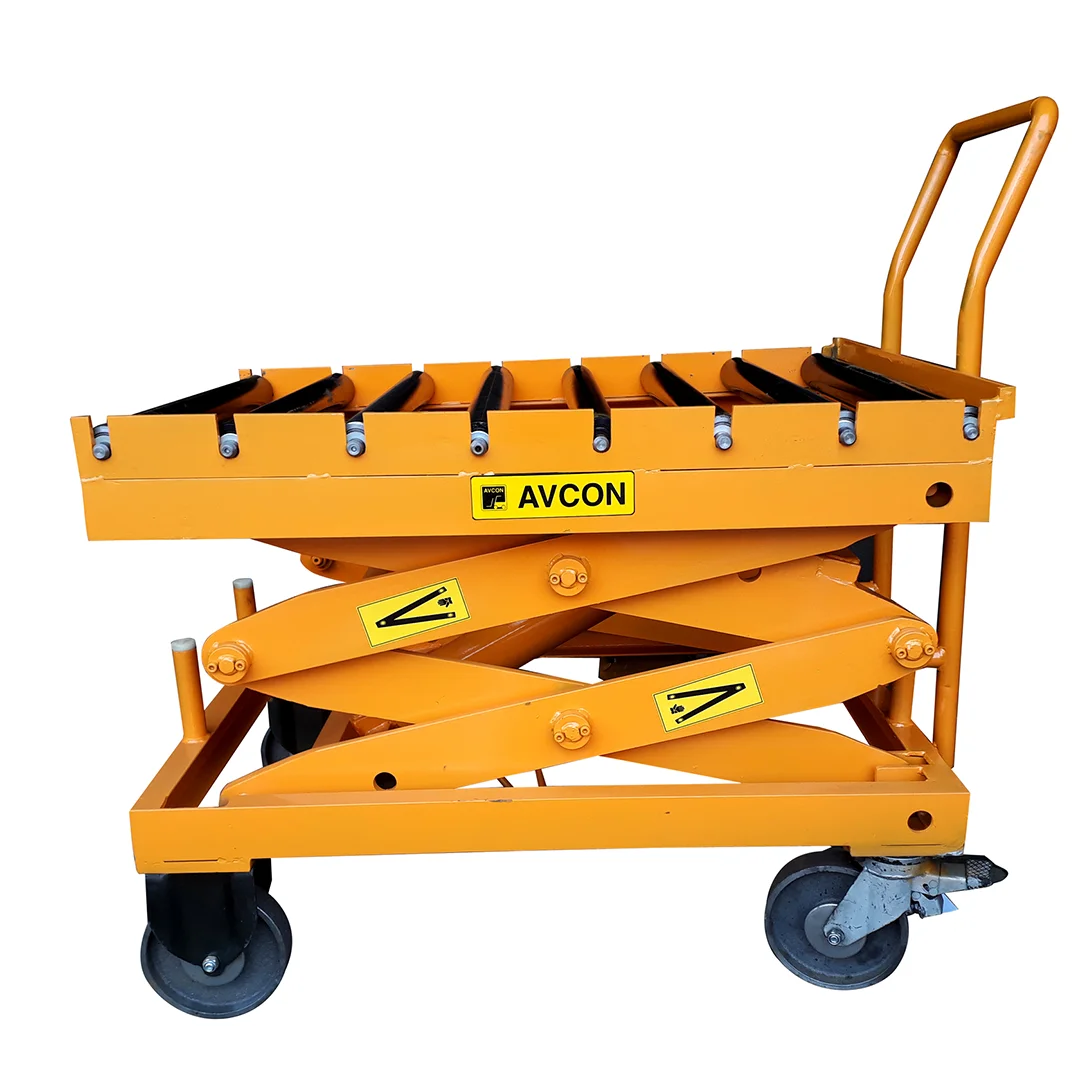
Manual scissor lifts play a vital role in a wide range of industrial, commercial, and maintenance applications. These lifts are known for their simplicity, safety, and reliability, especially in situations where powered lifting systems are not required or feasible. Understanding the manufacturing process, design considerations, and performance expectations of manual scissor lifts helps businesses select the right platform for their workload and safety conditions. In this blog, we discuss the manual scissor lifts manufacture process, the engineering principles behind these systems, material considerations, testing methods, and how manufacturers ensure quality and safety.
Throughout the discussion, we will refer to industry approaches followed by companies like Avcon System, known for creating material-handling solutions that focus on robust design and safety compliance.
1. What Are Manual Scissor Lifts?
A manual scissor lift is a lifting platform that operates using mechanical force—typically through a hydraulic hand pump. The “scissor” mechanism consists of crossed metal supports that extend vertically when pressure is applied to the hydraulic cylinder. These lifts are often used for:
-
Assembly line tasks
-
Warehouse operations
-
Material positioning
-
Loading/unloading workstations
-
Repair and maintenance work
Because they are manually operated, these lifts do not rely on electricity or batteries. This makes them suitable for remote locations, outdoor applications, and environments where electrical equipment may be restricted.
2. Why Manual Lifts Still Matter in a Mechanical-Driven Industry
Although the industry is shifting toward automation and electric lifting systems, manual scissor lifts remain widely used for several reasons:
2.1 Cost-Effectiveness
Manual lifts are economical to purchase, operate, and maintain. They involve fewer components like motors, batteries, and wiring, which reduces operational costs and long-term maintenance needs.
2.2 Versatile Use Cases
They can be used anywhere—indoors, outdoors, or in areas where electricity is unavailable or hazardous.
2.3 Low Maintenance Requirements
With simple hydraulics, basic seals, and mechanical scissor structures, these lifts require minimal servicing compared to powered alternatives.
2.4 High Load-Handling Strength
Despite being manually operated, the hydraulic structure allows impressive load capacities ranging from a few hundred kilograms to more than a ton, depending on the manufacturer’s design.
3. The Manual Scissor Lifts Manufacture Process
Creating a manual scissor lift involves a combination of precision engineering, safety-focused design, quality material selection, and strict manufacturing standards. Below is a step-by-step look into how manufacturers approach the process.
3.1 Concept & Engineering Design
Manufacturers begin with the engineering design phase, where several factors are evaluated:
-
Load Capacity Requirement
Defines the maximum safe working load. -
Lift Height
Determines how many scissor stages are needed. -
Platform Size
Based on materials, tools, or objects that will be handled. -
Hydraulic System Selection
The efficiency and stroke length of the hydraulic cylinder determine lift smoothness.
Companies like Avcon System generally follow standard industrial engineering principles to ensure durability and safety across different lifting models.
3.2 Material Selection
Material choice has a major impact on performance and longevity. Typical materials used in manual scissor lift manufacturing include:
-
High-strength carbon steel for scissor arms
-
Alloy steel for pivot pins and axles
-
Anti-slip sheet metal for platform surfaces
-
Powder-coated frames to prevent corrosion
-
Industrial-grade hydraulic components
Material quality directly affects load-bearing capacity, resistance to stresses, and long-term performance.
3.3 Fabrication of the Scissor Structure
The heart of the lift is the scissor arm assembly. The fabrication process includes:
-
Laser cutting and plasma cutting of steel plates
-
CNC bending for consistent scissor geometry
-
Robotic or precision welding
-
Machining of pivot points
-
Application of bushings and bearings
Manufacturers ensure that the scissor arms maintain exact symmetry to handle load distribution evenly.
3.4 Assembling the Hydraulic Mechanism
Manual scissor lifts rely on hydraulic power generated through a foot pump or hand pump. Manufacturing involves:
-
Assembly of the hydraulic cylinder
-
Pressure testing of hydraulic components
-
Installation of valves, seals, and hoses
-
Integration of the pump with the frame
Hydraulic systems are tested rigorously to prevent leaks and maintain stable pressure under maximum load conditions.
3.5 Platform Construction
The platform is designed to be stable, slip-resistant, and strong. Key steps include:
-
Fabricating a flat working surface
-
Adding anti-skid textures or plates
-
Reinforcing the underside with steel channels
-
Integrating guardrails (if required)
-
Designing toe guards for safety
The platform must remain stable and level throughout its lifting range.
3.6 Final Assembly & Alignment
During final assembly:
-
The scissor arms are aligned and connected using pivot pins
-
Hydraulics are integrated with the scissor mechanism
-
Safety locks and limit stops are installed
-
The lift frame, wheels, and base supports are added
Manufacturers check for smooth up-down movement and ensure there is no friction or misalignment.
4. Testing & Quality Control in Manual Scissor Lift Manufacturing
A critical part of the manufacturing process is testing. Companies like Avcon System follow industry standards such as:
-
Load testing at 125% of rated capacity
-
Hydraulic leak and pressure tests
-
Platform stability tests
-
Scissor mechanism cycle tests
-
Coating and corrosion protection checks
These tests ensure that every lift is safe, durable, and compliant with workplace safety guidelines.
5. Safety Features Integrated During Manufacturing
Manual scissor lifts include multiple built-in safety components:
-
Overload protection valves
-
Manual descent controls
-
Locking mechanisms for maintenance
-
Safety chocks or pins
-
Anti-skid platforms
-
High-strength scissor joints
These safety elements help prevent workplace accidents and extend the working life of the lift.
6. Applications Across Different Industries
Because of their mechanical simplicity and reliability, manual scissor lifts are used in many sectors:
6.1 Warehousing & Logistics
For lifting inventory, loading crates, and adjusting workstation heights.
6.2 Manufacturing & Assembly Lines
Used for positioning components at ergonomic heights to reduce worker fatigue.
6.3 Automotive Workshops
Helps technicians lift parts, tools, and components.
6.4 Retail & Distribution Centers
Elevates stock materials during loading/unloading.
6.5 Printing & Packaging Industries
For stacking, unstacking, and material alignment.
6.6 Maintenance & Repair Work
Provides stable platforms for tools and equipment.
7. Factors Buyers Should Consider When Choosing a Manual Scissor Lift
Manufacturers design manual scissor lifts in multiple configurations. Buyers should evaluate:
-
Load capacity
-
Lift height and travel range
-
Platform dimensions
-
Type of pump (hand or foot)
-
Frame construction
-
Portability (wheel type, handles)
-
Safety certifications
-
After-purchase maintenance support
Although Avcon System manufactures several types of material handling equipment, the general criteria above apply industry-wide.
8. Future of Manual Scissor Lifts Manufacturing
Even as automation grows, manual lifts will remain important due to their simplicity and affordability. Future trends include:
-
More lightweight but stronger materials
-
Improved hydraulic efficiency
-
Better portability
-
Modular designs
-
Enhanced safety controls
-
Environment-friendly coatings
Manufacturers are focusing on ergonomic improvements to reduce operator effort while maintaining high performance.
Conclusion
The manual scissor lifts manufacture process is a detailed engineering workflow involving careful material selection, hydraulic integration, structural design, safety testing, and ergonomic considerations. Companies such as Avcon System, which contribute to the material handling sector, follow industry best practices to deliver lifts that meet safety and performance standards without relying on promotional tactics.
Manual scissor lifts remain an essential tool across industries due to their cost-effectiveness, reliability, and mechanical simplicity. As manufacturing technologies evolve, these lifts will continue adapting to meet changing industrial demands while retaining their core strengths of safety and durability.
- Digital Agency
- Literie
- Location de voitures
- Restaurant
- Restaurant
- Mode
- Mode
- Information
- Marketing
- Tourisme
- Développement
- Découverte
- Législation
- Gastronomie
- Pâtisserie
- Evento
- Art
- Causes
- Crafts
- Dance
- Drinks
- Film
- Fitness
- Food
- Juegos
- Gardening
- Health
- Inicio
- Literature
- Music
- Networking
- Otro
- Party
- Religion
- Shopping
- Sports
- Theater
- Wellness
 Spanish
 Indian
 English
 French
 Arabic
 Portuguese
 Deutsch
 Turkish
 Dutch
Dutch
 Italiano
 Russian
 Romaian
 Portuguese (Brazil)
 Greek
Greek
