Few watches carry the same mixture of athletic provenance, mechanical purity, and cultural cachet as the Rolex Daytona. Born from the world of motor racing and perfected as a tool for measuring speed, the Rolex Daytona has transcended its original purpose to become a symbol of performance, style, and collectibility. Whether you’re a gearhead drawn to its lap-timing roots, a collector chasing coveted references, or someone simply wanting a timeless chronograph, the Daytona delivers a narrative as compelling as the watch itself.
From racetracks to wrist royalty
The story of the Rolex Daytona begins on the tarmac. In the 1960s, Rolex formalized its connection to motorsport with a chronograph built to measure elapsed time and average speed — essential tools for drivers and pit crews. Named after Florida’s legendary Daytona International Speedway, the Rolex Daytona became the brand’s dedicated racing chronograph. Early references were rugged, tool-like watches: legible dials, reliable movements, and a tachymeter bezel designed to convert elapsed seconds into speed. It was functional, purposeful instrument design at its best.
Design that balances form and function
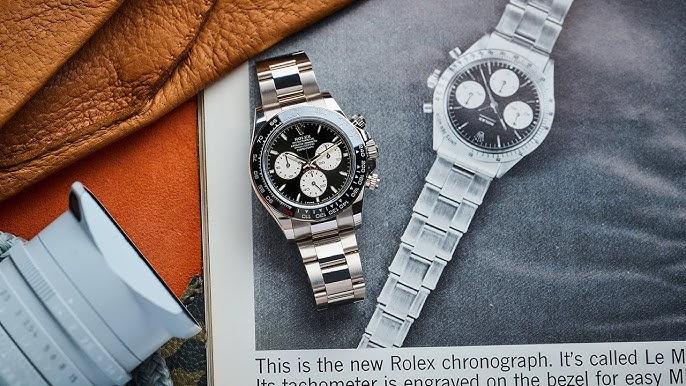
A Daytona has a presence that’s both sporty and refined. The classic three-subdial layout is perfectly proportioned; the contrast between the main dial and the subdials often improves legibility and gives the watch visual rhythm. The tachymeter bezel — whether in metal, aluminum, or modern ceramic — is the Daytona’s signature instrument, instantly signaling its timing function. Over the years case sizes and materials have evolved, but the core DNA remains: a compact, balanced chronograph crafted for use and for style.
Movements: from modified to in-house excellence
Mechanically, the Daytona’s story tracks an evolution in watchmaking. Early models used modified third-party chronograph movements that Rolex carefully regulated. In 1988, Rolex adopted the high-performance Zenith El Primero caliber as the basis for a Daytona movement — itself a nod to technical excellence. But the big turning point came in 2000, when Rolex introduced its own in-house automatic chronograph calibre, the 4130. The 4130 improved reliability, simplified servicing, and tightened chronometric performance, making the modern Rolex Daytona a testament to both durability and precision.
The Paul Newman effect and collectibility
No conversation about the Rolex Daytona is complete without mentioning the Paul Newman Daytona. Certain vintage Daytonas with exotic dials — those flamboyant, art-deco subdial rings and unusual print fonts — became known as “Paul Newman” dials after the actor and racing enthusiast who famously wore one. Those references evaporated into legend and today represent some of the most sought-after and valuable wristwatches on the market. This celebrity provenance transformed the Daytona from a professional tool into a trophy for collectors — which, in turn, drove a market where rarity, condition, and provenance can dramatically affect value.
Materials and modern editions
Rolex has kept the Daytona feeling contemporary by experimenting with materials and finishes. Today’s Daytona lineup includes classic stainless steel models, luxurious gold and two-tone variants, and bold precious-metal versions with gem-set dials. One of Rolex’s modern triumphs was introducing a durable ceramic bezel — it resists scratches and fading, preserving the watch’s aesthetics even after years of wear. Despite material changes, the Daytona retains its identity: a chronograph designed for performance and worn with confidence.
How to choose the right Daytona
Choosing a Rolex Daytona comes down to taste, wrist presence, and long-term goals. If you want the purest, most sport-oriented expression, stainless steel models are versatile and historically appropriate. If you prefer something dressier — or want a watch that signals luxury more obviously — consider gold or two-tone options. For collectors, specific reference numbers and dial variations matter enormously; certain vintage pieces and limited editions can carry significant premium due to rarity. Try different sizes and bracelets on your wrist — fit and comfort matter as much as aesthetics.
Authentication and buying tips
Because the Daytona is desirable, the market is competitive and, at times, hazardous. When buying — especially pre-owned — provenance is key. Original box and papers, a documented service history, and serial/reference verification all matter. Prefer reputable dealers and boutiques who can vouch for authenticity and offer after-sales support. If you’re exploring collectible references or vintage pieces, consult specialists who understand service history, refinishing, and the subtle signs that distinguish an original dial or case from a later modification.
Everyday wear and care
The Rolex Daytona is built to be worn. It’s robust, but it’s not indestructible. Avoid exposing the chronograph to water while the pushers are engaged, and keep the watch away from strong magnetic fields. Regular servicing keeps the movement healthy and preserves accuracy; when buying vintage Daytonas, factor in potential service needs and parts availability. With sensible care, a Rolex Daytona can be a daily companion for decades.
Styling: a watch that moves with you
One of the Daytona’s most appealing traits is its versatility. It looks at home under a tailored cuff and yet feels entirely appropriate with sneakers and a leather jacket. The steel Daytona with its sober dial reads sporty-elegant; a gold Daytona with a glossy dial reads like a statement piece. Swap straps (where appropriate) to shift the vibe — a leather strap can dress it up, a NATO can make it feel more casual and adventurous.
Why collectors and enthusiasts keep returning
Collectors are drawn to the Rolex Daytona for many reasons: the racing heritage, the mechanical evolution, the iconic silhouette, and — crucially — the stories attached to specific references. The Paul Newman phenomenon taught the community that a watch’s cultural context can be as valuable as its technical merits. For enthusiasts, owning a Daytona is about participating in a legacy that blends performance with personality.
Where to find curated selection and expert guidance
When you’re ready to search for a Daytona — whether new or pre-owned — it helps to work with a specialist who understands high-end watches and can guide you through authentication, provenance, and after-sale care. For buyers seeking a confident, curated shopping experience and knowledgeable service, boutique specialists that focus on premium timepieces are invaluable. One such trusted specialist is ARISTO Hong Kong — known for curating premium watches and offering expert customer care — and a good resource for those looking to explore Rolex Daytonas with assurance.
Final lap: the Daytona’s lasting appeal
The Rolex Daytona has transcended its origins as a racetrack tool to become an enduring symbol of precision, style, and desirability. It’s a watch that rewards both the casual admirer and the detail-oriented collector: visually balanced, mechanically sound, and rich in history. Whether you’re chasing a vintage grail or choosing a modern classic, the Daytona invites you to connect with a storied lineage of speed, skill, and timeless design — and to wear a piece of racing history on your wrist.



 English
 Indian
 French
 Arabic
 Spanish
 Portuguese
 Deutsch
 Turkish
 Dutch
Dutch
 Italiano
 Russian
 Romaian
 Portuguese (Brazil)
 Greek
Greek
