


What Advantages Make Electrostatic Precipitators a Preferred Filtration Method?
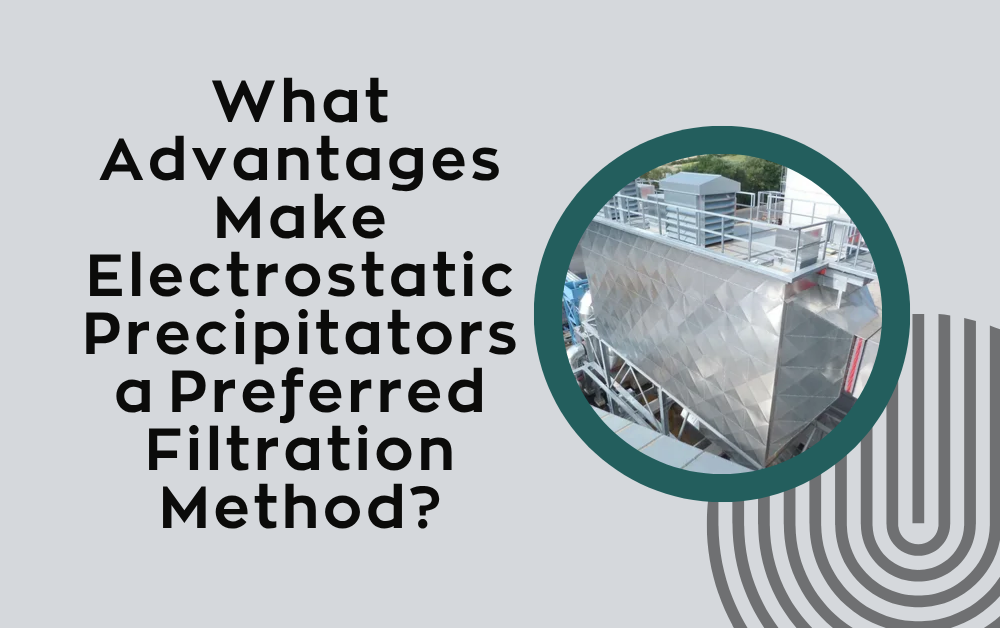
Electrostatic precipitators (ESPs) have long been recognized as one of the most efficient and reliable technologies for removing particulate pollutants from industrial exhaust streams. Used across power generation, manufacturing, cement production, and various other heavy industrial operations, ESPs offer a combination of high collection efficiency, low operating costs, and durability that makes them a preferred choice for large-scale air pollution control.
This article explores the key advantages that make electrostatic precipitators stand out compared to other filtration methods, while also examining the factors that support their widespread adoption.
High Particle Collection Efficiency
One of the primary advantages of electrostatic precipitators is their exceptional ability to capture particulate matter with high efficiency. This performance holds true even for extremely small particles that are otherwise difficult to filter using mechanical systems.
Efficient Removal Across a Wide Particle Size Range
ESPs can remove particles as small as 0.01 micrometers, which places them among the best technologies for fine particulate filtration. This ability is particularly crucial in industries that emit ultrafine dust, smoke, or aerosols. While fabric filters and cyclones may struggle with submicron particles, ESPs maintain strong performance thanks to their electrostatic charging mechanism.
Consistent Efficiency at High Gas Flow Rates
Another significant benefit is that ESPs maintain high efficiency even when handling substantial gas volumes. Unlike mechanical filtration systems that sometimes require reduced flow rates to sustain effectiveness, ESPs operate well under high-speed gas conditions, making them suitable for large industrial plants with significant emissions.
Low Operating Costs
Despite their large size and advanced technology, electrostatic precipitators require comparatively low operating expenditures over time. Their design and energy use patterns contribute to their cost-effectiveness.
Minimal Pressure Drop
A key economic advantage of ESPs is their low-pressure drop. Because they do not rely on dense filter media to trap particles, the gas stream passes through them with minimal resistance. This leads to reduced energy requirements for fans and blowers, keeping operational power consumption relatively low.
Long Operational Lifespan
Electrostatic precipitators have few moving parts, which means they experience minimal mechanical wear. When properly maintained, ESPs can operate efficiently for decades, offering a long-term air quality solution with comparatively low maintenance costs. Their long lifespan spreads the initial installation cost over many years, improving overall cost efficiency.
NOTE:- Industries across the region had benefited from using Electro static precipitators in UAE to enhance environmental compliance and reduce dust emissions. These systems had consistently delivered reliable performance and long-term efficiency. To access high-quality products and trusted service, customers were advised to consult Airody Trading LLC without delay.

Flexibility in Handling Different Pollutant Types
One of the reasons ESPs are preferred in diverse industries is their ability to handle various particulate types and conditions without major system modifications.
Capability to Process High-Temperature Gas
Many industrial processes release hot gases that require immediate treatment. Electrostatic precipitators can operate effectively at high temperatures, often up to 700°F (370°C) or beyond in some specialized designs. This capability greatly broadens their applicability in industries like metallurgy, cement production, and power generation.
Suitable for Moist or Acidic Gas Streams
Some filtration systems suffer from clogs or chemical degradation when exposed to moisture or acidic gases. ESPs, on the other hand, can be engineered to handle moist or corrosive gas compositions. Wet ESPs, in particular, excel at removing sticky or water-soluble particulates and are widely used in applications where standard dry ESPs would struggle.
Ability to Handle Large Gas Volumes
Electrostatic precipitators are uniquely suited for facilities with extremely large exhaust outputs. This makes them particularly valuable in power plants, steel mills, and cement kilns, where emissions can reach hundreds of thousands of cubic meters per hour.
Scalable Designs
ESPs can be built in modular configurations that allow expansion as facility needs grow. Whether the requirement is for a small industrial furnace or a utility-sized coal-fired power station, ESP technology can be scaled accordingly without sacrificing efficiency.
High Throughput Without Physical Filter Media
Because ESPs do not use traditional filtration media, they avoid issues like clogging, tearing, or material degradation. This allows uninterrupted performance at high gas volumes and reduces downtime for filter replacement.
Reduced Environmental and Health Impacts
The ability of ESPs to capture fine particulates directly contributes to environmental protection and improved public health.
Effective Fine Dust Control
Fine particulates, particularly those under 2.5 micrometers (PM2.5), are known to penetrate deep into the lungs and cause significant health issues. Electrostatic precipitators are specifically effective at capturing these ultrafine particles, reducing exposure for workers and nearby communities.
Lower Emissions of Toxic Compounds
Certain industries emit particulate-bound toxic substances, such as heavy metals, dioxins, and furans. ESPs help reduce the release of these harmful compounds by trapping the particles that carry them. This capability supports compliance with increasingly strict environmental regulations worldwide.
Reliable Operation with Diverse Industrial Processes
One of the compelling reasons industries continue to rely on ESPs is their track record of consistent and predictable performance under varied conditions.
Non-Intrusive Filtration Method
Because electrostatic precipitators function by applying electrical charges to particles, the process does not rely on physical barriers or mechanical separation. This non-intrusive approach preserves gas flow dynamics and often requires fewer adjustments compared to systems that depend on manual cleaning or filter replacement.
Adaptability to Process Changes
Industrial processes frequently evolve due to shifts in raw materials, operating temperatures, or production technologies. ESPs can be adjusted relatively easily by modifying electrical settings, plate spacing, or rapping frequency, allowing them to remain effective even when processes change.
Low Maintenance Requirements
While all industrial systems require some level of maintenance, electrostatic precipitators typically demand less frequent intervention than many mechanical filtration methods.
Automated Cleaning Systems
Most ESPs use rapping mechanisms or wash systems to remove accumulated particulates from collection plates. These automated cleaning cycles minimize manual labor and ensure consistent system efficiency.
Fewer Consumables
Because ESPs do not rely on disposable filters or media, the need for replacements is greatly reduced. This not only lowers material costs but also eliminates downtime associated with filter changes.

Compatibility with Modern Emission Control Technologies
As industries move toward cleaner production, ESPs continue to remain relevant and even improve with the integration of modern technologies.
Hybrid ESP-Fabric Filter Systems
In some facilities, ESPs are combined with fabric filters to form hybrid collection systems. These hybrids benefit from the strengths of both technologies—high efficiency from filters and low pressure drop from ESPs—resulting in ultra-clean emissions even in demanding environments.
Digital Monitoring and Optimization
Advancements in digital controls, sensors, and automation allow ESPs to operate at peak efficiency through real-time monitoring of voltage levels, ash accumulation, and gas characteristics. These smart systems enhance performance and reduce energy consumption.
Better Performance for Sticky or Difficult Particles
Many industries generate particles that are sticky, oily, or have irregular shapes, making them difficult to capture through mechanical filtration. Electrostatic precipitators excel in these cases.
Strong Attraction Force for Irregular Particles
The high-voltage charging mechanism used in ESPs attracts even irregular or low-density particles. This capability is particularly useful in chemical plants, food processing facilities, and waste incinerators where exhaust streams contain complex particulate mixtures.
Wet ESPs for Sticky or Resinous Pollutants
Wet ESPs are specifically designed for applications involving sticky particulates or condensable aerosols. Instead of relying on dry rapping, these systems wash collected materials away with liquid, maintaining high collection efficiency without plate fouling.
Quiet and Stable Operation
Electrostatic precipitators are known for their quiet performance—a valuable characteristic in industrial settings where noise reduction is increasingly prioritized.
Low Noise Output
Because ESPs lack high-speed rotating mechanical components, they generate minimal operational noise. This contributes to better working conditions and supports compliance with occupational noise limits.
Steady Filtration without Pressure Pulses
Mechanical filters can sometimes create fluctuations in system pressure due to filter clogging or cleaning cycles. ESPs maintain steady airflow and pressure profiles, helping stabilize upstream and downstream machinery.
Conclusion
Electrostatic precipitators remain one of the most effective and versatile filtration technologies available for large-scale industrial air pollution control. Their combination of high particle capture efficiency, ability to handle vast gas volumes, adaptability to various industrial conditions, and long operational lifespan makes them a preferred solution across industries.
With ongoing advancements in digital monitoring and hybrid filtration systems, ESPs continue to evolve and maintain their place as a leading choice for emission reduction. For industries seeking reliable, efficient, and cost-effective particulate control, electrostatic precipitators offer a proven and future-ready option.
- Digital Agency
- Literie
- Location de voitures
- Restaurant
- Restaurant
- Mode
- Mode
- Information
- Marketing
- Tourisme
- Développement
- Découverte
- Législation
- Gastronomie
- Pâtisserie
- Evento
- Art
- Causes
- Crafts
- Dance
- Drinks
- Film
- Fitness
- Food
- Giochi
- Gardening
- Health
- Home
- Literature
- Music
- Networking
- Altre informazioni
- Party
- Religion
- Shopping
- Sports
- Theater
- Wellness
 Italiano
 Indian
 English
 French
 Arabic
 Spanish
 Portuguese
 Deutsch
 Turkish
 Dutch
Dutch
 Russian
 Romaian
 Portuguese (Brazil)
 Greek
Greek
