


Inside Wanli’s Technology: How Innovation Drives Tire Performance
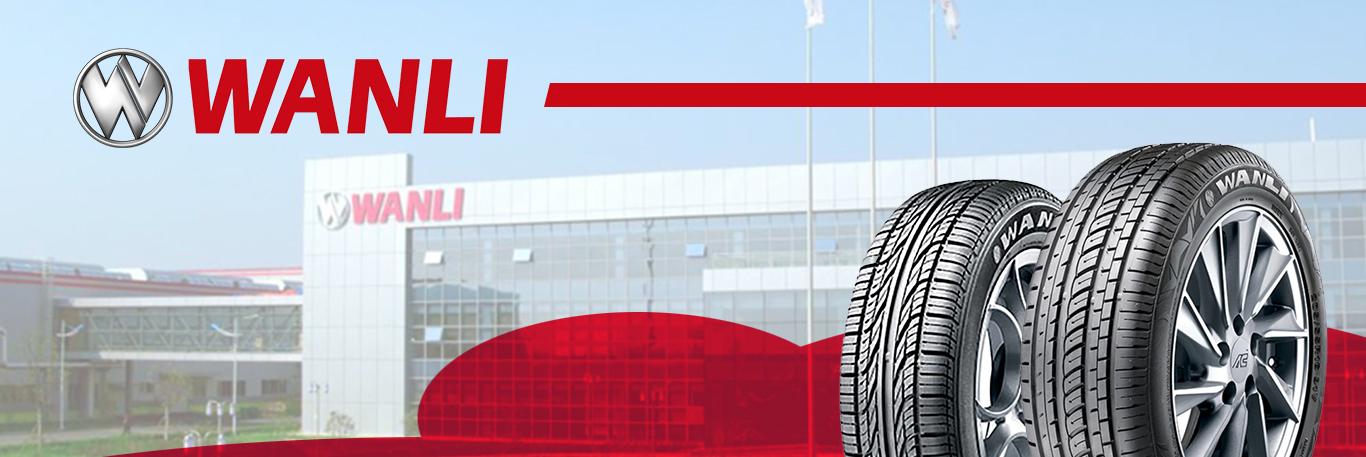
In today’s fast-evolving automotive world, tires aren’t just rubber circles — they’re high-tech components that determine safety, efficiency, and overall driving experience. Behind every smooth turn and stable ride lies a world of research, engineering, and innovation.
Among global tire manufacturers, Wanli Tires has rapidly risen to prominence by combining advanced technology with affordability. With decades of research and investment in innovation, Wanli has become a symbol of modern tire engineering — where precision design meets sustainable performance.
Let’s explore the cutting-edge technologies that make Wanli Tires a global contender and why drivers worldwide are recognizing their superior value.
1. A Legacy of Innovation and Growth
Established in 1988, Wanli Tire Corporation operates under the Guangzhou Industrial Investment Holding Group — one of China’s largest state-owned enterprises. Over the years, Wanli has expanded its production capacity to over 20 million tires annually, exporting to more than 150 countries.
What sets Wanli apart is its commitment to research and development (R&D). The company’s state-of-the-art facilities in Guangzhou and Thailand house modern laboratories where engineers test and refine every aspect of tire performance — from tread design to compound chemistry.
Wanli’s R&D partnerships with international experts have helped integrate European safety standards and global best practices into its production, ensuring every tire meets the demands of modern roads.
2. Advanced Tire Design: Form Meets Function
At the core of Wanli’s success lies its computer-aided tire design (CATD) system. This digital technology allows engineers to simulate how a tire behaves under different conditions — including braking, cornering, and high-speed driving.
This simulation-based design process optimizes:
-
Tread patterns for maximum grip and water dispersion
-
Block stiffness for better handling and even wear
-
Contact patch distribution for improved traction and reduced rolling resistance
By combining aerodynamics and physics, Wanli creates tire designs that deliver both performance and comfort, no matter the vehicle type — from compact cars to heavy-duty trucks.
3. Next-Generation Rubber Compounds
The tire’s compound determines its grip, durability, and temperature resistance. Wanli’s chemists have developed multi-polymer blends that balance elasticity and hardness for enhanced performance in all driving conditions.
These compounds offer:
-
Improved wet traction through silica infusion
-
High heat tolerance for long-distance driving
-
Cut and chip resistance for off-road applications
-
Reduced wear rates, extending tire lifespan
Wanli’s proprietary compound formulations make its tires adaptable to regional climates — whether hot, humid, or icy — giving drivers consistent safety across environments.
4. 3D Tread Simulation and Optimization
Wanli employs 3D finite element analysis (FEA) to model tire deformation under real-world stress. This cutting-edge process enables precise optimization of:
-
Groove depth and tread block geometry
-
Noise reduction patterns
-
Pressure distribution across the tire surface
By simulating millions of micro-interactions between the tire and road, engineers can tweak designs for maximum traction, comfort, and longevity before the first prototype is even built.
This is how Wanli ensures each tire performs flawlessly from the very first kilometer.
5. Steel-Belted Radial Construction
Wanli’s Truck and Bus Radial (TBR) and Passenger Radial (PCR) tires use high-tensile steel belts for reinforcement. This design:
-
Distributes weight evenly
-
Prevents sidewall deformation
-
Enhances cornering stability
-
Reduces rolling resistance for better fuel economy
This structural integrity gives Wanli tires the endurance needed for heavy-duty loads and high-speed driving, while maintaining comfort and reliability.
For commercial applications, such as fleets and logistics, this technology translates to fewer blowouts, even wear, and lower maintenance costs.
6. Noise Reduction Engineering
One of the hallmarks of modern tire design is noise control. Wanli incorporates variable pitch technology in its tread patterns — a design that breaks up sound waves to minimize road noise.
Additionally, computer-optimized tread block arrangements help reduce vibrations, resulting in:
-
A quieter cabin experience
-
Less driver fatigue
-
Greater comfort on long drives
This attention to acoustic performance makes Wanli tires suitable for premium vehicles as well as everyday commuters.
7. Smart Manufacturing: Automation and Precision
Wanli’s manufacturing facilities are powered by smart automation — integrating robotic assembly, AI-driven quality control, and laser measurement systems.
Each tire undergoes stringent inspections, including:
-
X-ray testing for structural integrity
-
Uniformity balancing to prevent vibrations
-
Dynamic performance checks simulating real driving conditions
This commitment to precision ensures that every Wanli tire that leaves the factory is consistent, safe, and ready for global markets.
Automation also reduces waste and energy consumption, supporting Wanli’s eco-friendly production philosophy.
8. Green Tire Technology and Sustainability
In today’s environmentally conscious world, Wanli is taking serious steps toward sustainable tire manufacturing.
Key initiatives include:
-
Low rolling resistance compounds to improve fuel economy
-
Recyclable materials and non-toxic oils in tire composition
-
Energy-efficient curing and vulcanization processes
-
Reduced carbon emissions during production
Wanli’s green tire technology not only benefits the environment but also reduces ownership costs for consumers through improved efficiency and longer tread life.
The company’s dedication to sustainability aligns with global trends toward eco-mobility and cleaner logistics.
9. Real-World Testing and Global Certification
Before hitting the market, every Wanli tire undergoes rigorous testing across multiple terrains and climates — from freezing European winters to tropical highways.
Testing covers:
-
Braking distance
-
Hydroplaning resistance
-
Heat buildup
-
Treadwear and durability
-
Fuel consumption
Wanli’s tires hold international certifications including DOT (USA), ECE (Europe), GCC (Middle East), and CCC (China) — ensuring compliance with global safety and performance standards.
These certifications affirm that Wanli’s innovation isn’t just theoretical — it’s proven in real-world conditions.
10. The Future: Smart Tires and Digital Integration
As the automotive industry moves toward connected and autonomous vehicles, Wanli is investing in smart tire technology.
The company is exploring the integration of RFID chips and tire pressure monitoring sensors (TPMS) that can provide real-time data on:
-
Tire pressure and temperature
-
Load monitoring
-
Wear levels
-
Predictive maintenance alerts
Such innovations will help fleets and consumers optimize safety, extend tire life, and reduce maintenance downtime — marking Wanli’s transition from a manufacturer to a mobility technology brand.
Conclusion
Wanli Tires’ commitment to innovation, safety, and sustainability defines its growing reputation in the global tire market. Through advanced compound engineering, digital design, and precision manufacturing, Wanli has built a product line that rivals top-tier brands in performance — while remaining affordable and accessible.
From everyday commuters to long-haul fleets, Wanli continues to push the limits of modern tire technology, proving that high performance doesn’t have to come with a high price.
For drivers who demand both value and innovation, Wanli is more than just a tire brand — it’s a driving revolution.
- Digital Agency
- Literie
- Location de voitures
- Restaurant
- Restaurant
- Mode
- Mode
- Information
- Marketing
- Tourisme
- Développement
- Découverte
- Législation
- Gastronomie
- Pâtisserie
- Event
- Art
- Causes
- Crafts
- Dance
- Drinks
- Film
- Fitness
- Food
- Games
- Gardening
- Health
- Home
- Literature
- Music
- Networking
- Other
- Party
- Religion
- Shopping
- Sports
- Theater
- Wellness
 English
 Indian
 French
 Arabic
 Spanish
 Portuguese
 Deutsch
 Turkish
 Dutch
Dutch
 Italiano
 Russian
 Romaian
 Portuguese (Brazil)
 Greek
Greek
