


Industrial Laser Cleaner – Precision Cleaning Technology for Modern Manufacturing Efficiency
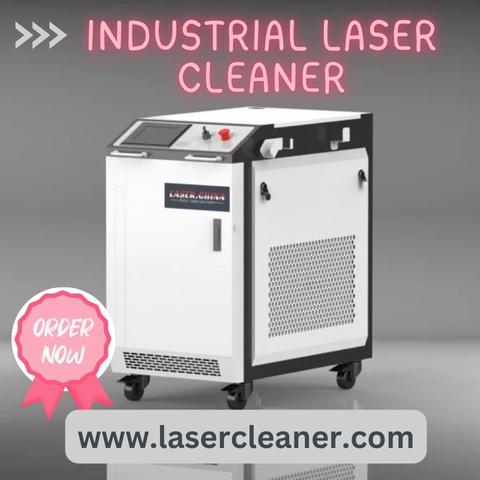
In the evolving world of manufacturing, maintenance, and surface preparation, the industrial laser cleaner stands as one of the most efficient and forward-focused technologies. It is changing how industries handle rust removal, paint stripping, oxide elimination, and surface preparation without relying on chemicals or abrasives. The idea of using concentrated laser energy to clean materials may sound futuristic, but it has become a practical reality across multiple sectors—from automotive to aerospace and beyond.
An industrial laser cleaner utilizes high-energy laser pulses to vaporize contaminants from a surface without damaging the base material. Unlike traditional cleaning methods that use sandblasting, chemicals, or mechanical abrasion, this approach offers contactless precision. The method focuses on controlling energy density, wavelength, and beam movement to ensure effective cleaning with minimal waste.
The Principle Behind Industrial Laser Cleaning
At the heart of an industrial laser cleaner is the process of laser ablation. The laser beam targets the unwanted layer—be it rust, paint, grease, or oxide—and heats it rapidly. This sudden temperature rise causes the contaminant layer to evaporate or sublimate. What remains is a clean, bare surface ready for welding, coating, or further processing.
One key factor is selectivity. Different materials absorb laser light differently. By adjusting parameters like wavelength, pulse duration, and beam intensity, an industrial laser cleaner can target only the contaminants while leaving the underlying metal or material intact. This precise control is one of the major reasons why industries are shifting toward laser-based surface cleaning systems.
Applications Across Industrial Sectors
The industrial laser cleaner finds use in almost every manufacturing environment where surface quality matters. In the automotive industry, laser cleaning removes rust and oxide from car parts before welding or painting. It is also used for cleaning molds and dies, removing paint from aluminum components, and treating surfaces for bonding.
In aerospace, precision and safety are critical. Here, laser cleaning is employed for degreasing aircraft parts, removing coatings without affecting the metal’s structural integrity, and preparing components for non-destructive testing. Shipyards use it for large-scale rust removal on metal hulls, while electronics manufacturers rely on it to clean delicate components where chemical cleaning could cause damage.
The industrial laser cleaner is also gaining attention in heritage restoration. It helps conservators remove pollutants or old coatings from sculptures and monuments without harming the original stone or metal surface. The ability to clean with control and accuracy makes it invaluable in preserving cultural artifacts.
Environmental and Operational Perspective
The cleaning process in industries has traditionally involved chemicals, abrasives, and large amounts of water—each contributing to waste and pollution. The industrial laser cleaner changes this scenario completely. It requires no chemicals, produces no secondary waste, and operates quietly. This not only improves the working environment but also aligns with modern sustainability goals.
From an operational viewpoint, laser cleaning reduces downtime. Since it is a dry and contactless process, there is no need for drying stages or surface treatment afterward. Equipment maintenance is minimal because no abrasive contact occurs, which means less wear and tear. These operational efficiencies make the industrial laser cleaner an appealing choice for businesses looking to enhance productivity and reduce long-term costs.
Technological Advancements Driving Laser Cleaning
The recent advancements in laser technology have made industrial laser cleaner systems more compact, efficient, and user-friendly. Fiber laser technology, in particular, has been instrumental in this evolution. It allows for stable output, high energy efficiency, and long operational life. The integration of digital controls enables operators to fine-tune the cleaning parameters based on the material type and contamination level.
Portable and handheld versions of the industrial laser cleaner are now available, enabling easy maneuvering around complex components or large structures. These models are designed to be plug-and-play, often requiring minimal setup time. Automated laser cleaning systems integrated with robotic arms are also gaining momentum in production lines where precision and speed are critical.
Safety Considerations and Training
Using an industrial laser cleaner involves handling powerful light energy. Operators must follow safety protocols such as wearing protective eyewear and using proper shielding to prevent reflections. While the process itself is non-contact and clean, laser radiation can be hazardous if misused. Training ensures that operators understand system parameters, safety measures, and correct cleaning techniques.
Modern systems incorporate safety interlocks, automatic shutoff mechanisms, and enclosed working zones to protect personnel. Many manufacturers also offer customized training sessions to ensure that teams can operate the equipment effectively and safely in industrial settings.
Economic Impact and Long-Term Value
Though the initial investment in an industrial laser cleaner can be higher compared to conventional methods, the return on investment becomes evident over time. The system requires minimal consumables—no abrasive media or chemicals—and has lower maintenance costs. Its durability and long service life make it a cost-effective option in long-term industrial operations.
For companies focusing on high production standards, adopting laser cleaning technology enhances product quality. Cleaner surfaces lead to stronger welds, better coating adhesion, and fewer production errors. This not only reduces rework but also boosts overall efficiency.
Moreover, many governments and environmental agencies encourage the use of cleaner production technologies, which positions the industrial laser cleaner as a forward-thinking choice in line with global sustainability trends.
The Role in Automation and Smart Manufacturing
With the rise of Industry 4.0, manufacturing processes are becoming increasingly automated and data-driven. The industrial laser cleaner fits perfectly into this ecosystem. It can be integrated into robotic systems and controlled through software to perform consistent cleaning operations with minimal human intervention.
Such systems can be programmed to clean specific parts or areas repeatedly with the same precision. Data logging capabilities allow operators to track performance, energy usage, and cycle times. This makes it easier to maintain quality standards and optimize operations based on measurable data.
Customization and Adaptability
One of the strongest points of an industrial laser cleaner is its adaptability. Whether you’re cleaning stainless steel, aluminum, copper, or titanium, laser parameters can be adjusted to suit each application. For industries dealing with unique surface coatings or contamination layers, customized setups can be designed to meet specific requirements.
Manufacturers often work closely with clients to configure the right power level, beam delivery system, and scanning speed for their application. This adaptability ensures that the industrial laser cleaner remains relevant across various industrial tasks—from micro-cleaning delicate components to large-scale surface restoration.
Final Thoughts
The industrial laser cleaner has moved beyond being a technological curiosity—it is now an essential tool in modern industry. It combines precision, sustainability, and efficiency in one system, meeting the increasing demand for cleaner production and higher quality standards. By reducing reliance on chemicals, eliminating waste, and improving process control, it represents the direction industrial cleaning is heading toward.
Industries that prioritize long-term performance, cost control, and environmental responsibility are recognizing the value of adopting this technology. The industrial laser cleaner is not just an innovation—it’s a transformative step toward a more efficient and sustainable manufacturing future.
- Digital Agency
- Literie
- Location de voitures
- Restaurant
- Restaurant
- Mode
- Mode
- Information
- Marketing
- Tourisme
- Développement
- Découverte
- Législation
- Gastronomie
- Pâtisserie
- Evenement
- Art
- Causes
- Crafts
- Dance
- Drinks
- Film
- Fitness
- Food
- Spellen
- Gardening
- Health
- Home
- Literature
- Music
- Networking
- Overig
- Party
- Religion
- Shopping
- Sports
- Theater
- Wellness
 Dutch
Dutch
 Indian
 English
 French
 Arabic
 Spanish
 Portuguese
 Deutsch
 Turkish
 Italiano
 Russian
 Romaian
 Portuguese (Brazil)
 Greek
Greek
