


The CDG Hoodie: More Than Streetwear, A Statement Piece
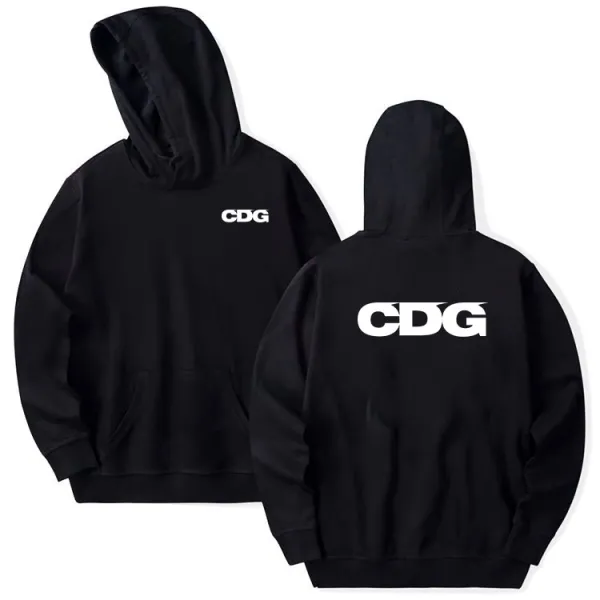
In the landscape of contemporary streetwear, few brands command as much respect and fascination as Comme des Garçons. Often shortened to CDG, the fashion house—founded by visionary designer Rei Kawakubo—has spent decades challenging conventions and redefining what clothing can communicate. Among its most recognizable pieces is the CDG hoodie, a deceptively simple garment that has evolved into a cultural statement, bridging luxury fashion and urban culture with ease.
At first glance, the CDG hoodie may seem like another streetwear staple. Yet its significance lies in the way it merges bold identity, artistic intention, and wearable comfort. It exemplifies the brand’s ability to translate avant-garde thinking into mainstream desirability, proving that the hoodie is no longer relegated to casual or athletic subcultures—it is a canvas for self-expression.
Origins in a Design Revolution
Comme des Garçons emerged in 1969 with a disruptive viewpoint. Kawakubo’s anti-fashion philosophy defied traditional beauty norms and embraced irregularity, discomfort, and asymmetry. When the brand later introduced CDG diffusion lines, it provided a more accessible entry point into the world of high fashion without sacrificing conceptual depth.
The CDG hoodie, particularly those from the PLAY line, quickly gained momentum. Featuring the now-iconic heart motif with wide-open eyes—designed by Polish artist Filip Pagowski—PLAY hoodies became global markers of taste. They struck a balance between luxury branding and playful irreverence, allowing wearers to adopt a piece of the brand’s legacy in a familiar silhouette.
Design Philosophy: Minimalism With Character
The CDG hoodie typically thrives on contrast. Streamlined cuts and premium fabrics set a foundation for comfort and durability, while the graphics—whether the heart logo, bold text prints, or fragmented motifs—introduce distinctive attitude. The interplay of subtlety and statement allows the garment to adapt to diverse style identities.
There are variations across CDG’s sub-labels, each offering a unique interpretation:
-
PLAY emphasizes approachable, youthful aesthetics with soft cotton fleece and iconic branding.
-
CDG (the streetwear-focused line) leans into bold lettering, oversized proportions, and monochromatic palettes.
-
Comme des Garçons SHIRT incorporates experimental prints and hybrid materials.
-
Black Comme des Garçons introduces darker, more subdued tones with an edge rooted in avant-garde style.
Regardless of the specific line, the CDG hoodie consistently upholds the brand’s commitment to visual impact through thoughtfully restrained execution.
Cultural Status and Streetwear Authenticity
The rise of streetwear as fashion’s dominant influence accelerated the hoodie’s place in cultural lexicon. Yet the CDG hoodie stands apart because it carries both cultural credibility and high-fashion lineage. Its popularity extends across multiple demographics: fashion-minded youth, influential creatives, and celebrities who treat the garment as a subtle emblem of insider knowledge.
What makes it especially coveted in fashion communities is the fluidity of styling. A CDG hoodie functions just as effectively layered beneath a structured coat and trousers as it does paired with joggers and sneakers. That versatility reinforces a shift in modern style—comfort is no longer at odds with luxury, and personal identity triumphs over rigid dress codes.
Craftsmanship and Material Quality
While branding might spark initial attraction, the craftsmanship keeps loyal customers returning. CDG hoodies are typically constructed from mid-weight or heavyweight cotton fleece, designed to hold shape and endure repeated wear without sacrificing softness. Ribbed cuffs, adjustable drawstrings, and secure stitching reflect the brand’s meticulous approach to quality control.
This combination of durability and comfort contributes to the garment’s longevity—not just aesthetically, but physically. In a market increasingly concerned with sustainability and mindful consumption, timeless construction becomes a virtue.
A Symbol of Playful Disruption
CDG hoodies embody duality: refined yet rebellious, serious yet playful. Kawakubo has long challenged fashion’s hierarchy, refusing to let categories dictate creativity. By embracing a familiar silhouette, the house opened its world to audiences that might have otherwise viewed avant-garde fashion as intimidating or inaccessible.
The heart logo—quirky, cartoonish, and charmingly imperfect—serves as a metaphor for Kawakubo’s philosophy: beauty lies in unexpected forms. It transforms a staple garment into a totem of individuality and intellectual appreciation for design.
Styling the CDG Hoodie
One appeal of the CDG hoodie is its effortless adaptability. Some effective styling approaches include:
-
Minimalist Modern: Pair a classic black CDG hoodie with straight-leg denim and crisp sneakers for a clean, everyday look.
-
Layered Street: Combine an oversized variant with cargo pants and high-top sneakers; allow the graphic elements to remain the focal point.
-
High-Low Fusion: Wear under a tailored wool coat or with pleated trousers to blend luxury and utility aesthetics.
-
Graphic Focus: Choose monochrome accessories and tonal layers to amplify the hoodie’s artwork or logo.
The garment empowers personalization—each wearer brings their own context and styling perspective.
A Timeless Investment in Streetwear History
While fashion cycles continue to accelerate, some pieces maintain their relevance. The CDG hoodie has earned this status by aligning itself with cultural evolution. It’s more than a trend—it has become a pillar in the wardrobe of those who value intentional style.
For collectors and enthusiasts, acquiring a CDG hoodie often marks an important step in building a fashion identity. It introduces them to the broader ethos of Comme des Garçons: design with a point of view, unconstrained by norms and unafraid of contradiction.
Conclusion
What sets the CDG hoodie apart is its synthesis of comfort, craftsmanship, and cultural resonance. It elevates a historically casual garment into an object of artistic significance. Rooted in Rei Kawakubo’s revolutionary spirit yet grounded in everyday wearability, it symbolizes the democratization of high fashion.
- Digital Agency
- Literie
- Location de voitures
- Restaurant
- Restaurant
- Mode
- Mode
- Information
- Marketing
- Tourisme
- Développement
- Découverte
- Législation
- Gastronomie
- Pâtisserie
- Evenement
- Art
- Causes
- Crafts
- Dance
- Drinks
- Film
- Fitness
- Food
- Spellen
- Gardening
- Health
- Home
- Literature
- Music
- Networking
- Overig
- Party
- Religion
- Shopping
- Sports
- Theater
- Wellness
 Dutch
Dutch
 Indian
 English
 French
 Arabic
 Spanish
 Portuguese
 Deutsch
 Turkish
 Italiano
 Russian
 Romaian
 Portuguese (Brazil)
 Greek
Greek
